
About Ikkō Tanaka
Lived 1930 – 2002 (aged 71). Ikkō Tanaka was a Japanese graphic designer, designer and graphic artist.
was a Japanese graphic designer.
Tanaka is widely recognized for his prolific body of interdisciplinary work, which includes graphic identity and visual matter for brands and corporations including Seibu Department Stores, Mazda, Issey Miyake, Hanae Mori, and Expo 85. He is credited with developing the foundational graphic identity for lifestyle brand Muji, emphasizing the "no brand" quality of their products through unadorned, charming line drawings paired with straightforward slogans. His use of bold, polychromatic geometries and his harnessing of the dynamic visual potential of typography are undergirded by a sensitivity towards traditional Japanese aesthetics. Though keenly sensitive to historical precedents and established conventions, Tanaka nevertheless maintained a degree of playfulness in his work, manipulating color, scale, and form to reconfigure familiar iconographies into fresh and accessible visual representations.
Tanaka is also widely recognized for his posters designs for Noh productions and other performances and exhibitions staged in Japan and beyond. He was active in realms of typography, exhibition design, and book design as well, and his publication Japan Style was released in 1980 alongside the Victoria and Albert Museum exhibition of the same name. As a leading figure in postwar Japanese design, Tanaka is also credited with playing a role in the professionalization and expansion of the discipline.
Career
Education and early beginnings (1930-1957) Born in 1930 in Nara, Ikko Tanaka studied art at the Kyoto City University of Arts, graduating in 1950 with a degree in ancient Japanese art. He began his professional career in the department of textile design at the Kanegafuchi Boseki (now Kracie Holdings) firm in Osaka, working under the direction of French-trained designer Katsujiro Kinoshita. He established his eponymous studio in 1963 in Aoyama. Tanaka's use of motifs borrowed from the natural world, and his placement of forms against monochromatic backgrounds has been described by art historian Yuji Yamashita as a 20th-century iteration of Rinpa, to such an extent that he could be considered "the very person that embodied Rinpa." Tanaka himself acknowledged the influence of Rinpa on his work, while simultaneously expressing a reluctance to wholly align with an aesthetic that "purveys an idea of beauty that’s far too far away from what we are." These ideas percolate into his extensive work relating to theatre and other performing arts, and Tanaka played a critical role in the popular revival of Noh in the postwar era. By shifting the print matter associated with Noh performances from esoteric handwritten slips of paper to public-facing, bold posters that translated the enigmatic and profound qualities of the medium in more accessible and visually captivating terms, Tanaka helped bring the traditional art into the modern age without sacrificing its core aesthetic and cultural qualities. Tanaka also designed signage and medals for the 1964 Summer Olympics in Tokyo, and the 1972 Winter Olympics in Sapporo.
Commercial In 1975, Tanaka was appointed creative director of the Seibu group, a holding company that encompasses railways, department stores, real estate, and numerous other industries under its umbrella.
Together with marketing consultant Kazuko Koike and interior designer Takashi Sugimoto, Tanaka conceptualized the graphic identity for Mujirushi Ryōhin, a Seibu group discount brand founded as a response and respite to late capitalism’s brand-oriented culture. Tanaka proposed the use of recycled paper for the product packaging, and a simple logo printed in maroon, featuring the four kanji characters of the brand written in bold font. As part of the company’s advisory board, Tanaka also played a vital role in product design, advocating for the embrace of the natural textures and colors of metal and wood materials, and pushing back against the use of pigments in synthetic plastics.
Book design and typography Tanaka collaborated with historians, curators, architects and artists throughout his career to produce art publications, exhibition designs, and promotional materials. Notable books include Japan Style (1980) with Yoshida Mitsukuni, published in conjunction with the exhibition of the same title at the Victoria and Albert Museum, Japan Color (1981) with Kazuko Koike, and Japan Design (1984) also with Kazuko Koike. Designers including Tanaka sought to establish "nihon moji," a lettering aesthetic that would be recognized as uniquely Japanese and systematically standardized.
Later in his career, he developed a Bodoni-inspired Mincho typeface called kōchō, which makes use of strong contrasts between thick and thin strokes, triangular uroko (serifs), and full osae (pressure).
Fashion Beginning in the late 1960s and 70s, Tanaka engaged in collaborative work with several Japanese fashion designers. Tanaka designed Hanae Mori's iconic butterfly logo and produced a body of visual matter for the line, including a documentary on the fashion designer intended for foreign distribution. In the late 1990s, Tanaka designed promotional posters for Salvatore Ferragamo and produced exhibition materials and designed the catalogue for "Salvatore Ferragamo - The Art of Shoe," held at the Sogetsu Kai Foundation in 1998.
Death and legacy Tanaka died on January 10, 2002, at the age of 71 from a heart attack in Tokyo. In 2008, the Tanaka Ikko Archive was established at the Center for Contemporary Graphic Art (CCGA) in Sukagawa, Fukushima. the Walker Art Center, the Museum of Modern Art, the Indianapolis Museum of Art, the University of Michigan Museum of Art, the Cooper Hewitt, the Museum of Applied Arts and Sciences, the British Museum, the Nasher Museum of Art, the Artizon Museum, and the Victoria and Albert Museum.
Selected awards and exhibitions
Awards
Source: 2000 Person of Cultural Merit
Exhibitions
2003 "Ikko Tanaka Retrospective: Our Era of Design," Museum of Contemporary Art Tokyo (exhibition designed by Tadao Ando) 2012 "Ikko Tanaka and Future/Past/East/West of Design," 21 21 Design Sight (curated by Kazuko Koike) 2015 "Ikko Style: The Graphic Art of Ikko Tanaka," USC Pacific Asia Museum 2016 "The Posters of Ikko Tanaka," National Museum of Art, Osaka 2018 "Ikko Tanaka: Faces." Die Neue Sammlung
Don’t just read it —
keep it.
Full-length biographies made to live with: read them, listen on the way to work, watch them tonight.
- E-book
- Audio
- Video
Instant download · yours to keep · every purchase keeps this site free
Important facts
People in Ikkō Tanaka's life
Named in this biography and alive at the same time




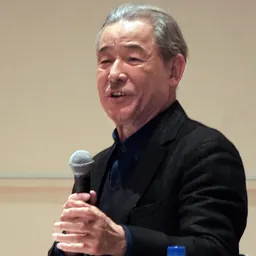
Related people
Same field, nearest in time




Contemporaries
People whose lives overlapped Ikkō Tanaka's





Frequently asked questions
Who was Ikkō Tanaka?
Japanese graphic designer (1930–2002)
When was Ikkō Tanaka born?
Ikkō Tanaka was born on 13 January 1930 in Nara.
When did Ikkō Tanaka die?
Ikkō Tanaka died on 10 January 2002 in Minami-Aoyama.
What was Ikkō Tanaka's occupation?
Ikkō Tanaka was a graphic designer, designer and graphic artist.
What nationality was Ikkō Tanaka?
Ikkō Tanaka was Japanese.
Sources & further reading
Cite this page
APA: Biography.guide. (2026). Ikkō Tanaka. https://biography.guide/ikko-tanaka/
MLA: "Ikkō Tanaka." Biography.guide, https://biography.guide/ikko-tanaka/.
Chicago: "Ikkō Tanaka." Biography.guide. https://biography.guide/ikko-tanaka/.
Data last updated: 2026-09-20 · Spot an error? Report a correction.
Page generated 2026-09-27 05:25 UTC