
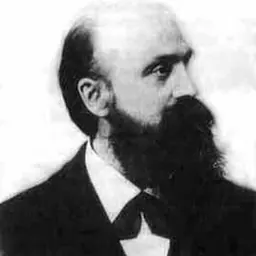
Ignatius Afram I Barsoum
120th Syriac Orthodox Patriarch of Antioch
About Ignatius Afram I Barsoum
Lived 1887 – 1957 (aged 70). Ignatius Afram I Barsoum was an Iraqi eastern Orthodox priest, diplomat, bishop, priest, researcher and literary scholar.
Mor Ignatius Aphrem I Barsoum (, , June 15, 1887 – June 23, 1957) was the 120th Syriac Orthodox Patriarch of Antioch and head of the Syriac Orthodox Church from 1933 until his death in 1957. He was consecrated as a Metropolitan and as a Patriarch at a very hard time for the Syriac Orthodox church and its people and parishes and he worked very hard to re-establish the church initiations to where his people moved. He researched, wrote, translated, scripted, and published many scholarly works that included books on the saints, tradition, liturgy, music, and history of Syriac Orthodox Church.
Early life and education Barsoum was born in Mosul, Ottoman Empire and was given the name Ayoub, from the biblical name Job ( - his baptism name). He was born to Istefane Barsoum and Sussan AbdulNour, descendants of two prominent Syriac Orthodox families in Mosul. In that school, he studied Languages, History, Religions, and many other subjects. There, he mastered Arabic and French and a good deal of Syriac and Turkish languages and he wrote in the mission newspaper, Iklil Al-Ward. In 1905, he was ordained as a Reader (Qoroyo) and Sub-Deacon (Aphodyacon) by Dionysius Bihnam Samarji, Archbishop of Mosul at that time. Later that year, he began his first scholarly visit to the monasteries and churches of Mardin, Tur-Abdin, Azech, Khrbut, Nisibin, Al-Ruha, Mosul and its villages, Aleppo, Homs, Beirut, Istanbul, Jerusalem, and Egypt. During this trip, he read and collected valuable information and wrote list of all their books and manuscripts that helped him in his future literary works. Soon afterwards he traveled as an emissary of the Patriarch to the United States, where he investigated the condition of the Syriac Orthodox Church, consecrated three new churches, and ordained new priests. He also gave lectures on the Syriac language and literature at the Providence University and the University of Chicago, and served at the Oriental Institute of the latter institution until his return in 1929. to represent the church in this conference where he met the French President, Raymond Poincaré, and many French ministers. He also presented a list of victims and casualties of about 90,000 people from the Syriac Orthodox Church including 7 bishops and 155 priests and monks killed, 336 villages destroyed, and 160 churches and monasteries in ruins. Soon, he was disillusioned, however, by the atmosphere of self-interest which prevailed among the delegates representing the victorious European powers and at one stage of the conference found himself defending not only the rights of his people, but those of the Arab nations where most of his Syriac Orthodox Church people lived after World War I. He outlined what happened in this conference to his confidant Archbishop Gregorius Bulus Behnam
The Scattered Pearls Patriarch Aphrem wrote one of the most important books in the Syriac Church Orthodox, The Scattered Pearls: History of Syriac Literature and Sciences is a monumental research work in the history of science and Syriac literature and the people who contributed to this history. It was completed in the 1920s by Barsoum and published in 1943. The book was translated to several languages, the English translation was by Matti Moosa. It was published by Georgias Press in 2011.
Published work Books In addition to the Scattered Pearls, Patriarch Aphrem published the following books during his life: The History of Tur Abdin, written in Syriac and translated to Arabic by Bishop Gregorius Bulus Behnam and to English by Matti Moosa. Gorgias Press 2011 Al-Tuhfa al-Ruhiyya fi al-Salat al-Fardiyya ("The Golden Key of the Obligatory Prayers"), 1911. Al-Zahra al-Qudsiyya fi al-Talim al-Masihia ("The Divine Flower of the Christian Catechism"), 1912. Nuzhat al-Adhhan fi Tarikh Dayr al-Zafaran ("The Excursion of the Mind in the History of Za`faran"), 1917. Anonymous Chronicles of 819, CORPUS SCRIPTORUM CHRISTIANORUM ORIENTALIUM (CSCO) 081 (Syr 36), 1920. Mukhtasar fi Al-Ta'alim Am-Masihi (The Shorter Catechism of the Syrian Orthodox Church of Antioch), 1926. Book to be taught in schools. An English translation by Rev. Fr. Elias Sugar, 1950. A translation of Kitab Tahdibh al-Akhlaq ("The Training of Characters"), by Yahya Ibn Adi, published in the Journal of Semitic Languages and Literature, Chicago, 1928. An edition of Bar Hebraeus Risala fi Ilm al-Nafs al-Insaniyya ("A Treatise on the Human Soul"), 1938. A translation of Bar Hebraeus Hadith al-Hikma ("The Speech of Wisdom"), 1940. Al-Durar al-Nafisa fi Mukhtasar Tarikh al-Kanisa ("The Precious Pearls of the Compendious History of the Church"), 1940. Al-Alfaz al-Suryaniyya fi al-Maajim al-Arabiyya ("Syriac Words in the Arabic Lexicons"), 1951. Fi Isem Al-Uma Al-Suryania (The Syrian Church of Antioch: Name and History), 1952. Al-Mawrid Al-Atheb fi Mukhtasar Tarikh Al-Kanisa ("The Sweet News in the History of the Church), 1953. Qithar al-Qulub ("The Harp of the Hearts"), a volume of collected poems, 1954.
Short Books or Articles Items 1 and 3 were translated and included in The Collected Historical Essays of Aphram I Barsoum Madrasat Antakia Al-Lahutia (Antioch Theological School), 1930. A'alam Al Syrian (Syriac Notables), 1931. Lama'a fi Tarikh Al-Uma Al-Suryania fi Al-Iraq (A Glimpse of the History of Syriac Nation in Iraq), 1936 Mazarea'a Al-Jazira (Al-Jazira Farms), 1955. A'ayan Al-Syrian (Syriac Notables)
Books published posthumously Risala fi Usul Al-Ta'arib from Al-Suryania language (An Article in Arabic Translation from Syriac), 1969. Makhṭūṭāt Ṭūrʻabdīn (The Manuscripts of Tur Abdin in Arabic), 2008. Makhṭūṭāt Dayr al-Zaʻfarān (The Manuscripts of Deir al-Za`faran monastery in Arabic), 2008. Makhṭūṭāt Āmid wa-Mārdīn ( The manuscripts of Amid and Mardin in Arabic), 2008.
Unpublished work This list is a partial list of some of Patriarch Aphrem unpublished work The History of the Syriac Orthodox Patriarchs of Antioch and the famous men of the Syriac Orthodox Church Syriac-Arabic Dictionary that he started working on it since his early days at the monastery Translations of ten liturgies of the Syriac Christianity to Arabic. The Ecclesiastical History of Bar 'Ebroyo, 2nd part. Translated into Arabic in the second part of 1909 when he was a monk at the Monastery of Za'faran. Index of Syriac manuscripts in different churches, monasteries, and with individuals that he put together before all the event that happened during World War I and the looting and destruction that happened to the Syriac churches and Monasteries during Sayfo. 3 volumes were published posthumously
Holy Girdle of Mary In 1953, while Patriarch Aphrem was reading few manuscripts he discovered a book written in Garshuni that was sent to the people of Mardin from the people of Homs in 1852. The book contained information about the Diocese of Homs and other dioceses in Syria from the time when the church was being renovated and enlarged. The Holy Girdle of Mary was found inside a glass vessel in the middle of the holy table in the altar. Based on these information, Patriarch Aphrem opened the Holy Sanctum in the attendance of Alexandros the Greek Orthodox bishop of Homs and other prominent persons. When the alter table was opened, they discovered a stone vessel covered with a thick round copper plate and the glass vessel was broken inside. They found the Holy Girdle folded and sign of age was apparent on it. The Girdle was examined by the antiquities authorities in Syria and it was found to be authentic. The Holy Girdle was put back in the alter where it is still today.
Death Patriarch Aphrem passed away in the morning of Sunday June 23, 1957 and was buried on Thursday June 27, 1957 at the Saint Mary Church of the Holy Belt Um Al-Zinar in Homs, Syria.
Don’t just read it —
keep it.
Full-length biographies made to live with: read them, listen on the way to work, watch them tonight.
- E-book
- Audio
- Video
Instant download · yours to keep · every purchase keeps this site free
Important facts
People in Ignatius Afram I Barsoum's life
Named in this biography and alive at the same time
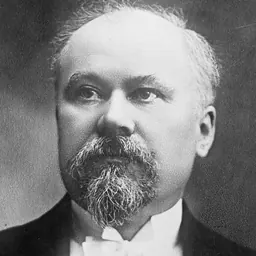

Related people
Same field, nearest in time

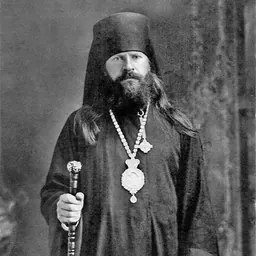
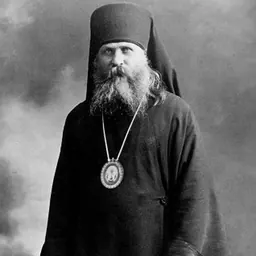



Contemporaries
People whose lives overlapped Ignatius Afram I Barsoum's


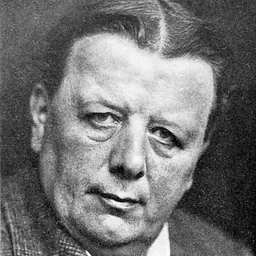

Frequently asked questions
Who was Ignatius Afram I Barsoum?
120th Syriac Orthodox Patriarch of Antioch (1887–1957)
When was Ignatius Afram I Barsoum born?
Ignatius Afram I Barsoum was born on 15 June 1887 in Mosul.
When did Ignatius Afram I Barsoum die?
Ignatius Afram I Barsoum died on 23 June 1957 in Homs.
What was Ignatius Afram I Barsoum's occupation?
Ignatius Afram I Barsoum was an eastern Orthodox priest, diplomat, bishop, priest, researcher and literary scholar.
What nationality was Ignatius Afram I Barsoum?
Ignatius Afram I Barsoum was Iraqi.
Sources & further reading
· Wikipedia: Ignatius Afram I Barsoum
Cite this page
APA: Biography.guide. (2026). Ignatius Afram I Barsoum. https://biography.guide/ignatius-afram-i-barsoum/
MLA: "Ignatius Afram I Barsoum." Biography.guide, https://biography.guide/ignatius-afram-i-barsoum/.
Chicago: "Ignatius Afram I Barsoum." Biography.guide. https://biography.guide/ignatius-afram-i-barsoum/.
Data last updated: 2026-09-20 · Spot an error? Report a correction.
Page generated 2026-09-27 05:26 UTC