
Ignacio "Nacho" López Bocanegra
Mexican photojournalist
About Ignacio "Nacho" López Bocanegra
Lived 1923 – 1986 (aged 62–63). Ignacio "Nacho" López Bocanegra was a Mexican photographer, photojournalist and filmmaker.
Nacho López (Ignacio López Bocanegra 1923–1986) was an important figure in the photojournalism of Mexico in the 20th century. Unlike the current of the time, he mostly rejected the creation of images that made Mexico exotic and preferred the photographing of the common people of Mexico City over that of the country's political and social elite. He is credited for being the first in Mexico to work on photographic series, which he called “photo-essays” meant for publication in weekly pictorial magazines in the country. About half of his photographs were events staged by López designed to capture the reactions of bystanders. Although he was an active photojournalist for less than a decade in the 1950s, he was influential to the generations of photojournalists that followed him, with a collection of about 33,000 images now at the federal photograph archive in Pachuca, Hidalgo.
Life Nacho López was born in Tampico, Tamaulipas, Mexico in 1923 with the full name of Ignacio López Bocanegra. He studied at the Instituto de Artes y Ciencias Cinemato-gráficas from 1945 to 1947. He learned photography principally from Manuel Álvarez Bravo along with influences from Francisco Monterde, Ricardo Razaetti, film director Alejandro Galindo and writer Xavier Villaurrutia .
He began his photography career at a time when most photographers were constrained by Mexico's politics and the desire to create a unified Mexican identity, something he learned to reject under the Alvaréz Bravo. His other interests included architecture, ethnography, 1960s jazz and contemporary dance, marrying two contemporary dancers during his lifetime.
He died suddenly in 1986 in Mexico City, leaving behind a daughter Citlali Lopez, an anthropologist. His early photographic work included subjects such as 15 de Septiembre Street, dancers, masks and carnivals as well as teachers’ strikes, Huichol and Cora peoples. At the time, picture magazines were the main source of cultural information and this work gave him the most creative flexibility. López wanted to be a movie producer and director and used his years as a photojournalist to illustrate some of his script ideas. For the next ten years he made a number of documentaries and award-winning commercials and short film called Los hombres cultures in 1972. He never completely stopped exhibiting his photographic work, participating in collective exhibitions of a group called “Los Interioristas” in the 1960s. In the 1980s, he taught photography at the Centro Universitario de Estudios Cinematograficos of the Universidad Nacional Autónoma de México and the Universidad Veracruzana, teaching many who would become part of the New Photojournalists movement. He rarely photographed celebrities and politicians with the notable exceptions of the inauguration of Rafael Ávila Camacho as governor of Puebla and the wedding of Anastasio Somoza in Nicaragua. This is out of a total of more than forty photo-essays on which he collaborated on during his entire career. When López studied and began his career from the late 1930s to early 1950s, there were two major trends in Mexican photography. The first was political, with the aim of creating a unified Mexican identity, minimizing regional and ethnic differences as well as making the political and social elite of the country look good. This was true for both newspaper and weekly magazines such as Hoy, Mañana and Siempre! which were the main means of diffusing cultural information at the time. Images of workers, indigenous and other common people were notable missing. Nacho Lopez studied under Alvarez Bravo along with another prominent photographer Héctor García in the 1940s, prompting them to take this anti-picturesque stance, but with even more social criticism. Another important influence for Lopez in this direction was from the Mayo Brothers from Spain. These influences helped him to develop a kind of “modernist objectivity” and ethics for his work with magazines in strong contrast to the emphasis on the exotic and political pressures.
López's work for the Mexico City press in the 1950s was radical. However, these photos were taken not to be seen by his subjects or those of their social class, but rather the middle-class readers of illustrated magazines. He worked to show the hidden underside of what was then being promoted as a “miraculous” modernization of Mexico.
About half of his photographic work, including photo essays, were situations created by the photographer, capturing images of passers-by as they engaged with it. The most famous photo of this type is “Mujer guapa parte plaza por Madero” (Beautiful woman leaves plaza on Madero Street) in 1953. This photo was the result of a woman with a very narrow waist, in reality Maty Huitron, an actress hired by López, walking in downtown Mexico City and in other settings so that Lopéz could photograph bystanders’ reactions to her. Another photograph of this type is called “La Venus se va de juerga” (Venus goes out to party) which is a series of photographs of a nude mannequin carried around by a workers and photographed in different locations and situations.
Some of López photo essays were compiled from his personal archive of previously unpublished images. An example of this method is "La Calle Lee" ("The Street Reads"), a photo-essay devoted to acts of reading people of various socioeconomic backgrounds and in various situations. According to historian John Mraz, his most critical photo-essay was called “Solo los humildes van al infierno,” (Only the humble go to hell) published in Siempre! in 1954, but who also eliminated some of the photos. The series “Valle de Mezquital” consists of thirty photographs of people and landscapes of the Mezquital Valley in the state of Hidalgo which showed both the beauty and the poverty of the area. One last photograph compilation he did was called “fotopoematicos,” loosely translated as “photo-poems”, which were poems and photos matched together. One of these fotopoematicos include “Sueno: Te tengo escondida en mi sueno remoto.”
Don’t just read it —
keep it.
Full-length biographies made to live with: read them, listen on the way to work, watch them tonight.
- E-book
- Audio
- Video
Instant download · yours to keep · every purchase keeps this site free
Important facts
People in Ignacio "Nacho" López Bocanegra's life
Named in this biography and alive at the same time






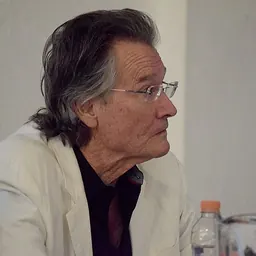
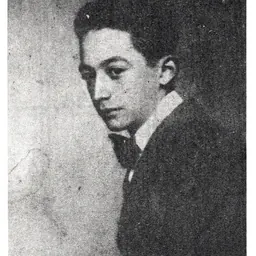
Related people
Same field, nearest in time
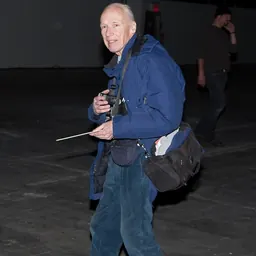




Contemporaries
People whose lives overlapped Ignacio "Nacho" López Bocanegra's
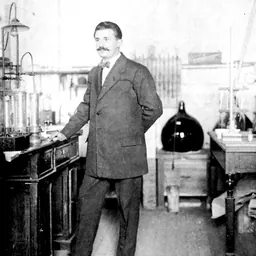
Frequently asked questions
Who was Ignacio "Nacho" López Bocanegra?
Mexican photojournalist (1923–1986)
When was Ignacio "Nacho" López Bocanegra born?
Ignacio "Nacho" López Bocanegra was born in 1923 in Tampico.
When did Ignacio "Nacho" López Bocanegra die?
Ignacio "Nacho" López Bocanegra died in 1986 in Mexico City.
What was Ignacio "Nacho" López Bocanegra's occupation?
Ignacio "Nacho" López Bocanegra was a photographer, photojournalist and filmmaker.
What nationality was Ignacio "Nacho" López Bocanegra?
Ignacio "Nacho" López Bocanegra was Mexican.
Sources & further reading
· Wikipedia: Ignacio "Nacho" López Bocanegra
Cite this page
APA: Biography.guide. (2026). Ignacio "Nacho" López Bocanegra. https://biography.guide/ignacio-nacho-lopez-bocanegra/
MLA: "Ignacio "Nacho" López Bocanegra." Biography.guide, https://biography.guide/ignacio-nacho-lopez-bocanegra/.
Chicago: "Ignacio "Nacho" López Bocanegra." Biography.guide. https://biography.guide/ignacio-nacho-lopez-bocanegra/.
Data last updated: 2026-09-20 · Spot an error? Report a correction.
Page generated 2026-09-27 05:11 UTC