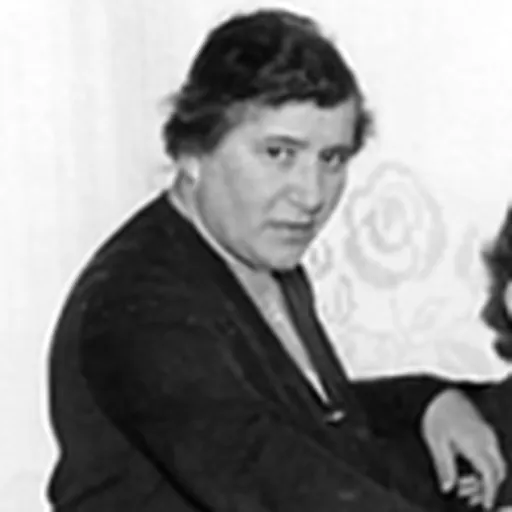
About Ida Ekman
Lived 1875 – 1942 (aged 66). Ida Ekman was a Finnish singer and opera singer.
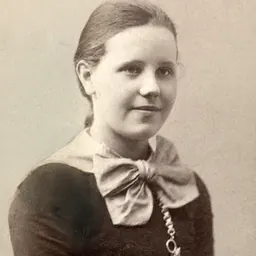
Ida Paulina Ekman (22 April 187514 April 1942) was a Finnish soprano singer. She was also referred to as Ida Morduch-Ekman. with whose career her own was closely connected. Sibelius regarded her as his favourite singer.
Biography Ida Paulina Morduch was born in Helsinki in 1875 to Jewish parents Israel Jacob Morduch (1833–76) and Eva Grünblatt (1833–1913). Her stepfather was Arye Leib Krapinsky (1832–1897). Vienna (under Pauline Lucca), Germany and Italy. She sang with the Nuremberg Opera for a time, but her greatest success came in lieder. In 1895, when she was 19, she married the pianist, composer and conductor Karl Ekman, a piano student of Ferruccio Busoni. She appeared in concert with Edvard Grieg. Ernst Mielck's song "Heimath" (1898) was dedicated to Ida Morduch-Ekman. She accompanied Robert Kajanus and Jean Sibelius on their European tour in the summer of 1900. She had earlier been instrumental in bringing Sibelius's music to the attention of Johannes Brahms, who died in 1897. She gave the first performance of "The Tryst", Op. 37, No. 5 in late January 1901 in Berlin. Her Sibelius dedications included three songs from Op. 36 – "Black Roses", "But my bird is long in homing" and "Tennis at Trianon"; "On a balcony by the sea", Op. 38, No. 2, and all the songs from Opp. 86, 88 and 90. Ekman performed the Op. 90 songs for the first time at her jubilee concerts in October 1917, at the end of her career. The Sibelius songs were "Was it a dream?", Op. 37, No. 4; "Longing", Op. 50, No. 2; "But my bird is long in homing", Op. 36, No. 2; "A maiden yonder sings", Op. 50, No. 3; "Black Roses", Op. 36, No. 1; "And I questioned then no further", Op. 17, No. 1; and "Tennis at Trianon", Op. 36, No. 3. She also recorded songs by Richard Strauss and arias from operas by Tchaikovsky and Handel. A selection of her recordings can be heard here.
She influenced Sibelius to orchestrate some of his songs originally written for voice and piano; these included "Spring is flying" (Op. 13, No. 4), "And I questioned then no further" (Op. 17, No. 1), "The Diamond on the March snow" (Op. 36, No. 6), "Sunrise" (Op. 37, No. 3), "On a balcony by the sea" (Op. 38, No. 2) and "Night" (Op. 38, No. 3), orchestrated between 1903 and 1914.
On 21 October 1905, she sang Hector Berlioz's Les nuits d'été as part of the seventh of Ferruccio Busoni's Orchesterabende in Berlin.
Ida and Karl Ekman had a son, Karl Ekman Jr (1895–1962),
Don’t just read it —
keep it.
Full-length biographies made to live with: read them, listen on the way to work, watch them tonight.
- E-book
- Audio
- Video
Instant download · yours to keep · every purchase keeps this site free
Important facts
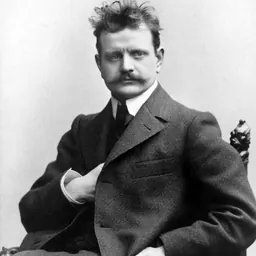
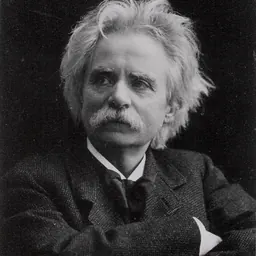
People in Ida Ekman's life
Named in this biography and alive at the same time




Related people
Same field, nearest in time



Contemporaries
People whose lives overlapped Ida Ekman's


Frequently asked questions
Who was Ida Ekman?
Finnish singer (1875–1942)
When was Ida Ekman born?
Ida Ekman was born on 22 April 1875 in Helsinki.
When did Ida Ekman die?
Ida Ekman died on 14 April 1942 in Helsinki.
What was Ida Ekman's occupation?
Ida Ekman was a singer and opera singer.
What nationality was Ida Ekman?
Ida Ekman was Finnish.
Sources & further reading
Cite this page
APA: Biography.guide. (2026). Ida Ekman. https://biography.guide/ida-ekman/
MLA: "Ida Ekman." Biography.guide, https://biography.guide/ida-ekman/.
Chicago: "Ida Ekman." Biography.guide. https://biography.guide/ida-ekman/.
Data last updated: 2026-09-21 · Spot an error? Report a correction.
Portrait: Wikimedia Commons · author & licence
Page generated 2026-09-27 04:58 UTC