
About Ibrahim Fathi
Lived 1930 – 2019 (aged 89). Ibrahim Fathi was a critic, writer and intellectual.
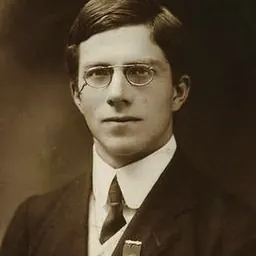
Ibrahim Fathi (; 1931 2019) was an Egyptian writer, intellectual and critic of the 1960s. He was called the dean of leftist intellectuals; he has numerous articles and papers published in various Arabic and foreign periodicals. In addition, Fathi was briefly a part of HADETU (Al-Haraka Al-Dimuqratiya Lil-Tahrir Al-Watani; Arabic for: The Democratic Movement for National Liberation). In addition, Najib Mahfouz praised his writing by criticizing his works.
Life He was one of the top high school students in Egypt, and he joined the Faculty of Medicine after moving to Cairo. He also translated and wrote several books, beginning by translating Defeat (original: al-hazīmah), the Arabic translation of a novel by Russian writer Alexander Fadeyev.
He also participated in founding The Writers of Tomorrow Society, which has played a prominent role in Egyptian cultural, intellectual and political life since the end of the 1960s. The Society published some literary publications, most notably The Face of Egypt poetry collection by Zayn al-Abideen Fuʼad, Entrance to Tagore Gardens by Izzat Amer and Thirsty for Seawater by Mohammed Ibrahim Mabrouk.
He also wrote the introduction of the story collection Papers of Love and Thirst by Mohammed Abdel Rahman and poetic works of Samir Abdel Baqi and Sayed Hijab upon being published by Dar Al Fikr Publishing.
Activity He began his career by translating Defeat (original: al-hazīmah), the Arabic translation of a novel by Russian writer Alexander Fadeyev, He cofounded the magazine Galerie 68,
He called himself "the sidewalk critic" as he used to meet writers outside the institutional framework where he kept up with their works of criticism.
He had a weekly seminar in Atelier Cairo in the 1980s and 1990s, where he discussed literary and intellectual works.
His book The Narrative World of Naguib Mahfouz received considerable attention for resisting the negative view of the left about Mahfouz’s writings. He also wrote important articles preaching about 1960s generation writers outside political organizations and was the first to present Ibrahim Aslan, Yahya Taher Abdullah, Mohamed el-Bisatie, Mohamed Hafez Rajab, Bahaa Taher and Gamal al-Ghitani.
Works
The Fictional World of Naguib Mahfouz Questions de sociologie (French for: Sociology in Question) by Pierre Bourdieu spending the last 10 years of his life between Cairo and London accompanied by his wife, Hanaa Suleiman.
Don’t just read it —
keep it.
Full-length biographies made to live with: read them, listen on the way to work, watch them tonight.
- E-book
- Audio
- Video
Instant download · yours to keep · every purchase keeps this site free
Important facts
People in Ibrahim Fathi's life
Named in this biography and alive at the same time





Related people
Same field, nearest in time



Contemporaries
People whose lives overlapped Ibrahim Fathi's



Frequently asked questions
Who was Ibrahim Fathi?
Egyptian writer and critic
When was Ibrahim Fathi born?
Ibrahim Fathi was born on 23 August 1930 in Cairo.
When did Ibrahim Fathi die?
Ibrahim Fathi died on 3 October 2019 in London.
What was Ibrahim Fathi's occupation?
Ibrahim Fathi was a critic, writer and intellectual.
What nationality was Ibrahim Fathi?
Ibrahim Fathi's recorded nationality: Kingdom of Egypt, Republic of Egypt, United Arab Republic.
Sources & further reading
Cite this page
APA: Biography.guide. (2026). Ibrahim Fathi. https://biography.guide/ibrahim-fathi/
MLA: "Ibrahim Fathi." Biography.guide, https://biography.guide/ibrahim-fathi/.
Chicago: "Ibrahim Fathi." Biography.guide. https://biography.guide/ibrahim-fathi/.
Data last updated: 2026-09-22 · Spot an error? Report a correction.
Page generated 2026-09-27 05:04 UTC