
About Ibn Asakir
Lived 1105 – 1176 (aged 70). Ibn Asakir was a muhaddith, islamic jurist, historian, theologian, legal scholar and traveler.
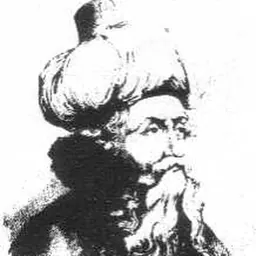
Ibn Asakir (; 1105–c. 1176) was a Syrian Sunni Islamic scholar, who was one of the most prominent and renowned experts on Hadith and Islamic history in the medieval era, He was the pre-eminent figure of the Asakir dynasty, whose family members occupied the most prominent positions as judges and scholars of the Shafi'i school of the Sunni law in Damascus for almost two centuries.
Name and Titles His full name was ‘Alī ibn al-Ḥasan ibn Hibat Allāh ibn `Abd Allāh, Thiqat al-Dīn, Abū al-Qasim, known as Ibn `Asakir al-Dimashqi al-Shafi`i al-Ash`ari (الحافظ المؤرخ علي بن الحسن بن ھبة اللہ بن عبداللہ بن الحسین الدمشقي الشافعي). The massive knowledge that he had gained, especially in hadith, law, and scriptural exegesis, earned him the title of Ḥāfiẓ (great memorizer), and he became the most learned and renowned scholar of his era.
Teaching He first began teaching hadith in the Umayyad mosque and was appointed as the hadith master there in Damascus, then in the Dar al-Sunna madrassa (which was then renamed Dar al-Hadith al-Ashrafiyya) built for him by Nur al-Din as a recognition for his high scholarly prestige and reward for his relentless jihad propaganda. Ibn Asakir shunned all types of material goods and refused the office of head preacher, only to strictly focus on writing, teaching, and worshipping.
As he was world famous, he also lectured in many famous learning centers:
Adh-Dhuhriyyu Al-Jaami' fi-l-Haththi 'alaa Hifzwi-l-'Ilm Dhammu-l-Malaahee Maddhu-t-Tawaadwu'i Wadhammu-l-Kibbr Majjlisaan minn Majaalis fee Masjidi-Dimashqq Majjmoo'a Feehi Khawmsi Sa'ati Rawhmatullaah Nafee Tashbiyah Swiffati-Allaah Ta'alaa
Students Ibn Asakir had a large number of students with some becoming world-class leading scholars in their times; amongst them:
Ibn al-Sam'ani Ibn al-Athir Ibn al-Dubaythi Izz al-Din ibn 'Abd al-Salam Ibn al-Salah Ibn Arabi Sultan Saladin (famous Islamic conqueror and ruler); was also his student and had a profound impact on Saladin's life to the point he would attend to Ibn Asakir's funeral.
Creed In his book entitled Tabyin Kadhib al-Muftari, he staunchly defends Imam Abu Hasan al-Ash'ari and his school. The following lines of poetry were included in his book's conclusion:
"I have chosen a doctrine that in no way resembles innovation But which successors faithfully took from predecessors. Those who are impartial declare my doctrine sound While those who criticize it have abandoned impartiality."
Death Ibn Asakir, the Imam of the hadith scholars and historians died in 24 January 571/1176 at the age of 71 and was buried at the Bab al-Saghir cemetery, next to his father and near to the grave of the Caliph Mu`awiya.
During Ibn Asakir's intense journeys for education to the east. It is said that he was the first scholar in Damascus to bring many copies of books that have never reached Damascus before in history. Due to so much knowledge and information he gathered, he manage to share these new pieces of valuable information in Umayyad Mosque and began teaching there. Due to this, Damascus would later grow into becoming the Islamic center and birth many great scholars. The city would eclipse both Islamic leading centers such as Baghdad and Nishapur after the Mongol invasion. Ibn Asakir's collection's would later spread all over the west impacting further Islamic knowledge.
Al-Qasim the son of Ibn Asakir would narrate two unique reports that prophesize his legacy.
Ibn al-Najjar said about him: "He was the Imam (leader) of all the hadith scholars of his time and the chief leader in memorization, meticulous verification, thorough knowledge in the sciences of hadith, trustworthiness, nobility, and excellence in writing and beautiful recitation. He is the seal of this science."
Al-Dhahabi said: "There was no one in his time equal to him in the command (sciences) of Hadith or more knowledge about Hadith transmitters (Ilm al-Rijal). Whoever reads his Ta'rikh realizes the man's pre-eminence." Al-Muwaafaqaat `alaa Shuyukhu-l-A'immati-th-Thiqaawt (72 volumes). `Awali Malik ibn Anas wa Dhayl 'alaa `Awali Malik ibn Anas (50 volumes). Manaaqib ash-Shubbaan (15 volumes). Al-Mu`jam (12 volumes) listing only the names of his shaykhs. Fadaa'il Ashaabi-l-Hadeeth (11 volumes): Fadl al-Jumu`a, Fadl Quraysh, Fada'il al-Siddiq, Fada'il Makka, Fada'il al-Madina, Fada'il Bayt al-Muqaddas, Fada'il `Ashura', Fada'il al-Muharram, Fada'il Sha`ban. Ghawraaw'ibb Malik (10 volumes). Al-Suba`iyyat (7 volumes), listing narrations with chains containing only seven narrators up to the Islamic prophet Muhammad. Yawmi-l-Mazeed (3 volumes). Al-Ishraf `ala Ma`rifatu-l-Atraf. Akhbar al-Awza`i. Al-Musalsalat. Bayan al-Wahm wa al-Takhlit fi Hadith al-Atit ("The Exposition of Error and Confusion in the Narration of the [Throne's] Groaning") At-Tawbah wa Sa'atu Rahmatullaah (Repentance and the Intensity of the Mercy of Allaah) Al-Arba'oon fee Manaaqib Ummahaati-l-Mu'mineen (R) (including Fadlu Ummu-l-Mu'mineen Aa'ishah (R)) Arba`un Hadithan fi al-Jihad. Arba`un Hadithan `an Arba`ina Shaykhan min Arba`ina Madeenah. Tabyin Kadhib al-Muftari fima Nusiba ila al-Imam Abi al-Hasan al-Ash'ari is a biography of Al-Ash'ari, relaying his ancestry, his conversion from Mu'tazilism and his subsequent "middle position" creed, i.e. Orthodox Sunni Islam.
Don’t just read it —
keep it.
Full-length biographies made to live with: read them, listen on the way to work, watch them tonight.
- E-book
- Audio
- Video
Instant download · yours to keep · every purchase keeps this site free
Important facts
People in Ibn Asakir's life
Named in this biography and alive at the same time
Related people
Same field, nearest in time





Contemporaries
People whose lives overlapped Ibn Asakir's




Frequently asked questions
Who was Ibn Asakir?
Islamic scholar and historian (1105–1176)
When was Ibn Asakir born?
Ibn Asakir was born on 13 September 1105 in Damascus.
When did Ibn Asakir die?
Ibn Asakir died on 25 January 1176 in Damascus.
What was Ibn Asakir's occupation?
Ibn Asakir was a muhaddith, islamic jurist, historian, theologian, legal scholar and traveler.
Sources & further reading
Cite this page
APA: Biography.guide. (2026). Ibn Asakir. https://biography.guide/ibn-asakir/
MLA: "Ibn Asakir." Biography.guide, https://biography.guide/ibn-asakir/.
Chicago: "Ibn Asakir." Biography.guide. https://biography.guide/ibn-asakir/.
Data last updated: 2026-09-22 · Spot an error? Report a correction.
Portrait: Wikimedia Commons · author & licence
Page generated 2026-09-27 05:03 UTC