
About Ian Macphee
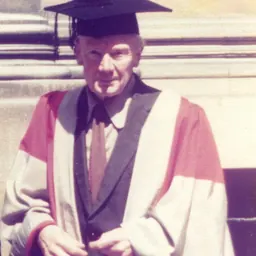
Born 1938. Ian Macphee is an Australian politician and lawyer.
Ian Malcolm Macphee AO (born 13 July 1938) is an Australian former politician. He held ministerial office in the Fraser government as Minister for Productivity (1976–1979), Immigration and Ethnic Affairs (1979–1982), and Minister for Employment and Youth Affairs (1982–1983). He was a member of the House of Representatives from 1974 to 1990, representing the Liberal Party. He was known for his contributions in developing Australian multiculturalism as immigration minister and for being one of the most prominent "small-l" liberals within the Liberal Party.
Early years Macphee was born in Sydney on 13 July 1938. His father was an electrical engineer who served with the Royal Australian Navy during World War II and later worked at the steelworks in Whyalla, South Australia.
Macphee was raised in the Sydney suburb of Neutral Bay, attending Neutral Bay Public School and North Sydney Technical College. After leaving school he worked as a clerk in the state Public Solicitor's Office while studying law part-time.
Early political involvement Macphee unsuccessfully sought Liberal preselection for the New South Wales seat of Berowra prior to the 1969 election, losing to Tom Hughes. He retained Balaclava for the Liberal Party at the 1974 federal election.
Immigration minister After three years in the productivity portfolio, Macphee replaced Michael MacKellar as the Minister for Immigration and Ethnic Affairs. Fraser and MacKellar had already adopted the recommendations of the Galbally report, which led to a new framework for migrant settlement. Macphee, with the full support of Fraser, continued the pace of reform, allowing large numbers of Indochinese refugees into Australia and he also introduced a family reunion scheme for these refugees. Macphee was assisted by receiving full bipartisan support from the shadow Immigration Minister Mick Young.
In the 1980 and the 1983 elections, Macphee retained his seat, defeating Labor candidate Chris Kennedy. Macphee helped oversee the introduction of the Special Broadcasting Service. He played an important role in the opening of the Australian Institute of Multicultural Affairs and he worked with the institute's director, Petro Georgiou, in overseeing government policy in this area.
Macphee later described his time as Immigration Minister as the most "exciting...[and] absolutely enriching" time during his period in parliament.
Macphee became a Cabinet minister in May 1982 when Fraser promoted him to Minister for Employment and Youth Affairs. Macphee defended the role of compulsory arbitration as a means to protect wages in spite of pressure from the more conservative elements within the party, and held this post until the Fraser Government was defeated in March 1983.
In opposition Upon this defeat, the Liberal Party became badly divided between the moderate (wet) and the conservative (dry) forces within the party. Macphee, as one of the party's leading moderates, became a strong supporter of Andrew Peacock, who defeated John Howard for the leadership of the party. Macphee remained in Shadow Cabinet, continuing as shadow Minister for Employment and Industrial Relations before he was given the job of shadow Minister for Foreign Affairs after the 1984 election. At this election, Macphee transferred to the newly created Division of Goldstein, essentially a reconfigured version of Balaclava.
In 1985 Howard successfully challenged for the leadership. Macphee stood for the deputy leadership that Howard had vacated, finishing runner-up to Neil Brown with 15 votes out of 70. Howard kept Macphee in the Shadow Cabinet, although he became Shadow Minister for Communications rather than retain his more prestigious former portfolio. Macphee kept this position until April 1987 when Howard sacked him.
In 1988 Howard commented that immigration from Asia should be slowed down. This position attracted criticism from the Labor Party but also many of his colleagues in the Liberal Party, especially from those who had implemented multicultural policies under Fraser. In order to expose Liberal divisions on the issue, Prime Minister Bob Hawke moved a motion in Parliament that race or ethnic origin should never be a criterion for becoming an immigrant to Australia. Macphee was one of the several Liberals who crossed the floor to support the motion and he received support from prominent Liberal Party politicians such as Nick Greiner and Jeff Kennett for his stand.
Preselection challenge Early in the following year, Macphee lost Liberal preselection in Goldstein—the real contest in what was then a safe Liberal seat—to academic David Kemp. This challenge was portrayed in the media as a "wet" versus "dry" battle, although some commentators, such as Gerard Henderson, argued that Macphee had simply lost the support of the Liberal members in his electorate. Macphee blamed his loss on his decision to oppose Howard's position on Asian immigration.
He conducted an independent review of a tender evaluation process undertaken by the Civil Aviation Authority (CAA), which reported in December 1992. The CAA's tender process was found to have been "in significant respects unsound and unfair".
Macphee, given his history with Howard, was critical of the Howard Government, stating that he was "consistently outraged" by the Government's position on refugee policy. He also publicly supported the 2005 "backbench revolt" of Petro Georgiou, Judi Moylan, Bruce Baird and Russell Broadbent, which saw the softening of some aspects of the legislation.
Macphee was also highly critical of the Howard Government's role in the 2003 invasion of Iraq.
In 2017 speaking as a former immigration minister, Macphee criticised the powers held by current Immigration Minister Peter Dutton as "unchecked and unjust."
In 2020, in response to a push from a local group, Voices of Goldstein, Macphee endorsed the push for an independent candidate in his old seat of Goldstein, saying "the Liberal party branches are now controlled by the Liberal party head office, which does not listen to ordinary voters... that's the state we've got to in our democracy which has been abused by power hungry people."
Don’t just read it —
keep it.
Full-length biographies made to live with: read them, listen on the way to work, watch them tonight.
- E-book
- Audio
- Video
Instant download · yours to keep · every purchase keeps this site free
Important facts
People in Ian Macphee's life
Named in this biography and alive at the same time




Related people
Same field, nearest in time






Contemporaries
People whose lives overlapped Ian Macphee's



Frequently asked questions
Who is Ian Macphee?
Australian politician
When was Ian Macphee born?
Ian Macphee was born on 13 July 1938 in Sydney.
What is Ian Macphee's occupation?
Ian Macphee is a politician and lawyer.
What nationality is Ian Macphee?
Ian Macphee is Australian.
Sources & further reading
Cite this page
APA: Biography.guide. (2026). Ian Macphee. https://biography.guide/ian-macphee/
MLA: "Ian Macphee." Biography.guide, https://biography.guide/ian-macphee/.
Chicago: "Ian Macphee." Biography.guide. https://biography.guide/ian-macphee/.
Data last updated: 2026-09-20 · Spot an error? Report a correction.
Page generated 2026-09-27 05:31 UTC