
About Ian Agol
Born 1970. Ian Agol is an American mathematician, topologist and university teacher, known for Freedman–He–Wang conjecture, Marden tameness conjecture and Virtually Haken conjecture.
Ian Agol (; born May 13, 1970) is an American mathematician who deals primarily with the topology of three-dimensional manifolds.
Education and career Agol graduated with B.S. in mathematics from the California Institute of Technology in 1992 and obtained his Ph.D. in 1998 from the University of California, San Diego. His faculty advisor was Michael Freedman and his thesis was Topology of Hyperbolic 3-Manifolds. He is a professor at the University of California, Berkeley and a former professor at the University of Illinois at Chicago.
Contributions In 2004, Agol proved the Marden tameness conjecture, a conjecture of Albert Marden. It states that a hyperbolic 3-manifold with finitely generated fundamental group is homeomorphic to the interior of a compact 3-manifold. The conjecture was also independently proven by Danny Calegari and David Gabai, and implies the Ahlfors measure conjecture. The conjecture (now theorem) states that every aspherical 3-manifold is finitely covered by a Haken manifold.
In 2022, he posted on the ArXiv a proof of Cameron Gordon's 1981 conjecture on knot theory saying that ribbon concordance forms a partial ordering on the set of knots.
Awards and honors Agol, Calegari, and Gabai received the 2009 Clay Research Award for their proof of the Marden tameness conjecture. In 2012 he became a fellow of the American Mathematical Society.
In 2013, Agol was awarded the Oswald Veblen Prize in Geometry, along with Daniel Wise.
In 2015, he was awarded the 2016 Breakthrough Prize in Mathematics, "for spectacular contributions to low dimensional topology and geometric group theory, including work on the solutions of the tameness, virtually Haken and virtual fibering conjectures."
In 2016, he was elected to the National Academy of Sciences.
Personal His identical twin brother, Eric Agol, is an astronomy professor at the University of Washington in Seattle.
Don’t just read it —
keep it.
Full-length biographies made to live with: read them, listen on the way to work, watch them tonight.
- E-book
- Audio
- Video
Instant download · yours to keep · every purchase keeps this site free
Important facts
People in Ian Agol's life
Named in this biography and alive at the same time
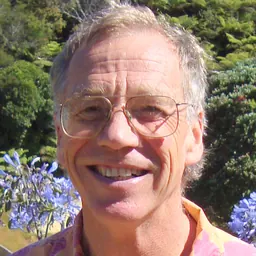
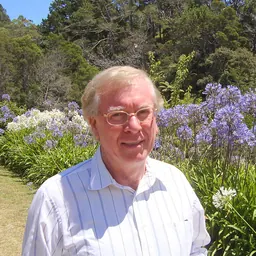
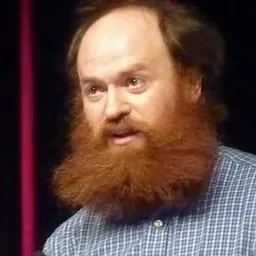
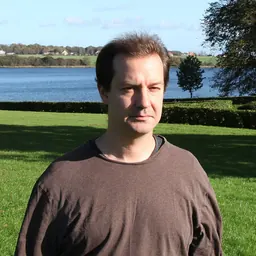




Related people
Same field, nearest in time

Contemporaries
People whose lives overlapped Ian Agol's

Frequently asked questions
Who is Ian Agol?
American mathematician
When was Ian Agol born?
Ian Agol was born on 13 May 1970 in Hollywood.
What is Ian Agol's occupation?
Ian Agol is a mathematician, topologist and university teacher.
What is Ian Agol known for?
Ian Agol is known for Freedman–He–Wang conjecture, Marden tameness conjecture, Virtually Haken conjecture and Wise's conjecture.
What nationality is Ian Agol?
Ian Agol is American.
Sources & further reading
Cite this page
APA: Biography.guide. (2026). Ian Agol. https://biography.guide/ian-agol/
MLA: "Ian Agol." Biography.guide, https://biography.guide/ian-agol/.
Chicago: "Ian Agol." Biography.guide. https://biography.guide/ian-agol/.
Data last updated: 2026-09-26 · Spot an error? Report a correction.
Page generated 2026-09-27 05:15 UTC