
I. T. A. Wallace-Johnson
Sierra Leonean trade unionist, journalist, activist, and politician
About I. T. A. Wallace-Johnson
Lived 1894 – 1965 (aged 70–71). I. T. A. Wallace-Johnson was a Sierra Leonean journalist, politician and trade unionist.
Isaac Theophilus Akunna Wallace-Johnson (1894 – 10 May 1965) was a Sierra Leonean, British West African workers' leader, journalist, activist and politician, recognised as one of West Africa’s most influential anti-colonial figures. A vocal advocate for workers' rights, press freedom, and African self-governance, he founded the West African Youth League (WAYL) and played a key role in Sierra Leone's labour movement.
His radical political stance, support for Marxist ideologies, and criticism of colonial rule led to repeated arrests, trials, and expulsions across British West Africa. Wallace-Johnson later transitioned from militant activism to mainstream politics, serving as a delegate at Sierra Leone’s independence talks in 1960.
Early life He was born to poor Creole parents in Wilberforce, British Sierra Leone, a village adjoining the capital city, Freetown. His father was a farmer, and his mother was a fish trader. Educated at Centenary Tabernacle Day School and later the United Methodist Collegiate School.
Forced to leave school after two years to support his family, he took a job at the customs department in 1913, where he was dismissed for organising a labour strike but reinstated a year later after the secretary of State for the Colonies assessed the case. In 1916, he joined the Carrier Corps as a clerk during World War I, serving in Cameroon, East Africa, and the Middle East as part of the British infantry. After being demobilized in 1920, he worked briefly as a municipal clerk in Freetown, where he claimed to have exposed corruption leading to the arrest of top officials.
After losing his municipal government job in 1926, Wallace-Johnson left Sierra Leone and worked as a sailor, though details of this period are unclear due to conflicting accounts. He either served on an American ocean liner or as an engine hand for Elder Dempster Lines, giving different versions in interviews and lectures. In 1929, he worked for a year in Sekondi as a clerk in a trading company.
All during this time, he wrote articles in the Aurora, a newspaper edited by H. C. Bankole-Bright.
Union organiser and Communist affiliations Wallace-Johnson joined the UK National Seamen’s Union and reportedly edited The Seafarer, a newsletter for black sailors. He is also believed to have joined the Communist Party, which actively recruited among sailors in port cities.
In 1930, he co-founded the Nigerian Workers' Union, the first trade union in Nigeria, alongside Communist-affiliated Frank Macauley. That same year, he represented the Sierra Leone Railway Workers’ Union at the International Trade Union Committee of Negro Workers in Hamburg, using the alias E. Richards. He was elected to the presidium and wrote for Negro Worker under another alias, Wal. Daniels, advocating for labour rights and self-organization. His involvement led colonial governments to ban the publication.
By 1933, Wallace-Johnson joined Negro Worker Aggrey did that we should not be satisfied with taking what we get or what has been given us but to use what we have been given to gain what we ought to have. I. T. A. Wallace-Johnson|Sierra Leone Weekly News, 30 April 1938.
West African Youth League in Sierra Leone
Less than three weeks after his arrival, Wallace-Johnson opened the first branch of the WAYL in Sierra Leone. The league was an instant success and greatly exceeded Wallace-Johnson's own expectations. The league organised public gatherings, established the African Standard newspaper, founded trade unions and contested local elections. Its program included equality for women, unity for people of all tribes, co-operation between the Sierra Leone colony and protectorate, and higher wages for workers.
According to , Wallace-Johnson's success with the WAYL was attributed to his "concrete militant efforts to publicize and combat the economic, political, and social dissatisfaction which by the late 1930s affected the lives of the majority of the population". Utilizing his previous experiences in the Gold Coast labour movement, Wallace-Johnson helped organise eight trade unions in Sierra Leone: the Public Works Workers' Union, the War Department Amalgamated Workers' Union, the Mabella Coaling Company Workers' Union, the King Tom Docks Workers' Union, the All Seamen's Union, the Bonthe Amalgamated Workers' Union, the Pepel and Marampa Miners Workers' Union, and the Motorists' Union. His opponents conceded that Wallace-Johnson's "considerable personal magnetism for the masses" were admirable qualities. According to , Wallace-Johnson's most important characteristic was his "truculence and his apparent willingness to thumb his nose at officialdom". In public, he spoke jokingly of colonial officials who most Sierra Leoneans feared. He casually referred to officials on a first-name basis and criticised them "in diatribes and invectives the like of which had never before been heard in the Freetown society where decorum and savoir faire were the hall-marks of the leaders". The conference was also attended by Lamina Sankoh and Harry Sawyerr representing Sierra Leone as well as other names including Hastings Banda, Jomo Kenyatta and Kwame Nkrumah to name a few.
In 1950, Wallace-Johnson merged the WAYL into the new National Council of the Colony of Sierra Leone. However, he left the group in 1954 to found the United Sierra Leone Progressive Party. He remodelled himself as a Pan-Africanist and de-emphasised his earlier radicalism. He co-founded the United National People's Party in 1956. The UPP became the official opposition after a general election in 1957. Wallace-Johnson was a delegate to the independence talks in London. He died in a car crash in Ghana on 10 May 1965. His wife died in early 2008 in Freetown.
Don’t just read it —
keep it.
Full-length biographies made to live with: read them, listen on the way to work, watch them tonight.
- E-book
- Audio
- Video
Instant download · yours to keep · every purchase keeps this site free
Important facts
People in I. T. A. Wallace-Johnson's life
Named in this biography and alive at the same time

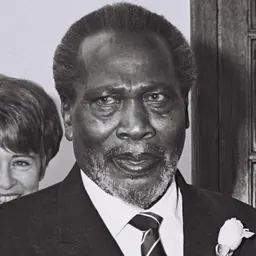
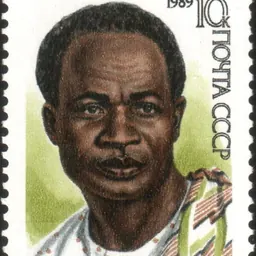

Related people
Same field, nearest in time



Contemporaries
People whose lives overlapped I. T. A. Wallace-Johnson's


Frequently asked questions
Who was I. T. A. Wallace-Johnson?
Sierra Leonean trade unionist, journalist, activist, and politician (1894–1965)
When was I. T. A. Wallace-Johnson born?
I. T. A. Wallace-Johnson was born in 1894 in Wilberforce.
When did I. T. A. Wallace-Johnson die?
I. T. A. Wallace-Johnson died on 10 May 1965 in Ghana.
What was I. T. A. Wallace-Johnson's occupation?
I. T. A. Wallace-Johnson was a journalist, politician and trade unionist.
What nationality was I. T. A. Wallace-Johnson?
I. T. A. Wallace-Johnson was Sierra Leonean.
Sources & further reading
· Wikipedia: I. T. A. Wallace-Johnson
· DBpedia: I. T. A. Wallace-Johnson
Cite this page
APA: Biography.guide. (2026). I. T. A. Wallace-Johnson. https://biography.guide/i-t-a-wallace-johnson/
MLA: "I. T. A. Wallace-Johnson." Biography.guide, https://biography.guide/i-t-a-wallace-johnson/.
Chicago: "I. T. A. Wallace-Johnson." Biography.guide. https://biography.guide/i-t-a-wallace-johnson/.
Data last updated: 2026-09-20 · Spot an error? Report a correction.
Page generated 2026-09-27 05:28 UTC