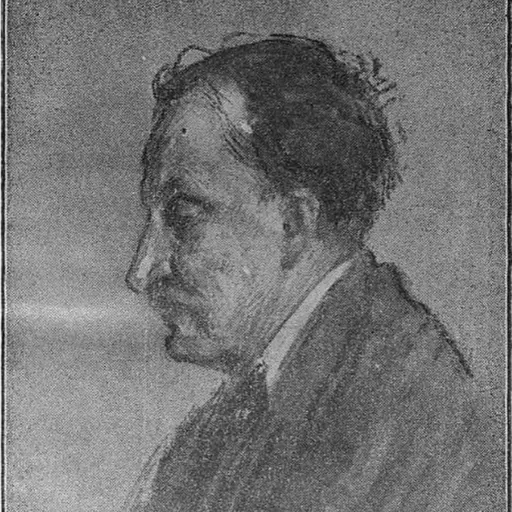
About I. Dragoslav
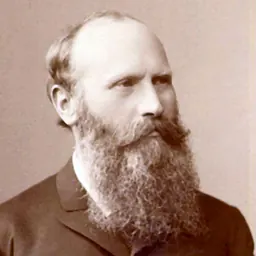
Lived 1875 – 1928 (aged 52). I. Dragoslav was a Romanian writer, journalist, children's writer and poet.
I. Dragoslav or Ion Dragoslav , pen names of Ion V. Ivaciuc or Ion Sumanariu Ivanciuc (; June 14, 1875 – May 5, 1928), was a Romanian writer. His presence on the local literary scene meant successive affiliations with various competing venues: having debuted with the traditionalist and nationalist magazine Sămănătorul, he later connected the eclectically conservative Convorbiri Critice group of Mihail Dragomirescu with the Romanian Symbolist movement leaders Alexandru Macedonski and Ion Minulescu, before moving close to the modernist trend of Eugen Lovinescu and his Sburătorul.
Noted for his contributions to fantasy, children's literature and memoir, Dragoslav defied inclusion in the genres illustrated by his public commitments. His work, often described as picturesque but mediocre, is primarily indebted to Ion Creangă, through him, to folkloric tradition.
Biography A native of Fălticeni to a peasant family, Largely an autodidact, he made his debut in writing in 1903, when his contribution was hosted by the leading traditionalist venue, Sămănătorul. During those years, he published his first volumes, the lyric poetry collection Pe drumul pribegiei ("On the Path of Wanderers"), followed by the short story volumes Facerea lumiii ("The Origin of the World") and La han la Trei ulcele ("At the Three Pitcher Inn").
I. Dragoslav's works made an impression on two rival literary men, Mihail Dragomirescu and Alexandru Macedonski. Also before 1910, Dragoslav began contributing to Covorbiri Critice magazine and attending its club, which Dragomirescu was hosting at his Bucharest home. Previously a follower of the conservative literary society Junimea, Dragomirescu had been directing his efforts toward assembling together some of his former colleagues, alongside writers from traditionalist and neo-romantic groups like Făt Frumos (Emil Gârleanu, Anastasie Mândru, Corneliu Moldovanu and D. Nanu among them), and more eclectic ones—Panait Cerna, Gheorghe Vâlsan, as well as Dragoslav himself. In addition to these authors, people who frequented Dragomirescu's circle before its 1910 disestablishment included Symbolist figures (Minulescu, Dimitrie Anghel, Al. T. Stamatiad) or writers of various other orientations (Cincinat Pavelescu, Liviu Rebreanu), joined by visual artists Iosif Iser, Costin Petrescu and George Talaz. Călinescu also notes that, although he boasted a rustic lifestyle, Dragoslav's townhouse was "far from a miserable mud hut", and that Dragoslav raised ducks, geese and pigs. In 1910, he put out the collections Novele ("Novellas") and Povestiri alese ("Selected Stories"), followed in 1911 by Povestea trăznetului ("The Story of Thunder"). That same year, the writer was among those who welcomed Macedonski back from his extended trip to France (itself caused by literary scandals). He viewed the event as an opportunity for restoring Macedonski's prestige, and, in a Rampa article, stated: " 'Macedonski has arrived'; this word is on everyone's lips and sounds as if the man has risen from the dead." Together with Stamatiad and Mândru, Dragoslav was instrumental in bridging the gap between Macedonski's Literatorul and Convorbiri Literare, successfully urging Dragomirescu to give his colleague a positive review.
His volumes followed each other in quick succession: Flori și povești ("Flowers and Stories") in 1911; Volintirii ("The Volunteers") and Împăratul Rogojină ("Emperor Doormat") in 1912; Povești de sărbători ("Holiday Stories") in 1913; Povești de Crăciun ("Christmas Stories"), in 1914. However, as the Central Powers occupied the Romanian south and the Romanian front drew close to Fălticeni, Dragoslav reportedly spend much time at the local high school, reading to wounded soldiers.
During the early interwar period, Dragoslav affiliated with Eugen Lovinescu's Sburătorul modernist club, Călinescu deemed Facerea lumii, Dragoslav's main work in the fantasy genre, a "sort of glib fairy tale." Nevertheless, Călinescu saw one of Trivale's major mistakes as being his "excessive leniency" for both Dragoslav and comediographer Alexandru Cazaban.
Dragoslav was identified by Călinescu as the main source of inspiration for Pitarcă, a secondary character in Mihail Sorbul's novel Mângâierile panterei ("The Panther's Caresses"). His appearance is also recorded in a portrait drawn by Iosif Iser.
Don’t just read it —
keep it.
Full-length biographies made to live with: read them, listen on the way to work, watch them tonight.
- E-book
- Audio
- Video
Instant download · yours to keep · every purchase keeps this site free
Important facts
People in I. Dragoslav's life
Named in this biography and alive at the same time




Related people
Same field, nearest in time



Contemporaries
People whose lives overlapped I. Dragoslav's

Frequently asked questions
Who was I. Dragoslav?
Romanian writer (1875-1928)
When was I. Dragoslav born?
I. Dragoslav was born on 14 June 1875 in Fălticeni.
When did I. Dragoslav die?
I. Dragoslav died on 5 May 1928 in Fălticeni.
What was I. Dragoslav's occupation?
I. Dragoslav was a writer, journalist, children's writer and poet.
What nationality was I. Dragoslav?
I. Dragoslav was Romanian.
Sources & further reading
Cite this page
APA: Biography.guide. (2026). I. Dragoslav. https://biography.guide/i-dragoslav/
MLA: "I. Dragoslav." Biography.guide, https://biography.guide/i-dragoslav/.
Chicago: "I. Dragoslav." Biography.guide. https://biography.guide/i-dragoslav/.
Data last updated: 2026-09-22 · Spot an error? Report a correction.
Portrait: Wikimedia Commons · author & licence
Page generated 2026-09-27 05:02 UTC