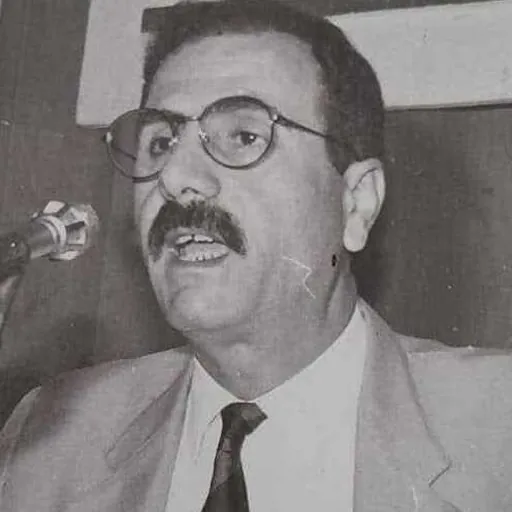
About Hussein al-Sharaa
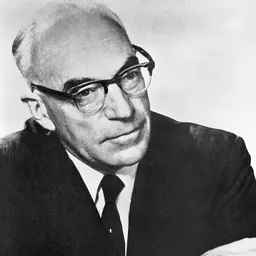
Born 1943. Hussein al-Sharaa is a Syrian writer and economist.
Hussein Ali al-Sharaa (born 1946) is a Syrian economist, researcher, and writer. He is the father of the current President of Syria, Ahmed al-Sharaa.
Born into a family in Daraa, Syrian Republic, he graduated from the University of Baghdad with a degree in economics and later earned a Ph.D. In 1961, he joined protests against the Baathists following their coup against the United Arab Republic and the Arab Socialist Ba'ath party coups in 1963. His family was displaced during the 1967 Israeli occupation. He was forced to leave Syria due to the worsening political and security situation and fled to Jordan, where he was imprisoned again. He was eventually given the choice to travel to either Saudi Arabia or Iraq, and he chose Iraq, which was then under President Abdul Salam Arif.
Al-Sharaa escaped from prison in 1971 to pursue his higher studies in Iraq. He later went to Jordan to cooperate with the Palestinian fedayeen. After returning to Syria in the 1970s, he served in the ministry of petroleum under Hafez al-Assad before eventually moving to Saudi Arabia with his family. He remained in the Syrian oil sector until 1979, when he was hired by the Saudi Ministry of Petroleum as an economic researcher. He returned to Syria in 1989 with his family and was briefly imprisoned again before serving as an advisor to the ministry of petroleum, a position he eventually left. After the Syrian civil war broke out in March 2011, al-Sharaa resettled to Egypt.
After the fall of the Assad regime, he criticized the caretaker government’s plan to privatize public institutions but later defended it, saying it had a clear vision for Syria’s future without outside influence. He also condemned Israel after an attack in Damascus and warned that Syria would not remain silent. In June 2025, al-Sharaa said that Benjamin Netanyahu underestimated Iran’s strength and referred to the destruction in occupied Palestinian cities.
Early life and education Hussein Ali al-Sharaa was born in 1946 in Daraa. His father, Ali al-Sharaa, was born in Fiq, Golan Heights, and was a landowner who owned most of Fiq. Hussein al-Sharaa’s grandfather, Muhammad ibn Khalid al-Sharaa, was a key participant in the Zoya Revolution against French rule. His uncle, Talib Abdul Majeed al-Sharaa, was one of the most prominent leaders of the Zawiya Revolution. Both were involved in resistance against French colonialism and were sentenced to death in absentia; however, the sentences were not carried out.
He studied in the Kuttab during his childhood and learned arithmetic operations.
Later years
Rebellion and Imprisonment In 1961, he joined protests against the Baathists after their coup against the United Arab Republic, and he later joined demonstrations against the Arab Socialist Ba'ath party coups in 1963.
After returning to school with his classmates, al-Sharaa was threatened by the principal with severe punishment.
Al-Sharaa escaped from prison in 1971 to complete his higher studies in Iraq. During this time, he traveled to Jordan to co-operate with the Palestinian fedayeen. where he wrote extensively on the subject and published several books.
Later life and public affairs He returned to Syria in 1989 with his family. After being rejected for a government position, he worked as an English teacher in Daraa and was imprisoned again before later serving as an advisor to the ministry of petroleum, a position he eventually left. It is said that his family owned a shop in the upscale Mezzeh district of Damascus. After the Syrian civil war broke out in March 2011, al-Sharaa settled to Egypt. He later defended the caretaker government, saying that they had "a clear vision and a roadmap for Syria’s future, independent of external influence." In June 2025, al-Sharaa commented on the Twelve-Day War, saying that "this reckless Benjamin Netanyahu thinks Iran is just Hezbollah and Hamas. He doesn’t understand that Iran is a strong state with tremendous capabilities," and added that "we’re seeing the scale of destruction in the occupied Palestinian cities." During the interview, he said: "When I was studying in Baghdad, I found the Shawaya to be much kinder and more civilized than the monastery." He added that the monastery is characterized by noise and loud voices. He also said that the people of Abu Kamal are better than them. He spoke about the presence of a sense of superiority among some people in major cities toward rural residents, saying that the people of the Levant and Aleppo have a superior view and consider themselves to be above others.
Hussein al-Sharaa said in an interview on the Al-Sharq podcast that "Hafez al-Assad was very good and growth reached 7 percent," adding, "This was our rule for 30 years, and Bashar for 25 years." He pointed out that "periods of economic growth were clear" during Hafez al-Assad’s rule, but noted that "corruption, familialism, and personalization appeared and then infiltrated the system." this fact is denied by MENA Research Center. In August 2025, Hussein said on SyriaTV that the Al-Sharaa family in Daraa, to which former Syrian Vice President Farouk al-Sharaa belongs, has no direct kinship ties, but he pointed to an ancient lineage dating back to the 1930s. Hussein is married to Widad al-Khaled, who is the mother of Ahmed al-Sharaa.
Books He has published numerous books in Arabic on regional economic development, particularly focusing on natural resources and their potential contribution to education, agriculture, and military advancement. His first book was Oil and Comprehensive Development in the Arab World (1983). His second book was Economic Evaluation and the Future of Development in Saudi Arabia (1983). His third book was The Saudi Economy in the Process of Basic Infrastructure and Capacity Building (1984). His fourth book was OPEC 1960–1985: Major Transformations and Persistent Challenges (1987).
Don’t just read it —
keep it.
Full-length biographies made to live with: read them, listen on the way to work, watch them tonight.
- E-book
- Audio
- Video
Instant download · yours to keep · every purchase keeps this site free
Important facts
People in Hussein al-Sharaa's life
Named in this biography and alive at the same time




Related people
Same field, nearest in time

Contemporaries
People whose lives overlapped Hussein al-Sharaa's


Frequently asked questions
Who is Hussein al-Sharaa?
Syrian economist, researcher, and writer (born 1946)
When was Hussein al-Sharaa born?
Hussein al-Sharaa was born in 1943 in Fiq.
What is Hussein al-Sharaa's occupation?
Hussein al-Sharaa is a writer and economist.
What nationality is Hussein al-Sharaa?
Hussein al-Sharaa is Syrian.
Sources & further reading
· Wikipedia: Hussein al-Sharaa
Cite this page
APA: Biography.guide. (2026). Hussein al-Sharaa. https://biography.guide/hussein-al-sharaa/
MLA: "Hussein al-Sharaa." Biography.guide, https://biography.guide/hussein-al-sharaa/.
Chicago: "Hussein al-Sharaa." Biography.guide. https://biography.guide/hussein-al-sharaa/.
Data last updated: 2026-09-22 · Spot an error? Report a correction.
Portrait: Wikimedia Commons · author & licence
Page generated 2026-09-27 05:01 UTC