
Hugo Willrich
German historian and teacher
About Hugo Willrich
Lived 1867 – 1950 (aged 82). Hugo Willrich was a German historian, university teacher, secondary school teacher, historian of classical antiquity and teacher.
Hugo Willrich (August 20, 1867 – June 20, 1950) was a German teacher and classical historian of the Hellenistic era and Roman era. He was also a scholar of Hellenistic Judaism, albeit from a secular German Protestant perspective. He was born in Pomerania, but spent most of his life living in Göttingen. He eventually became a firm antisemite who advocated harsh measures against German Jews, and was active in organizing local antisemitic groups in Göttingen.
Biography Hugo Willrich was born on August 20, 1867, in Kummerow in Landkreis Regenwalde in Pomerania, then part of the North German Confederation. He was educated in Greifenberg (modern day Gryfice) and passed his university examination there. He studied classical philology and history in Berlin at first, and from 1887 at the University of Göttingen. Among others, he studied under the classicist Ulrich von Wilamowitz-Moellendorff. During his studies he joined the Verein Deutscher Studenten, a German fraternity organization. He took a teaching examination in 1890 and performed military service; afterward, Willrich received his doctorate in 1893. His thesis was on the Catilinarian conspiracy (~63 BCE) in the Roman Republic. He received his habilitation in 1896 in ancient history.
In the years that followed, he taught at the University of Göttingen as a privatdozent, but was not offered a professorship. In 1904 he went into teaching at the Gymnasium (loosely equivalent to American high school) level and taught as an Oberlehrer (senior teacher) at the Royal Gymnasium in Göttingen (now known as the ). In 1914, Willrich's military status was reactivated as a reserve lieutenant for service in World War I; he was wounded in Flanders in 1914. He still occasionally did teaching at the university, and was made an honorary professor in 1917. After Professor Georg Busolt's death, he filled in for him in 1920 and 1921 at the university. At the Gymnasium, he received a promotion to Oberstudienrat in 1925. Willrich retired in 1931, and died in 1950.
Willrich had three children, two daughters and a son. His son, Wolfgang Willrich, was an artist friendly with the Nazis and in agreement with their views on art. He helped stage the Degenerate Art exhibition and attacked modern art. Wolfgang predeceased his father, dying in 1948. Conversely, his daughter Ingeborg Willrich opposed the Nazis. She voted "no" in the 1934 German referendum. She worked as a public school teacher but refused to take the Hitler Oath required for all civil servants, and was dismissed from her position without entitlement to a pension in December 1934. She was forced to work as a private instructor instead until 1937, when her continued refusal to take the oath resulted in this being denied to her as well. She was only able to find petty work afterward.
Works
Willrich published various books and journal articles. He also wrote entries in the encyclopedia Realencyclopädie der classischen Altertumswissenschaft (also known as Pauly's). His work includes:
De conjurationis Catilinariae fontibus. Göttingen 1893 (Dissertation) Juden und Griechen vor der makkabäischen Erhebung. Göttingen 1895 Eine neue Inschrift zur Geschichte des ersten Mithradatischen Krieges. In: Hermes Band 33 (1898), p. 657–661 Wer liess König Philipp von Makedonien ermorden? In: Hermes Band 34 (1899), p. 174–182 Krateros und der Grabherr des Alexandersarkophags von Sidon. In: Hermes Band 34 (1899), p. 231–250 Alabanda und Rom zur Zeit des ersten Krieges gegen Mithradates. In: Hermes Band 34 (1899), p. 305–311 Judaica. Forschungen zur hellenistisch-jüdischen Geschichte und Litteratur. Göttingen 1900 Caligula. In: Klio. Beiträge zur alten Geschichte. Band 3 (1903) Der historische Kern des III. Makkabaeerbuches. In: Hermes Band 39 (1904), p. 244–258 Livia. Leipzig 1911 Die Welfenherrschaft in Hannover. Göttingen 1920 Die Entstehung des Antisemitismus. München 1921 Urkundenfälschung in der hellenistisch-jüdischen Literatur. Göttingen 1924 Das Haus des Herodes zwischen Jerusalem und Rom. Heidelberg 1929 Perikles. Göttingen 1936 Cicero und Cäsar. Göttingen 1944
Don’t just read it —
keep it.
Full-length biographies made to live with: read them, listen on the way to work, watch them tonight.
- E-book
- Audio
- Video
Instant download · yours to keep · every purchase keeps this site free
Important facts
People in Hugo Willrich's life
Named in this biography and alive at the same time
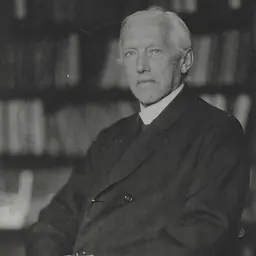


Related people
Same field, nearest in time
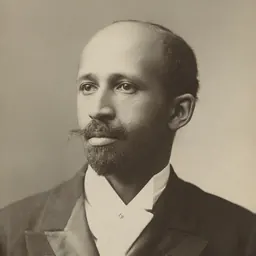

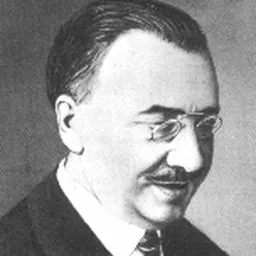
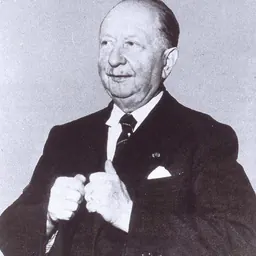
Contemporaries
People whose lives overlapped Hugo Willrich's


Frequently asked questions
Who was Hugo Willrich?
German historian and teacher (1867–1950)
When was Hugo Willrich born?
Hugo Willrich was born on 20 August 1867 in Komorowo.
When did Hugo Willrich die?
Hugo Willrich died on 20 June 1950 in Göttingen.
What was Hugo Willrich's occupation?
Hugo Willrich was a historian, university teacher, secondary school teacher, historian of classical antiquity and teacher.
What nationality was Hugo Willrich?
Hugo Willrich was German.
Sources & further reading
Cite this page
APA: Biography.guide. (2026). Hugo Willrich. https://biography.guide/hugo-willrich/
MLA: "Hugo Willrich." Biography.guide, https://biography.guide/hugo-willrich/.
Chicago: "Hugo Willrich." Biography.guide. https://biography.guide/hugo-willrich/.
Data last updated: 2026-09-20 · Spot an error? Report a correction.
Page generated 2026-09-27 05:16 UTC