
Hugo Helbing
German art dealer and auctioneer, dispossessed and murdered by Nazis
About Hugo Helbing
Lived 1863 – 1938 (aged 75). Hugo Helbing was an art dealer, auctioneer, merchant, art historian, publisher and antiquarian bookseller.
Hugo Helbing (23 April 1863 – 30 November 1938) was a German art dealer and auctioneer.
The Helbing art shop Born in Munich, Helbing was a son of Sigmund Helbing, who ran an antique dealer in Munich from the middle of the 19th century. His sons also became active in this field: Helbing had a respected coin shop in Munich, his brother Ludwig opened an antique shop in Nuremberg, and Hugo Helbing founded the Kunsthandlung Hugo Helbing in 1885.
From 1906, Helbing ran the company together with other co-owners, including his son Fritz from his first marriage. The internationally renowned house had branches in Berlin and Frankfurt, and Helbing was appointed to the rank of Kommerzienrat. Helbing's auctions, which lasted several days and were held in collaboration with Paul Cassirer from 1916 until the 1920s, were considered social events and were "a piece of cultural history of our century". Between 1930 and 1935, the Helbing auction house published 123 auction catalogues, making it one of the largest auction houses of the time. which had been organised by Helbing together with the art dealer Alfred Flechtheim and the Galerie Paffrath, was broken off by the Sturmabteilung. The gallery owner was forced into this demolition because of Helbing's and Flechtheim's Jewish origins, and the works Degenerate Art were confiscated. The writes: "Such disturbances against art dealers were common after the National Socialists came to power. Actions like the one at the Paffrath Gallery were carried out by the Kampfbund für deutsche Kultur under the leadership of Alfred Rosenberg". Flechtheim himself was not present when the auction was cancelled; he had "literally collapsed" when he heard about it. He left Germany in October 1933 and died in London four years later.
In 1935, Helbing's membership in the was revoked because he was Jewish, and with it his auction licence expired. Helbing had tried to prove the great economic importance of his company by listing his sales with the Bavarian State Ministry, Department for Trade, Industry and Commerce, but the Reich Chamber refused to grant him a further auction licence "in view of auction regulations". Helbing himself was beaten up on the same day in his residence in front of his wife during the riots of the Kristallnacht. He was taken by wheelbarrow to the , but any medical help came too late. On 30 November 1938, the 75-year-old succumbed to his severe injuries at home. His son Fritz and his third wife Doris, née Goldstein, were deported in 1942 or 1943 to the extermination camp Auschwitz and murdered.
After Helbing's Death From 1936 onwards, the art market in Munich was dominated by NSDAP member Adolf Weinmüller, who as chairman of the Bundes deutscher Kunst- und Antiquitätenhändler was partly responsible for Helbing no longer being able to work in the art trade and as an auctioneer. He had previously been actively involved in the Gesetz über das Versteigerungsgewerbe (Law on the Auction Trade), which aimed to systematically eliminate Jewish art dealers and antiquarians.
In 1956, Helbing's widow Lydia stated for the Wiedergutmachung that the "trustee" Heiss had also had art objects that had been in the family's possession transferred from the private flat to the art shop. At the reading of the will, Heiss had declared that the company would be closed down within a few hours on behalf of the NSDAP if Lydia Helbing and her son Fritz accepted the inheritance. for . In 1939 and 1940, he sold Helbing's properties in Munich. He sold art objects, also from Helbing's private property, to Martin Bormann, among others, such as the painting Straße am Golf von Neapel by Oswald Achenbach for the Residenzschloss Posen intended as "Führer Residence". In 1957, Helbing's heirs were awarded damages of DM 5,000 for the paintings taken from their private property on the basis of a settlement.
The discovery of 187 auction catalogues from Helbing's auction house became public in 2021. The catalogues, which cover the years 1896 to 1937 and are annotated, are of importance among others for the provenance research because of the significance of the Kunsthandlung Hugo Helbing.
Don’t just read it —
keep it.
Full-length biographies made to live with: read them, listen on the way to work, watch them tonight.
- E-book
- Audio
- Video
Instant download · yours to keep · every purchase keeps this site free
Important facts
People in Hugo Helbing's life
Named in this biography and alive at the same time
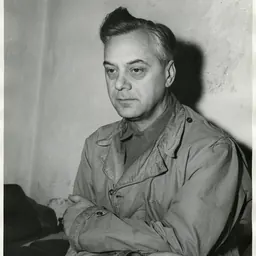
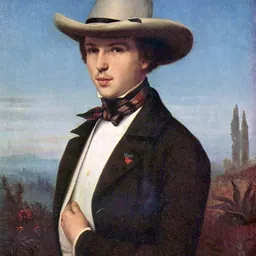

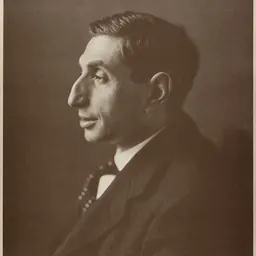


Related people
Same field, nearest in time
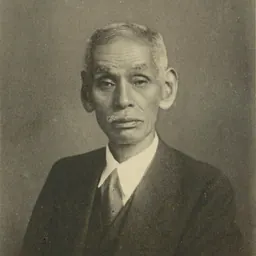

Contemporaries
People whose lives overlapped Hugo Helbing's



Frequently asked questions
Who was Hugo Helbing?
German art dealer and auctioneer, dispossessed and murdered by Nazis (1863-1938)
When was Hugo Helbing born?
Hugo Helbing was born on 23 April 1863 in Munich.
When did Hugo Helbing die?
Hugo Helbing died on 30 November 1938 in Munich.
What was Hugo Helbing's occupation?
Hugo Helbing was an art dealer, auctioneer, merchant, art historian, publisher and antiquarian bookseller.
What nationality was Hugo Helbing?
Hugo Helbing's recorded nationality: German Reich.
Sources & further reading
Cite this page
APA: Biography.guide. (2026). Hugo Helbing. https://biography.guide/hugo-helbing/
MLA: "Hugo Helbing." Biography.guide, https://biography.guide/hugo-helbing/.
Chicago: "Hugo Helbing." Biography.guide. https://biography.guide/hugo-helbing/.
Data last updated: 2026-09-20 · Spot an error? Report a correction.
Page generated 2026-09-27 05:21 UTC