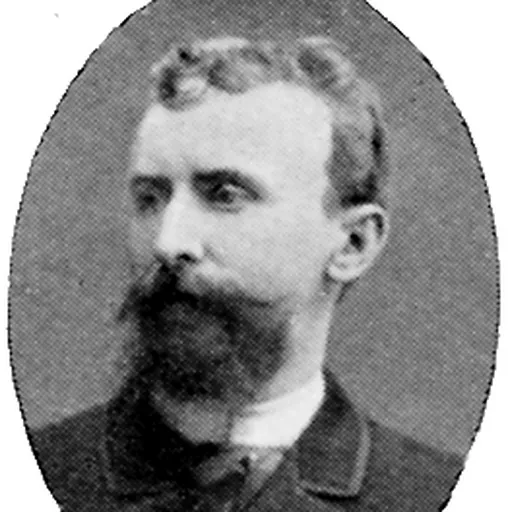
About Hugo Birger
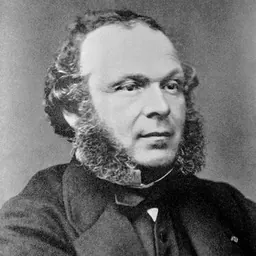
Lived 1854 – 1887 (aged 33). Hugo Birger was a Swedish painter.
As a 13-year-old, Birger began his education at the Royal Swedish Academy of Fine Arts' preparatory school, which was the preparatory education for the academy. Birger spent three years drawing on "Principen". In 1870, he was then accepted as a student at the Royal Swedish Academy of Fine Arts, where he stayed for 6.5 years. Birger was weak early on from rheumatism, so he needed more time for his studies. Among his peers at the academy were Carl Larsson, Per Ekström and Ernst Josephson . It was here at the Royal Swedish Academy of Fine Arts, led by Professor Georg von Rosen, that Birger and his schoolmates laid the foundation for their talents and commitment to art. In the last year he received a gold medal for his painting "Syndafallet". It was praised for its strong colors and shininess.
To Paris Birger moved to Paris in 1877, and spent the summer of 1878 in Barbizon with Carl Larsson and Carl Skånberg. It was here that he began to call himself Hugo Birger. When the painter Ernst Josephson moved from Rome to Paris, Birger became a resident with him on Rue Gabrielle(Gothenburg Museum of Art) in Montmartre where Josephson had taken over August Hagborg's studio house. There, Birger painted small pictures of the quiet street, the small corner of the garden or interior from the studio, preferably with elegant young ladies.
He debuted at the Paris Salon the following year with Rue Gabrielle (1879, now in the Gothenburg Museum of Art). From 1881 to 1882, Birger visited Spain and Northern Africa. His largest painting from Spain was La feria ("The Feast Day", 1882, Gothenburg Museum of Art), which depicts a breakfast in Granada.
In 1885, Birger became one of the most ardent among the Opponenterna, a group of artists who demanded reform of the Royal Swedish Academy of Fine Arts . Ernst Josephson and Carl Larsson led the work against the academy. At the "Opponenterna's exhibition" in Blanch's art salon in Stockholm on September 15, 1885, Birger contributed several paintings. In 1886, the Artists' Union was formed as a counter-movement to the strict Academy of Arts.
the Big Painting Despite this enthusiasm in Birger's life, he grew weaker and weaker. At times, Birger had severe ailments from his rheumatism. He wanted to fight on and took on the challenge that came to mean the most to him as an artist "Scandinavian artists' breakfast in Café Ledoyen". The work took just over 4 months to complete. The painting shows the Nordic artists' celebratory breakfast on the day of the opening (Vernissage), the day when the Salon opens and when the compatriots used to gather in Ledoyen's restaurant on the Champs Elysées . Birger had high hopes of finally receiving a prize with this painting. The painting was hung above a door in the salon and the jury's prize instead went to Richard Bergh's "Portrait of my wife". "Breakfast" then came to the Artists' Union's first exhibition in Stockholm in 1886, and at its opening Birger himself was also present. It was his last visit to Stockholm.
Birger's paintings were fairly well and fairly valued by the Swedish critics. Handelstidningen's critic admitted that "Breakfast at Ledoyen" was one of the "mature and most beautiful works the artist produced".
During the following winter in Paris, he was unable to work due to illness. In December 1886, Birger's doctor and friend Axel Munthe did an examination of Birger where the earlier fears came true. In addition to rheumatism, he had pulmonary tuberculosis that had been lurking for a long time, which turned into so-called galloping pneumonia . When the summer was in, Munthe brought him to Sweden by steamboat from Lübeck . Three days after arriving in Helsingborg, Hugo Birger died at Hotel Mollberg on June 17, 1887. He was then 33 years old and his artistic activity had only spanned a decade.
Hugo Birger is buried in the New cemetery in Helsingborg, near the chapel. The tombstone was previously decorated with a relief made by the good friend Carl Larsson . Due to an increased number of thefts in the area, the original relief was removed in 2008 and is now replaced by a copy.
Gallery
Don’t just read it —
keep it.
Full-length biographies made to live with: read them, listen on the way to work, watch them tonight.
- E-book
- Audio
- Video
Instant download · yours to keep · every purchase keeps this site free
Important facts
People in Hugo Birger's life
Named in this biography and alive at the same time



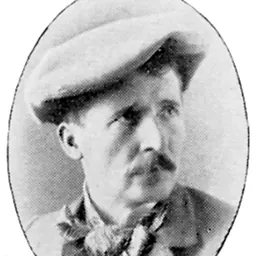
Related people
Same field, nearest in time
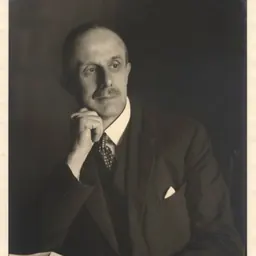
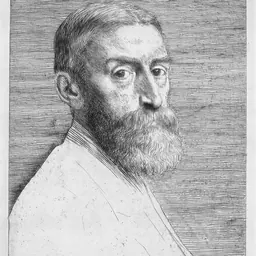
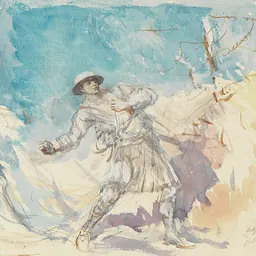
Contemporaries
People whose lives overlapped Hugo Birger's


Frequently asked questions
Who was Hugo Birger?
Swedish artist (1854-1887)
When was Hugo Birger born?
Hugo Birger was born on 12 January 1854 in Stockholm.
When did Hugo Birger die?
Hugo Birger died on 17 June 1887 in Helsingborg.
What was Hugo Birger's occupation?
Hugo Birger was a painter.
What nationality was Hugo Birger?
Hugo Birger was Swedish.
Sources & further reading
Cite this page
APA: Biography.guide. (2026). Hugo Birger. https://biography.guide/hugo-birger/
MLA: "Hugo Birger." Biography.guide, https://biography.guide/hugo-birger/.
Chicago: "Hugo Birger." Biography.guide. https://biography.guide/hugo-birger/.
Data last updated: 2026-09-21 · Spot an error? Report a correction.
Portrait: Wikimedia Commons · author & licence
Page generated 2026-09-27 04:59 UTC