
Hugo Ball
German author, poet and one of the leading Dada artists
About Hugo Ball
Lived 1886 – 1927 (aged 41). Hugo Ball was a German translator, poet, theatre director, writer, philosopher and playwright.
Hugo Ball (; 22 February 1886 – 14 September 1927) was a German author, poet, dramatist, and journalist, and one of the principal founders of the Dada movement in European art in Zürich in 1916. Among other accomplishments, he was a pioneer in the development of sound poetry. With the poet and cabaret performer Emmy Hennings, whom he later married, he founded the Cabaret Voltaire, around which the Zürich Dada group formed.
Ball's career extended beyond Dada. Before the First World War he participated in German Expressionist theatre and literature; during the war he became a pacifist and was influenced by anarchist thought. After withdrawing from Dada, he worked as a political journalist and cultural critic. Following his return to Catholicism in 1920, he increasingly devoted himself to Christian mysticism, hagiography, theology, and the history of German intellectual culture.
His best known works include the "Dada Manifesto", the Dadaist nonsense poem "Karawane," the poetry collection 7 schizophrene Sonette, the edited diary Flight out of Time, the Christian anarchist polemic book Critique of the German Intelligentsia and the novels Flametti, or The Dandyism of the Poor and Tenderenda the Fantast. His later works include (1923), devoted to three early Christian saints and mystical writers, and a biography of his friend Hermann Hesse (1927).
Life and work
Early life and education Hugo Ball was born in Pirmasens, Germany, and was raised in a middle-class Catholic family. His father was a shoe manufacturer.
From 1895 to 1901 Ball attended the Königliches Progymnasium in Pirmasens. At his parents' wishes he subsequently began an apprenticeship with a leather merchant, but abandoned it for health reasons. He then completed the qualifications necessary for university study at the humanistic gymnasium in Zweibrücken.
He studied sociology and philosophy at the Ludwig-Maximilians-Universität München and Heidelberg University, beginning his studies in 1906. His university studies also included German literature and history. In Heidelberg he attended lectures on Arthur Schopenhauer and Friedrich Nietzsche and developed a dissertation project entitled . Although he worked on the project for several years, he did not submit it, and left university without a degree in 1910.
Theatre and Expressionism In 1910, Ball moved to Berlin in order to become an actor and collaborated with Max Reinhardt. He studied at the acting school associated with Reinhardt's Deutsches Theater, where his training encompassed acting, directing, dramaturgy, and theatre administration. He published poetry, prose, criticism, and theatrical writing in magazines including Revolution, Die Neue Kunst, Die Aktion, Jugend, and Phöbus.
First World War and anarchism At the beginning of World War I, Ball tried joining the army as a volunteer, but was denied enlistment for medical reasons. Later in 1914, intending to visit a wounded friend at Lunéville, he travelled toward the war zone and gained a direct impression of conditions near the front. Anarchist ideas nevertheless remained important to his criticism of militarism, nationalism, political centralization, and the modern state.
Emigration to Switzerland In May 1915 Ball emigrated with Emmy Hennings to neutral Switzerland. Ball later explained to his sister that he had left Germany because he wished to continue developing abroad and because the war and contemporary "patriotism" contradicted his convictions.
In October 1915 Ball and Hennings found work with Ernst Alexander Michel's itinerant Maxim variety ensemble, Ball working principally as a pianist and writer. They subsequently attempted to establish their own Arabella Ensemble.
In May 1916 Ball edited and published a magazine and programme booklet with the same name, Cabaret Voltaire. The publication documented the emerging movement and contains the earliest surviving printed documentation of the word Dada.
A celebrated photograph depicts Ball in the geometric costume associated with his performance of "". The photograph bears the description "" ("verse without words in a cubist costume"). The cumbersome cardboard costume restricted his ordinary movements and contributed to the ceremonial quality of the performance.
Ball later recalled that during one sound-poetry performance his recitation unexpectedly took on a solemn, almost liturgical cadence reminiscent of the Catholic Mass of his childhood.
The Dada programmes developed during this period went beyond Ball's individual sound poems. They included simultaneous poetry in which several performers recited different texts at once, bruitist or noise-based performances, vowel concerts, dances, and recitations accompanied by Janco's masks. Such performances made the Cabaret Voltaire an early centre for experiments combining literature with music, visual art, and bodily performance.
The same year as the Manifesto, in 1916, Ball wrote his poem "", a poem consisting of nonsensical words. The meaning, however, resides in its meaninglessness, reflecting a central Dadaist rejection of conventional semantic and aesthetic expectations.
Some of his other best known works include the poem collection , the drama , a memoir of the Zürich period Flight Out of Time: A Dada Diary, and a biography of Hermann Hesse, entitled (1927).
Withdrawal from Dada and Galerie Dada The first phase of the Cabaret Voltaire lasted only several months. In July 1916 Ball left Zürich for Ticino, where he worked on Flametti. He had already become ambivalent about the direction in which Dada was developing.
In March 1917 Ball returned to organized Dada activity with the establishment of the Galerie Dada in Zürich. Working principally with Tzara, he helped organize a programme of exhibitions, lectures, performances, discussions, and other events. The gallery gave the experimental activities associated with the Cabaret Voltaire a somewhat more formal and pedagogical setting. Ball increasingly associated with strongly Catholic intellectual circles and studied early and medieval mystical writers. He also undertook lecture journeys in Germany and Switzerland.
After returning to Catholicism in July 1920, Ball retired to the canton of Ticino, where he lived a religious and relatively poor life with Emmy Hennings. Their principal residence was initially at Agnuzzo, below Montagnola, and later at Sorengo near Lugano.
Ball contributed to the journal Hochland during this time. Among his contributions was a substantial 1924 essay on Carl Schmitt's Political Theology. Ball and Schmitt were briefly personally close during this period, although the relationship later ended.
From October 1924 until April 1926 Ball and Hennings lived for extended periods in Italy, including Rome and Vietri sul Mare near Salerno.
Die Flucht aus der Zeit appeared in 1927. Although normally described as Ball's diary, it was extensively selected and edited from earlier material, making it both a documentary record and a retrospective interpretation of his intellectual development. The book encompasses not only the Zürich Dada period but Ball's movement through Expressionism, anti-war politics, anarchism, Dada, and religious conversion.
Tenderenda the Fantast Tenderenda the Fantast was largely composed between the years surrounding the First World War and Dada, although it was not published in book form until 1967. The experimental prose work combines narrative, poetry, parody, grotesque fantasy, theatrical writing, and other literary forms.
The work has often been interpreted as a distorted or disguised artistic autobiography of Ball's avant-garde period. Its episodes transform the world of Expressionism, cabaret, Dada, war, and spiritual crisis into a carnivalesque sequence of changing voices and personae.
Intellectual development Ball's intellectual career passed through a succession of movements and commitments: Nietzschean cultural criticism, Expressionist theatre, anarchism and pacifism, Dada, political journalism, and Catholic theology and mysticism.
Although the transitions involved genuine changes and repudiations, recurrent concerns extended across the different periods of his work. These included the relationship between the individual and institutions, the authority of the modern state, mechanization and abstraction, the corruption and renewal of language, the role of art in cultural transformation, and the possibility of forms of community and spiritual order beyond contemporary political society.
Ball's later religious work has also received increased scholarly attention. Studies of Byzantinisches Christentum, Flight out of Time, and his essays have examined the relationship between Dada, iconoclasm, ritual, Catholic modernism, mystical theology, psychology, and Ball's critique of modernity.
Ball's papers are preserved within the Emmy Hennings / Hugo Ball archive at the Swiss Literary Archives in Bern. The archival collection reflects the close biographical relationship between Ball and Hennings and contains manuscripts, correspondence, publications, photographs, and other materials.
A secondary school in Pirmasens bears Ball's name as the Hugo-Ball-Gymnasium. He is also commemorated by a star on the Walk of Fame des Kabaretts in Mainz.
In 2016 Swiss Post issued a commemorative postage stamp reproducing the familiar 1916 photograph of Ball in his Cabaret Voltaire costume. Since 2016, the Hugo-Ball-Kabinett at the Forum Alte Post in Pirmasens has presented a permanent exhibition devoted to his life and work.
Adaptations Ball's poem "Gadji beri bimba" was adapted to the song "I Zimbra" on the 1979 Talking Heads album Fear of Music. Ball received a writing credit for the song on the track listing.
The song contains these lines: Gadji beri bimba clandridi Lauli lonni cadori gadjam A bim beri glassala glandride E glassala tuffm I zimbra
The complete "Gadji beri bimba" poem by Ball reads: gadji beri bimba glandridi laula lonni cadori gadjama gramma berida bimbala glandri galassassa laulitalomini gadji beri bin blassa glassala laula lonni cadorsu sassala bim gadjama tuffm i zimzalla binban gligla wowolimai bin beri ban o katalominai rhinozerossola hopsamen laulitalomini hoooo gadjama rhinozerossola hopsamen bluku terullala blaulala loooo
zimzim urullala zimzim urullala zimzim zanzibar zimzalla zam elifantolim brussala bulomen brussala bulomen tromtata velo da bang band affalo purzamai affalo purzamai lengado tor gadjama bimbalo glandridi glassala zingtata pimpalo ögrögöööö viola laxato viola zimbrabim viola uli paluji malooo
tuffm im zimbrabim negramai bumbalo negramai bumbalo tuffm i zim gadjama bimbala oo beri gadjama gaga di gadjama affalo pinx gaga di bumbalo bumbalo gadjamen gaga di bling blong gaga blung
A voice-cut-up collage of his poem "Karawane" by German artist Kommissar Hjuler, member of Boris Lurie's NO!art movement, was released on an LP on the Greek Shamanic Trance label in 2010. "Karawane" was also set to music in 2012 by Australian composer Stephen Whittington, as an "anti-song cycle" of seventeen songs — one for each line of the poem, lasting approximately two minutes each. The same poem and its historical context was used by Esa-Pekka Salonen for his 28-minute composition Karawane for mixed choir and orchestra.
Ball's prose works have also been adapted for radio. In 1999 Bayerischer Rundfunk produced an adaptation of Flametti oder Vom Dandysmus der Armen, with a text adapted by Michael Farin, music and direction by Klaus Buhlert. A two-part radio adaptation of Tenderenda der Phantast, directed by Farin with music by Franz Hautzinger, followed in 2016.
Don’t just read it —
keep it.
Full-length biographies made to live with: read them, listen on the way to work, watch them tonight.
- E-book
- Audio
- Video
Instant download · yours to keep · every purchase keeps this site free
Important facts
People in Hugo Ball's life
Named in this biography and alive at the same time
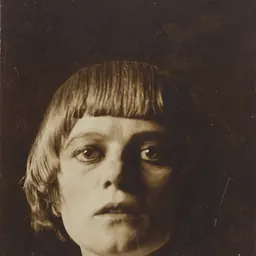
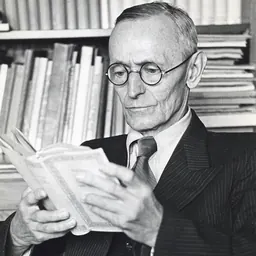
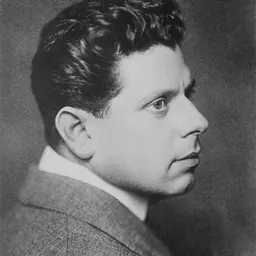

Related people
Same field, nearest in time


Contemporaries
People whose lives overlapped Hugo Ball's



Frequently asked questions
Who was Hugo Ball?
German author, poet and one of the leading Dada artists (1886–1927)
When was Hugo Ball born?
Hugo Ball was born on 22 February 1886 in Pirmasens.
When did Hugo Ball die?
Hugo Ball died on 14 September 1927 in Sant'Abbondio, Gentilino.
What was Hugo Ball's occupation?
Hugo Ball was a translator, poet, theatre director, writer, philosopher and playwright.
What nationality was Hugo Ball?
Hugo Ball was German.
Sources & further reading
Cite this page
APA: Biography.guide. (2026). Hugo Ball. https://biography.guide/hugo-ball/
MLA: "Hugo Ball." Biography.guide, https://biography.guide/hugo-ball/.
Chicago: "Hugo Ball." Biography.guide. https://biography.guide/hugo-ball/.
Data last updated: 2026-09-20 · Spot an error? Report a correction.
Page generated 2026-09-27 05:26 UTC