
About Hugh Willoughby
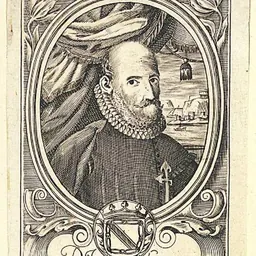
Lived 1500 – 1554. Hugh Willoughby was an English explorer.
Sir Hugh Willoughby (; died 1554) was an English soldier and an early Arctic voyager. He served in the court of and fought in the Scottish campaign where he was knighted for his valour. In 1553, he was selected by a company of London merchants to lead a fleet of three vessels in search of a Northeast Passage.
Willoughby and the crews of two ships died on the voyage while the third vessel , under the command of Richard Chancellor, went on to open a successful, long-lasting trading arrangement with Russia.
Biography Willoughby was the third and youngest son of Sir Henry Willoughby of Middleton, Warwickshire, a wealthy and influential gentleman who served in the courts of Richard III and Henry VII and was knighted by Henry VII following the Battle of Stoke Field in 1487.
Hugh Willoughby served various roles in the court of Henry VIII and then joined the military to serve as a captain in the Scottish campaign of 1544. He was knighted at Leith by Edward Seymour, 1st Duke of Somerset, then Earl of Hertford. In February 1548 he was sent with Thomas Carlisle and 50 horsemen by Grey of Wilton to capture "Billie tower". He became commander of the fort on the site of Thirlestane Castle and served there until 1550, successfully withstanding a siege by the Scots and the French. In 1551 he was again campaigning in the border country and eastern marches. The downfall and execution of Somerset in 1552 affected Willoughby's standing and caused him to look for other opportunities.
In 1553, a company of London merchants and courtiers were financing a voyage of exploration and trade. Organized by Sebastian Cabot, they hoped to find a northeast sea route to the Far East. Initially called the Company of Merchant Adventurers to New Lands, the trade organization became better known as the Muscovy Company. Willoughby petitioned to lead this expedition and although he lacked significant maritime experience, he was selected based on his distinguished family and his "singular skill in the services of war."
Three new vessels were constructed specifically for the voyage; on one ship the keel was lined with lead in hopes of preventing attack by shipworms. The fleet was well-provisioned for a lengthy voyage and an experienced crew was selected. On 10 May 1553, Willoughby set sail on the Bona Esperanza as captain-general of the fleet with two other vessels, the Edward Bonaventura and the Bona Confidentia, under his command. His chief pilot, Richard Chancellor, sailed on the Edward, captained by Stephen Borough. They left London with great fanfare and travelled slowly down the Thames, pausing at Greenwich to fire an artillery salute for the young King Edward.
The discovery was quickly reported back to the tsar in Moscow who ordered the ships secured and transferred to the White Sea to await recovery by the English. It was not until 1556 that crews were sent to Russia to sail the ships back to London. It was claimed that Willoughby's body was put on board for transport home. After leaving St. Nicholas on 20 July 1556, the two ships made it as far as the west coast of Norway when they encountered a storm that sank them both. Willoughby's journal did make it back to England safely on another ship.
In the 1590s, William Barents tried the same Northeast Passage, also became icebound near Novaya Zemlya, and also died, but some of his crew returned home and Barents Sea was named for him.
Don’t just read it —
keep it.
Full-length biographies made to live with: read them, listen on the way to work, watch them tonight.
- E-book
- Audio
- Video
Instant download · yours to keep · every purchase keeps this site free
Important facts
People in Hugh Willoughby's life
Named in this biography and alive at the same time

Related people
Same field, nearest in time




Contemporaries
People whose lives overlapped Hugh Willoughby's

Frequently asked questions
Who was Hugh Willoughby?
English polar explorer
When was Hugh Willoughby born?
Hugh Willoughby was born in 1500.
When did Hugh Willoughby die?
Hugh Willoughby died in 1554 in Varzina.
What was Hugh Willoughby's occupation?
Hugh Willoughby was an explorer.
What nationality was Hugh Willoughby?
Hugh Willoughby was English.
Sources & further reading
Cite this page
APA: Biography.guide. (2026). Hugh Willoughby. https://biography.guide/hugh-willoughby/
MLA: "Hugh Willoughby." Biography.guide, https://biography.guide/hugh-willoughby/.
Chicago: "Hugh Willoughby." Biography.guide. https://biography.guide/hugh-willoughby/.
Data last updated: 2026-09-20 · Spot an error? Report a correction.
Page generated 2026-09-27 05:23 UTC