
About Hugh Segal
Lived 1950 – 2023 (aged 72). Hugh Segal was a Canadian politician, writer, university teacher, policy analyst and executive.
Hugh Segal (October 13, 1950 – August 9, 2023) was a Canadian political strategist, author, commentator, academic, and senator. He served as chief of staff to Ontario premier Bill Davis and later to Canadian prime minister Brian Mulroney. Segal resigned from the Senate of Canada on June 15, 2014, as a result of his appointment as master (later principal) of Massey College in Toronto.
Career
Politics and public policy Segal was inspired by a visit from Prime Minister John Diefenbaker in 1962 to his school, United Talmud Torah Academy in Montreal. Segal went on to graduate from the University of Ottawa and was an aide to federal Progressive Conservative Leader of the Opposition Robert Stanfield in the early 1970s, while still a university student. He served as President of the Student Federation of the University of Ottawa from 1970-1971.
At the age of 21, he was an unsuccessful Progressive Conservative candidate in Ottawa Centre for the House of Commons of Canada in the 1972 general election. He was defeated again in 1974.
As a member of the Big Blue Machine, Segal was a senior aide to Ontario Progressive Conservative Premier Bill Davis in the 1970s and 1980s, and he was named Deputy Minister at age 29. From 1992 to 1993, he was Chief of Staff to Prime Minister Brian Mulroney.
Segal finished second to Joe Clark after the first ballot of the 1998 Progressive Conservative leadership election, but he chose to withdraw and support Clark (the eventual winner ) in the second ballot runoff vote against third-place finisher David Orchard. He had also briefly considered running for the Progressive Conservative leadership in 1993.
Senate Senator Hugh Segal, Canadian High Commissioner in Sri Lanka Shellie Viding and other delegates met E. Saravanapavan at the Uthayan newspaper premises in Jaffna, 2013 In 2005, Segal was appointed to the Senate of Canada by Liberal Prime Minister Paul Martin. He was the chairman of the Senate Foreign Affairs Committee until he "reluctantly" agreed to resign in 2007 at the request of the Conservative government, which reportedly wished to appoint a more ideologically conservative senator to the role after the committee issued a report critical of the Conservative government's foreign aid policy. Segal insisted, however, that the move was an administrative one. Segal later served as Chair of the Special Senate Committee on Anti-Terrorism.
In December 2013, Segal announced his intention to resign from the Senate in June 2014, twelve years before he would reach the mandatory retirement age of 75, to accept an academic appointment as Master of Massey College in Toronto.
Commonwealth On July 7, 2010, Segal was appointed to the Commonwealth Eminent Persons Group (EPG) by Secretary General Kamalesh Sharma. The group's mandate is to set out recommendations on how to strengthen the Commonwealth and fulfill its potential in the 21st century. In December 2011, the federal government appointed him special envoy to the Commonwealth with the task of convincing individual countries to sign on to the EPG's 106 recommendations.
Political views Segal espoused a moderate brand of conservatism that has little in common with British Thatcherism or US neoconservatism. He was a Red Tory in the tradition of Benjamin Disraeli, Sir John A. Macdonald, John Diefenbaker and his mentors Robert Stanfield and Bill Davis. This political philosophy stresses the common good and promotes social harmony between classes. It is often associated with One Nation Conservatism. The focus is on order, good government and mutual responsibility. Individual rights and personal freedom are not considered absolute. In his 1997 book Beyond Greed: A Traditional Conservative Confronts Neo-Conservative Excess, Segal sought to distinguish what he called "traditional" conservatives from neo-conservatives, notably those in the United States.
In an earlier book, his 1996 memoir No Surrender (page 225), Segal wrote: "Progressive Conservatives cannot embrace the nihilistic defeatism that masquerades as a neo-conservative polemic in support of individual freedom and disengagement." He went on to deplore "American fast-food conservatism." In a speech to the National Press Club on June 21, 1995, Segal referred to the "selfish and directionless nature of the American revolution -- which was more about self-interest, mercantile opportunity, and who collected what tax than it was about tolerance or freedom."
Segal opposed on civil liberties grounds the imposition of the War Measures Act by Prime Minister Pierre Trudeau in the October Crisis of 1970. He favoured strengthening Canada's military and encouraging investment while maintaining a strong social safety net. His 1998 proposal to reduce Canada's Goods and Services Tax from 7% to 6% (and then 5%) was adopted by Stephen Harper and the Conservative Party in 2005. During his leadership campaign, he stated his support for capital punishment.
On June 6, 2012, Segal had a comment published in the National Post outlining his views on Basic Income. In December 2012, Segal published an essay in the Literary Review of Canada promoting the benefits of a guaranteed annual income.
Journalism In the 1980s and 1990s, Segal became a television pundit and newspaper columnist. In the private sector, Segal has been an executive in the advertising, brewing, and financial services industries.
Academic work Segal lived in Kingston, Ontario, and until 2014 was a faculty member at Queen's University's School of Policy Studies, and has also taught at the university's school of business. He served as president of the Institute for Research on Public Policy, a Montreal think tank, from 1999 to 2006. He sat on the board of directors and was a distinguished fellow at the Canadian Defence and Foreign Affairs Institute. He was also a member of the Trilateral Commission.
Segal was appointed Master of Massey College in the University of Toronto (effective at the end of June 2014) and retired from the Senate to accept the position. He retired from the Massey College position effective June 30, 2019, five years into his seven-year term, and was succeeded by Nathalie Des Rosiers.
Personal life Segal was born in Montreal into what he described as a "very low-end, working-class family in what is now called Le Plateau". However richer relatives ensured that he and his brothers received a good education. He was Jewish.
He was the brother of corporate executive and former university administrator Brian Segal, and of artist Seymour Segal. He was married to Donna Armstrong Segal, a former Ontario Ministry of Health executive. They had one daughter, Jacqueline.
Death Segal died on August 9, 2023, in Kingston, Ontario, at the age of 72. *Segal held an honorary doctorate from the Royal Military College of Canada, University of Ottawa and Queen's University. Although he never served in the Canadian Forces, in 2004 Segal was named as an honorary captain in the Royal Canadian Navy. As a result of that honorary appointment, he was given the Canadian Forces' Decoration in 2017. He was made chair of the NATO Association of Canada in 2013. In 2013, Segal was honoured with a Peace Patron Award by The Mosaic Institute, an NGO based in Toronto working to promote pluralism reducing conflict in Canada and abroad. In 2016, he was made a member of the Order of Ontario.
Electoral record 1998 Progressive Conservative Party of Canada leadership election + Points by ballot Candidate First BallotOctober 24 Second BallotNovember 14 Points % Points % 50px CLARK, Charles Joseph (Joe) 14,592 48.5% 23,321 77.5% 50px SEGAL, Hugh 5,689 18.9% Endorsed Clark ORCHARD, David 4,916 16.3% 6,779 22.5% 50px PALLISTER, Brian William 3,676 12.2% Endorsed Clark 50px FORTIER, Michael M. 1,227 4.1% Endorsed Clark Total 30,100 100.0% 30,100 100.0%
1974 Canadian federal election - Ottawa Centre
1972 Canadian federal election - Ottawa Centre
Publications
Segal, Hugh (November 1, 2019). Bootstraps Need Boots: One Tory's Lonely Fight to End Poverty in Canada. On Point Press. . Segal, Hugh (April 23, 2016). Two Freedoms: Canada's Global Future. Dundurn Press. . Segal, Hugh (January 31, 2011). The Right Balance: Canada's Conservative Tradition. Douglas & McIntyre. . Segal, Hugh (November 7, 2006). The Long Road Back: The Conservative Journey, 1993-2006. HarperCollins Publishers. . Segal, Hugh (March 18, 2005). Geopolitical Integrity. Institute for Research on Public Policy. Segal, Hugh (2000). In defence of civility: Reflections of a recovering politician. Stoddart Publishing. Segal, Hugh (1997). Beyond greed: a traditional conservative confronts neoconservative excess. Stoddart Publishing. . Segal, Hugh (1996). No Surrender: Reflections of a Tory Warrior. HarperCollins Canada. .
Don’t just read it —
keep it.
Full-length biographies made to live with: read them, listen on the way to work, watch them tonight.
- E-book
- Audio
- Video
Instant download · yours to keep · every purchase keeps this site free
Important facts
People in Hugh Segal's life
Named in this biography and alive at the same time


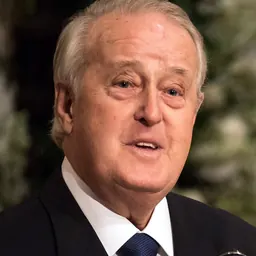
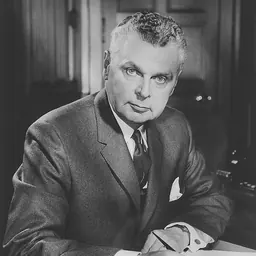



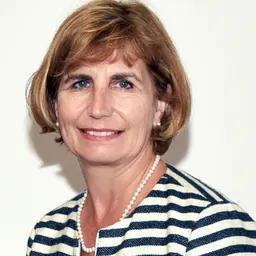
Related people
Same field, nearest in time
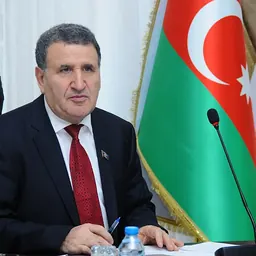




Contemporaries
People whose lives overlapped Hugh Segal's


Frequently asked questions
Who was Hugh Segal?
Canadian politician (1950-2023)
When was Hugh Segal born?
Hugh Segal was born on 13 October 1950 in Montreal.
When did Hugh Segal die?
Hugh Segal died on 9 August 2023 in Kingston.
What was Hugh Segal's occupation?
Hugh Segal was a politician, writer, university teacher, policy analyst and executive.
What nationality was Hugh Segal?
Hugh Segal was Canadian.
Sources & further reading
Cite this page
APA: Biography.guide. (2026). Hugh Segal. https://biography.guide/hugh-segal/
MLA: "Hugh Segal." Biography.guide, https://biography.guide/hugh-segal/.
Chicago: "Hugh Segal." Biography.guide. https://biography.guide/hugh-segal/.
Data last updated: 2026-09-20 · Spot an error? Report a correction.
Page generated 2026-09-27 05:21 UTC