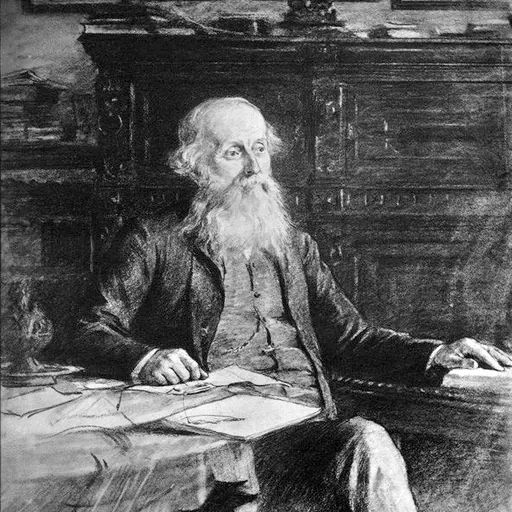
About Hugh Cleghorn
Lived 1820 – 1895 (aged 74). Hugh Cleghorn was a British botanist, physician, surgeon, forester, botanical collector and university teacher.
Hugh Francis Clarke Cleghorn (9 August 1820 – 16 May 1895) was a Madras-born Scottish physician, botanist, forester and land owner. Sometimes known as the father of scientific forestry in India, he was the first Conservator of Forests for the Madras Presidency, and twice acted as Inspector General of Forests for India. After a career spent in India Cleghorn returned to Scotland in 1868, where he was involved in the first ever International Forestry Exhibition, advised the India Office on the training of forest officers, and contributed to the establishment of lectureships in botany at the University of St Andrews and in forestry at the University of Edinburgh. The plant genus Cleghornia was named after him by Robert Wight.
Early life Cleghorn was born in Madras on 9 August 1820, where his father, Peter (also known as Patrick) ( 1783 – 1863) was Registrar and Prothonotary in the Madras Supreme Court. His mother Isabella (née Allan) died in Madras (1 June 1824) when Cleghorn was three and a half years old. In 1824 Cleghorn and his younger brother were sent home to Stravithie, near St Andrews, Fife, to the care of his grandfather, Hugh Cleghorn (1752–1837), who had been Professor of Civil History at St Andrews University and was later the first British colonial secretary of Ceylon. Cleghorn received his early education at the Royal High School, Edinburgh. Following an illness Cleghorn then attended the newly founded Madras College in St Andrews and in 1834 he entered the arts faculty of the United College of St Salvator and St Leonard of St Andrews University. While at Stravithie, under the influence of his grandfather, an improving laird, the young Hugh acquired an interest in estate management (including forestry) and botany. In 1837 he went to study medicine at Edinburgh, during which period he was apprenticed to the surgeon James Syme and studied botany under Robert Graham. He graduated MD from the University of Edinburgh in 1841 and the following year was appointed to the East India Company as an Assistant Surgeon in the Madras Presidency. who had suggested that he "study one plant a day for a quarter of an hour". It was here that Cleghorn began to commission botanical drawings, took a special interest in economic botany and noticed a decline in teak forests that had occurred since a visit by Francis Buchanan(-Hamilton) in 1801.
In 1848, suffering from 'Mysore fever', he returned on sick leave to Britain. He took an active part in scientific organisations, such as the Botanical Society of Edinburgh, to which he read several papers including one on hedge plants. He read the same paper at the annual meeting of the British Association held in Edinburgh in 1850, which won him a 'medium gold medal' of the Highland and Agricultural Society in 1851. At the same meeting, under the chairmanship of Sir David Brewster, Cleghorn was commissioned to write a report on the effects of tropical deforestation. A summary of this was read at the Association's Ipswich meeting on 7 July 1851, and subsequently published in full. He was requested by John Forbes Royle to assist in cataloguing the Indian botanical exhibits for the Great Exhibition of 1851. Cleghorn returned to India in 1852 and was appointed acting Professor of Botany and Materia Medica at Madras Medical College by Sir Henry Pottinger, a post confirmed two years later. During this period he became an active member of the Madras Literary Society and the Madras Agri-Horticultural Society. One of his students, Pulney Andy, became the first Indian to receive a medical degree from Scotland. John Shortt was another of his local students. In 1853 he published Hortus Madraspatensis, a catalogue of the plants in the latter Society's Garden. Cleghorn was consulted by the Madras Government on various economic-botanical subjects, resulting in papers such as one on the sand-binding plants of the Madras beach, read to the Madras Literary Society in 1856. Cleghorn also played a major role in the Madras Exhibitions of 1855 and 1857. thumb
Madras Forest Department In 1855, on the advice of the civil servant Walter Elliot, Cleghorn was asked by the Governor of Madras, Lord Harris, to organise a Forest Department for Madras and to start systematic forest conservancy, such has had earlier been established in Bombay under Alexander Gibson. On the suggestion of Frederick Cotton, a similar forest management scheme had been begun in the Anamalai hills under Colonel James Michael who worked from 1848 to 1856 on timber management. Cleghorn took over management of the area that was being worked and was appointed Conservator of Forests on 19 December 1856, which he held until 10 October 1867, most actively so until 1860. thumb "Foot of the Poonachy Pass", from Forests and Gardens of South India, illustrated by Douglas Hamilton.On his third forest tour Cleghorn again contracted fever and obtained a year's sick leave to Britain in September 1861. During this leave he interacted with the India Office, which allowed the publication of a compilation of his forest reports as The forests and gardens of South India. Though his goal may have been to supply a manual to enable forest assistants to work more effectively for the benefit of the State, the book is mainly a compilation of his reports documenting his activities in forest conservancy in the Madras Presidency during the four years that the department had by then been in operation. In Scotland, as on his previous leave, Cleghorn read papers to the Botanical Society of Edinburgh, and his Anamalai one to the Royal Society of Edinburgh (to which he was elected on 1 December 1862). The most notable event of this leave, however, was Cleghorn's marriage at Penicuik, on 8 August, to Marjorie Isabella, known as 'Mabel', daughter of Charles Cowan a notable philanthropist and paper-maker.
Forest Department of India Cleghorn (extreme right) with, from left to right, John Lindsay Stewart, Thomas Caverhill Jerdon and William Jameson taken at the Punjab Exhibition, Lahore, 1864.
On returning to India with Mabel in October 1861 Cleghorn was summoned to Calcutta by Lord Canning and charged with surveying the forests of the Punjab Himalaya. He continued this under Sir Robert Montgomery, Lt Governor of the Punjab, which led to Cleghorn's being based in Lahore, where he was involved in the 1864 Punjab Exhibition. The same year he was involved in a Missionary Conference in Lahore, evangelical Christianity, especially with a medical bias, underpinning the whole of Cleghorn's life and work. His second book The Forests of the Punjab (1864) is a compilation of his reports from this period. In December 1862 Lord Elgin had summoned Brandis from Burma to reorganize the Forest Department and in January 1864 Brandis and Cleghorn were appointed joint Commissioners of Forests; three months later Brandis was given the senior post of Inspector General. The pair worked together on the Indian Forest Act, which came into effect on 1 May 1865, following which Cleghorn was given a six-month leave to take his ailing wife home, and to attend to Stravithie following the death of his father. During two periods when Brandis was on leave in Europe Cleghorn acted as Inspector General (July 1864 to January 1865, and May 1866 to March 1867). Following the second of these Cleghorn returned to Madras, where he was given 20 months' leave in October 1867, though he was never return to India, and formally retired at the expiry of this period. Back in Britain he acted as an adviser to the Secretary of State for India and assisted with the selection of candidates for the Indian Forest Service. In 1872 he was elected president of the Scottish Arboricultural Society for two years, and subsequently played an instrumental role in the establishment of a lectureship in Forestry at the University of Edinburgh. Cleghorn also gave his opinions to the Select Committee of the House of Commons in 1885 on the topic of forestry education in Britain. Cleghorn wrote the entries on 'Arboriculture' (1875) and 'Forests' (1879) for the ninth edition of the Encyclopædia Britannica.
Cleghorn died at Stravithie, in the mansion that he had largely rebuilt, on 16 May 1895. The heir to the property was his nephew Alexander Sprot (later Sir Alexander, 1st Baronet), son of Cleghorn's sister Rachel Jane, widow of Alexander Sprot of Garnkirk.
The Cleghorn Collection
Some 3000 botanical drawings were commissioned and assembled by Cleghorn, mainly drawn in India. These now largely reside with the Royal Botanic Garden, Edinburgh, having been assembled from major donations from Edinburgh University, the National Museum of Scotland and the private collection of Dr Cleghorm of Stravithie, but with Edinburgh University still retaining a proportion of the works for their own use.
Botanical authorship Although Cleghorn published no descriptions of new plant species, a single invalid plant name has been attributed to him.
Don’t just read it —
keep it.
Full-length biographies made to live with: read them, listen on the way to work, watch them tonight.
- E-book
- Audio
- Video
Instant download · yours to keep · every purchase keeps this site free
Important facts
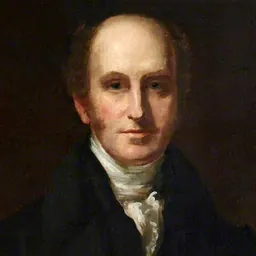
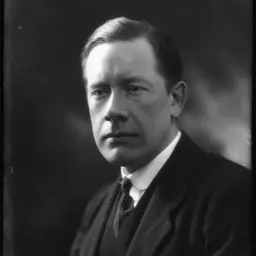
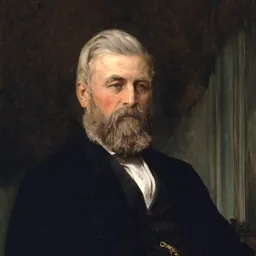
People in Hugh Cleghorn's life
Named in this biography and alive at the same time





Related people
Same field, nearest in time


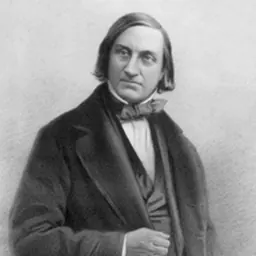
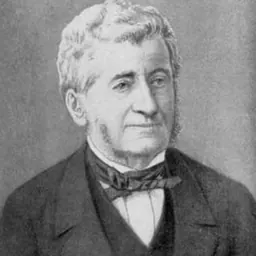


Contemporaries
People whose lives overlapped Hugh Cleghorn's
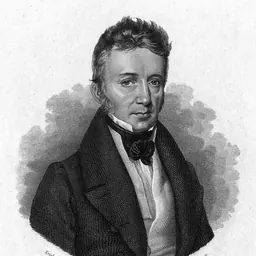


Frequently asked questions
Who was Hugh Cleghorn?
Scottish forester (1820-1895)
When was Hugh Cleghorn born?
Hugh Cleghorn was born on 9 August 1820 in Chennai.
When did Hugh Cleghorn die?
Hugh Cleghorn died on 17 May 1895.
What was Hugh Cleghorn's occupation?
Hugh Cleghorn was a botanist, physician, surgeon, forester, botanical collector and university teacher.
What nationality was Hugh Cleghorn?
Hugh Cleghorn was British.
Sources & further reading
· DBpedia: Hugh Cleghorn (forester)
Cite this page
APA: Biography.guide. (2026). Hugh Cleghorn. https://biography.guide/hugh-cleghorn/
MLA: "Hugh Cleghorn." Biography.guide, https://biography.guide/hugh-cleghorn/.
Chicago: "Hugh Cleghorn." Biography.guide. https://biography.guide/hugh-cleghorn/.
Data last updated: 2026-09-20 · Spot an error? Report a correction.
Page generated 2026-09-27 05:10 UTC