
About Huang Chao
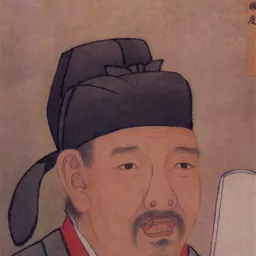
Lived 801 – 884 (aged 82–83). Huang Chao was a Chinese poet, rebel and military officer.
As Emperor of Qi In 881, Huang Chao moved into the Tang palace in Chang'an and declared himself the emperor of a new state of Qi. He made his wife, Lady Cao, empress, while making Shang Rang, Zhao Zhang , and the Tang officials Cui Qiu and Yang Xigu chancellors. Huang initially tried to simply take over the Tang imperial mandate, as he ordered that the Tang imperial officials of the fourth rank or lower (in Tang's nine-rank system) continue to remain in office, as long as they showed submission by registering with Zhao, removing only the third-rank or above officials. The Tang officials who would not submit were executed en masse. Huang also tried to persuade Tang generals throughout the circuits to submit to him, and a good number of them did, including Zhuge Shuang (whom he made the military governor of Heyang Circuit (河陽, headquartered in modern Jiaozuo, Henan)), Wang Jingwu the military governor of Pinglu Circuit (平盧, headquartered in modern Weifang, Shandong), Wang Chongrong (whom he made the military governor of Hezhong Circuit (河中, headquartered in modern Yuncheng, Shanxi), and Zhou Ji (whom he made the military governor of Zhongwu Circuit) — although each of those generals eventually redeclared loyalty to Tang and disavowed Qi allegiances. He also tried to persuade the former Tang chancellor Zheng Tian, the military governor of nearby Fengxiang Circuit (鳳翔, headquartered in modern Baoji, Shaanxi), to submit, but Zheng resisted, and when he sent Shang and Wang Bo to try to capture Fengxiang, Zheng defeated Qi forces that he sent in spring 881.
Tang forces were still not making a true attempt to recapture Chang'an by this point. However, the ethnic Shatuo general Li Keyong — who had been a Tang renegade for years but who had recently resubmitted to Tang and offered to attack Qi on Tang's behalf, arrived at Tong Prefecture in winter 882 to join the other Tang forces. In spring 883, Li Keyong and the other Tang generals defeated a major Qi force (150,000 men) commanded by Shang and approached Chang'an. In summer 883, Li Keyong entered Chang'an, and Huang was unable to resist him, and so abandoned Chang'an to flee east. With Tang forces again boggled down in pillaging the city, they were unable to chase Huang, and Huang was able to flee east without being stopped. (However, according to an alternative account in the New Book of Tang, Huang, believing that it was the only way that any of his army could be saved, committed suicide after instructing Lin to surrender with his head.)
Legend of possible escape Some speculate that Lin Yan bringing the alleged heads of Huang Chao and others to Shi Pu was only a decoy to allow the real Huang Chao to escape. It was noted that Langhu Valley was over 500 li or 3–4 days away on a horseback from Shi's camp in Xu Prefecture, and decomposition would have already kicked in during the hot summer to make the faces unrecognizable. Moreover, Huang Chao had a number of brothers following him and the siblings likely resembled each other.
Legends popular during the ensuing Five Dynasties and Ten Kingdoms period claim that Huang became a Buddhist monk following his escape. The Song dynasty scholar Wang Mingqing , for example, alleged in his book Huizhu Lu: "When Zhang Quanyi was the mayor (留守) of the Western Capital (i.e. Luoyang), he recognized Huang Chao from among the monks."
Poetry He wrote a few poems that were lyrical even when expressing anger and violence. One such line reads:
The capital's full of golden armored soldiers
This poem was used to describe his preparations for rebellion in an angry spirit. Later, this phrase was used for the Chinese name of the 2006 film Curse of the Golden Flower. The Hongwu Emperor, founder of the Ming dynasty (1368-1644), wrote a similar poem.
Don’t just read it —
keep it.
Full-length biographies made to live with: read them, listen on the way to work, watch them tonight.
- E-book
- Audio
- Video
Instant download · yours to keep · every purchase keeps this site free
Important facts
People in Huang Chao's life
Named in this biography and alive at the same time




Related people
Same field, nearest in time



Contemporaries
People whose lives overlapped Huang Chao's

Frequently asked questions
Who was Huang Chao?
Chinese emperor
When was Huang Chao born?
Huang Chao was born in 801 in Heze.
When did Huang Chao die?
Huang Chao died in 884.
What was Huang Chao's occupation?
Huang Chao was a poet, rebel and military officer.
What nationality was Huang Chao?
Huang Chao was Chinese.
Sources & further reading
Cite this page
APA: Biography.guide. (2026). Huang Chao. https://biography.guide/huang-chao-poet/
MLA: "Huang Chao." Biography.guide, https://biography.guide/huang-chao-poet/.
Chicago: "Huang Chao." Biography.guide. https://biography.guide/huang-chao-poet/.
Data last updated: 2026-09-20 · Spot an error? Report a correction.
Page generated 2026-09-27 05:19 UTC