
Htaw Lay
Burmese magistrate and governor
About Htaw Lay
Lived 1776 – 1869 (aged 92–93).
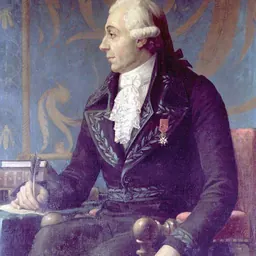
Maung Htaw Lay (, ; also spelled Maung Taulay; 1776–1869 or 1871) was Magistrate of Moulmein (Mawlamyine) from 1838 to 1853 during the early British colonial period of Myanmar (Burma), and governor of Dala from 1805 to 1827 during the Konbaung period. Prior to his defection to the British in 1827, he had been a Royal Burmese Army commander, and had fought in the First Anglo-Burmese War (1824–26). At Moulmein, Htaw Lay became one of the most senior indigenous officials in the colonial government. He moved to Yangon (Rangoon) in 1853 after the British annexation of Lower Burma. He successfully used his influence with the colonial government to stop the occupation forces' pillaging of Buddhist shrines around Yangon, and with the help of his son-in-law Maung Khaing, spent the rest of his life restoring the Shwedagon Pagoda.
The colonial government named two wide streets in downtown Yangon after him and Maung Khaing. The two street names survived the renaming of Yangon Streets until 1989. Some of his descendants became some of the most prominent members of the colonial era, including Mya Sein, May Oung, and Tun Hla Oung. The singer Myo Kyawt Myaing is his four times great-grandnephew.
Early life and career Born in Martaban (Mottama) in 1776, Htaw Lay was the eldest child of a leading ethnic Mon noble family in Lower Burma. He had three younger brothers and two younger sisters. His father had been a senior official in the service of Konbaung monarchs since King Alaungpaya. In 1805, Alaungpaya's fourth son King Bodawpaya appointed Htaw Lay governor (myoza) of Dala (modern Dala and Twante). His official style was Min Kyaw Thiha , and it was later upgraded to Kyawhtin Thihathu .
In the First Anglo-Burmese War (1824–26), Htaw Lay was one of the commanding officers responsible for the defense of Yangon (across the river from Dala) against the British invaders. After an eight-month battle, the Burmese were ousted from Yangon in December 1824. He returned to a war-ravaged Dala as governor after the war's end in 1826. His kingdom had been defeated and left crippled in debt. (The British had returned Lower Burma in exchange for an agreement to pay an indemnity of one million pounds sterling as well as to cede Arakan, Assam, Manipur, and the Tenasserim coast south of the Sawleen. The war reparations, which were to be made in four installments, were to impose a huge burden on the populace in the following years. )
Defection Htaw Lay's days at Dala were numbered. A year after the war, the governor of the neighboring Syriam (Thanlyin), Gov. Smim Bawor (also known as Thamein Baru The Ava court believed that Htaw Lay was also involved in the rebellion. But according to Htaw Lay's family tradition, Htaw Lay was not involved in the rebellion; he and his family fled to British territory only because they feared the indiscriminate wrath of the king's forces. fled Lower Burma and settled at Moulmein (Mawlamyaing) on the Tenasserim coast (modern Mon State, south of the Salween and Taninthayi Region) that Ava had just ceded a year earlier. who too had defected in 1832. The British made Myat Phyu sitke of North Moulmein. The two former governors made an alliance by marrying Ma Htu, daughter of Htaw Lay and Maung Khaing, son of Myat Phyu. He retired from office in 1853 right after the Second Anglo-Burmese War in order to devote full-time to restore the shrines in Yangon, which the British had just seized. The area of Moulmein where he lived was named Sitkegon ("General's Hill") in his honor.
At the top of their list was the Shwedagon Pagoda, the most sacred shrine in Burmese Buddhism. The pagoda had been used as a fort by the British during the war, and had been severely damaged by the British troops and their Indian sepoys. The most egregious act of desecration, to the Burmese, was the British commanders' decision to have their sepoys make 1.8 m wide, 45 cm long and 60 m deep penetrations into the pagoda, ostensibly to assess its utility as an arsenal. Htaw Lay had written to the British commander and to the India Office in London to stop the desecration but his pleas were ignored during the war. But after the war he found a more receptive ear with the incoming colonial administration led by Commissioner Arthur Purves Phayre. He got the Phayre government to stop the looting of the treasure chambers of Buddhist shrines by the occupation troops, and to provide some compensation for the damages done to the Shwedagon. In about two years, the duo was able to restore much of the great shrine. He became one of the founding trustees of the Shwedagon Pagoda Trust. Dalhousie saw the value in loyal, "pious and capable" indigenous figures, and included Htaw Lay and Khaing in the list of figures after whom the new roads and streets of Yangon were to be named. Nor could they replace the damaged hti (crowning umbrella) of the Shwedagon for nearly two decades. (The hti affair came to represent the sovereignty dispute of Lower Burma. As the Burmese government had not recognized the British annexation of Lower Burma, the British sent back the new hti donated by King Mindon in 1853. Only in 1871 after long negotiations did the British permit Mindon's new hti to be shipped to Yangon. )
It is not clear if Htaw Lay ever witnessed the raising of the new hti. According to Kin Thida Oung, a direct descendant of Htaw Lay, he died in 1871 His great-granddaughter was the wife of Maung Kin, the first Burmese to be knighted and the first Burmese Chief Justice of the High Court. Kin and Oung were the first two Burmese to become High Court justices. Mya Sein, the first Burmese woman to graduate from Oxford University, was born to Htaw Lay's great-granddaughter Thein Mya. Maj. Gen. Tun Hla Oung, the colonial era Police Commissioner, was Htaw Lay's two times great-grandson. The two streets escaped the initial round of renaming of Yangon's streets to Burmese names after independence.
Don’t just read it —
keep it.
Full-length biographies made to live with: read them, listen on the way to work, watch them tonight.
- E-book
- Audio
- Video
Instant download · yours to keep · every purchase keeps this site free
Important facts
Family & relationships
People in Htaw Lay's life
Named in this biography and alive at the same time

Contemporaries
People whose lives overlapped Htaw Lay's



Frequently asked questions
Who was Htaw Lay?
Burmese magistrate and governor
When was Htaw Lay born?
Htaw Lay was born in 1776 in Mottama.
When did Htaw Lay die?
Htaw Lay died in 1869 in Twante Township.
Sources & further reading
Cite this page
APA: Biography.guide. (2026). Htaw Lay. https://biography.guide/htaw-lay/
MLA: "Htaw Lay." Biography.guide, https://biography.guide/htaw-lay/.
Chicago: "Htaw Lay." Biography.guide. https://biography.guide/htaw-lay/.
Data last updated: 2026-09-20 · Spot an error? Report a correction.
Page generated 2026-09-27 04:58 UTC