
Hryhorii Kochur
Ukrainian writer, translator and human rights activist
About Hryhorii Kochur
Lived 1908 – 1994 (aged 86). Hryhorii Kochur was a Russian and Ukrainian writer, translator, literary scholar, human rights defender, poet and dissident.
Hryhorii Porfyrovch Kochur (; – 15 December 1994) was a Ukrainian writer, translator and human rights activist. A polyglot, Kochur was one of the most prolific translators in the history of the modern Ukrainian language, translating over 600 different works of poetry and different works of literature from 25 various countries over six decades. Kochur was an important figure in the Ukrainian cultural revival that took place during the 1960s, and he was arrested and sent to the Gulag by the Soviet government.
Early life and career Hryhorii Porfyrovych Kochur was born on 17 November 1908 in the village of , in what was then the Russian Empire and is now in Ukraine's northern Chernihiv Oblast. His father, who taught him to read at the age of three, was a descendant of Zaporozhian Cossacks; the surname "Kochur" is descended from "koch" , an antiquated term in Ukrainian for a boat. From an early age, Kochur frequently read the works of poet Taras Shevchenko. He additionally learned Old Church Slavonic from the Bible as a child,
From 1932 to 1936 Kochur taught foreign literature at the Tiraspol Pedagogical Institute (now the Shevchenko Transnistria State University). He later taught at Vinnytsia Pedagogical Institute from 1936 to 1941, heading the institute's department of literature. He continued to publish his translations from French in this period, with works being published in 1935 Throughout the 1960s Kochur continued to write translations, including from English, German, and Czech. He also translated Quotations from Chairman Mao Tse-tung, His translation of William Shakespeare's Hamlet, as well as the writings of Julian Tuwim, were particularly noted as the first translations of the original works into Ukrainian by George S. N. Luckyj.
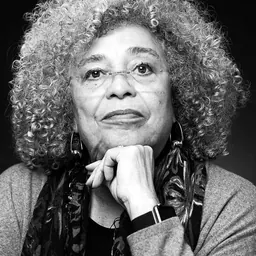
Later career Kochur continued to be engaged in both literature and politics into the 1970s. He expressed opposition to Viacheslav Chornovil's 1971 formation of the Civic Committee for the Defence of Nina Strokata, which had been formed along the lines of committees for the legal defence of Angela Davis in the United States. He translated Dante Alighieri's La Vita Nuova in 1965, and wrote several monographs about writers from both Ukraine (such as Rylsky) and other countries of Europe (such as Shakespeare and Aesop) in the late 1960s and early 1970s. He supported Ukrainian dissidents as a witness for Yevhen Sverstiuk's defence during the 1972–1973 Ukrainian purge, as a result of which he was expelled from the Union of Writers of Ukraine. He further supported other dissidents, led by Marynovych, who publicly celebrated Koliada in 1977.
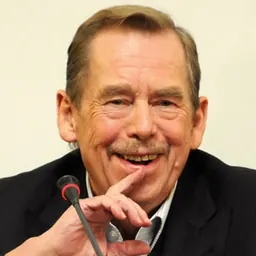
Kochur was admitted back into the Union of Writers in 1988. Following the dissolution of the Soviet Union, he was allowed to travel outside of the former Soviet Union for the first time in his life. He first travelled to Czechoslovakia, where he met Václav Havel, a Czech dissident leader who was a fan of Kochur's work. He later gave a lecture at the University of Illinois, and also visited Poland. He published his final anthology of translations, Second Echo, in 1991.
Death Kochur died on 15 December 1994 in Irpin from kidney failure. In the days prior to his death, while he was on his deathbed, he continued to work, discussing Mykola Lukash's translation of Don Quixote and expressing consternation at the fact that he was unable to finish a foreword to a book by Vira Vovk. A year after his death, he was posthumously awarded the Shevchenko National Prize for Second Echo in 1995.
Don’t just read it —
keep it.
Full-length biographies made to live with: read them, listen on the way to work, watch them tonight.
- E-book
- Audio
- Video
Instant download · yours to keep · every purchase keeps this site free
Important facts
People in Hryhorii Kochur's life
Named in this biography and alive at the same time



Related people
Same field, nearest in time





Contemporaries
People whose lives overlapped Hryhorii Kochur's



Frequently asked questions
Who was Hryhorii Kochur?
Ukrainian writer, translator and human rights activist (1908–1994)
When was Hryhorii Kochur born?
Hryhorii Kochur was born on 4 November 1908 in Feskivka.
When did Hryhorii Kochur die?
Hryhorii Kochur died on 15 December 1994 in Irpin.
What was Hryhorii Kochur's occupation?
Hryhorii Kochur was a writer, translator, literary scholar, human rights defender, poet and dissident.
What nationality was Hryhorii Kochur?
Hryhorii Kochur was Russian and Ukrainian.
Sources & further reading
Cite this page
APA: Biography.guide. (2026). Hryhorii Kochur. https://biography.guide/hryhorii-kochur/
MLA: "Hryhorii Kochur." Biography.guide, https://biography.guide/hryhorii-kochur/.
Chicago: "Hryhorii Kochur." Biography.guide. https://biography.guide/hryhorii-kochur/.
Data last updated: 2026-09-20 · Spot an error? Report a correction.
Page generated 2026-09-27 05:12 UTC