
About Howie Young
Lived 1937 – 1999 (aged 62). Howie Young was a Canadian ice hockey player.
Howard John Edward "Cowboy" Young (August 2, 1937 – November 24, 1999) was a Canadian professional ice hockey player and actor, best known for his time in the National Hockey League with the Detroit Red Wings in the 1960s.
Playing career
Early years in Detroit Young joined the Red Wings in the 1960–61 season. In his rookie season, Young recorded 8 assists and led the Wings with 108 penalty minutes in 29 games. In the playoffs, he appeared in all eleven games and scored two goals to help the Red Wings reach the Stanley Cup Finals.
He split another season between the NHL and the minors before establishing himself as a regular in 1962–63. That year he recorded nine points in 62 games and set the league record for penalty minutes, recording 273 to break Lou Fontinato's record of 202. His pugilistic exploits earned him a place on the cover of Sports Illustrated in January 1963.
However, his drinking had by this point reached full-blown alcoholism, and despite his popularity in Detroit the team shipped him to the Chicago Black Hawks in the summer of 1963.
Los Angeles Young's problems followed him to Chicago, and the Black Hawks' patience ran out even quicker than Detroit's did. Midway through the 1963–64 season, the team sold him to the Los Angeles Blades of the Western Hockey League. There he was one of the league's most feared defenders; he led the league in penalty minutes in both his full seasons there while contributing offensively from the blueline. Young played a minor role in the film None But The Brave.
In 1965, Young entered Alcoholics Anonymous.
Return to the NHL Young started the 1966–67 season dominating the WHL, with 22 points in his first 29 games. More impressively, the once-volatile defender spent just 43 minutes in the penalty box. Impressed with his sobriety and improved play, the Red Wings traded three players to Los Angeles to reacquire him.
Back in the NHL for the first time in three years, Young played the best hockey of his career. In 44 games for the Red Wings, he recorded 3 goals and 14 assists for 17 points along with 100 penalty minutes. In 1967–68, he would spend another full season in Detroit, setting career highs with 17 assists and 19 points.
He was then dealt to Oakland before being re-acquired by Chicago for the 1968–69 season, where he began to show his age. Now 32, he slumped to just 10 points in 57 games and seemed to have lost his physical edge. He spent most of the following two seasons in the minors, with an 11-game stint with the Vancouver Canucks in 1970–71, before retiring.
Comeback, WHA years and retirement After a year away from the sport, Young signed on with the WHL Phoenix Roadrunners. Despite being 35 and having played defense for most of his career, he returned as a forward, and was surprisingly successful. In 1972–73, he scored 20 goals and 38 assists for 58 points for the Roadrunners. In 1973–74, he was better yet, scoring 37 goals (sixth in the league) and 68 points, and was named a WHL First-Team All-Star.
In the 1974–75 season, the Roadrunners became a member of the World Hockey Association, and Young stayed with the team through the move. Now 37 and playing top-level pro hockey for the first time in five years, he recorded 15 points in 30 games before being sold mid-season to the Winnipeg Jets. In Winnipeg he was reunited with his former Chicago teammate Bobby Hull, and delivered 13 goals in 42 games. He finished the year with 16 goals and 22 assists for 38 points in 72 games.
Young retired again in 1975, but returned to Phoenix late in the 1976–77 season. Nearly 40, he scored just one goal and four points in 26 games. He played low-level minor pro hockey for another two seasons in Phoenix and Los Angeles before retiring again in 1979. He made yet another comeback in the 1985–86 season with the Flint Spirits of the IHL, picking up an assist in 4 games, an impressive feat at the age of nearly 50 in a league just a notch below the NHL. After being cut by the Spirits, Young was offered a roster spot on the New York Slapshots of the ACHL by head coach-general manager Dave Schultz. Young appeared in 7 games for the Slapshots before he was released in December.
Later life After retirement, Young moved to New Mexico where he owned a ranch and drove a school bus. He also worked as an actor; in 1989, he played an outlaw on the television mini-series Lonesome Dove, in 1990 he portrayed Poe Possey in the movie Young Guns II, and in 1997 he appeared with Tom Selleck in the 1997 television film Last Stand at Saber River.
Young died November 24, 1999, at age 62, from pancreatic cancer.
Career statistics
Regular season and playoffs Regular season Playoffs Season Team League GP G A Pts PIM GP G A Pts PIM 1953–54 St. Michael's Midget Majors THL — — — — — — — — — — 1953–54 Scarborough Scouts OHA-B — — — — — — — — — — 1954–55 Kitchener Canucks OHA 49 6 7 13 155 — — — — — 1955–56 Kitchener Canucks OHA 28 2 5 7 40 — — — — — 1956–57 Hamilton Tiger Cubs OHA 52 5 15 20 228 4 0 1 1 28 1957–58 Hamilton Tiger Cubs OHA 40 3 7 10 163 — — — — — 1958–59 New Westminster Royals WHL 4 0 1 1 26 — — — — — 1958–59 Chicoutimi Sagueneens QHL 50 4 16 20 180 — — — — — 1959–60 Rochester Americans AHL 68 7 7 14 170 — — — — — 1960–61 Hershey Bears AHL 33 1 5 6 160 — — — — — 1960–61 Detroit Red Wings NHL 29 0 8 8 108 11 2 2 4 30 1961–62 Detroit Red Wings NHL 30 0 2 2 67 — — — — — 1961–62 Edmonton Flyers WHL 24 3 15 18 97 12 3 10 13 49 1962–63 Detroit Red Wings NHL 64 4 5 9 273 8 0 2 2 16 1963–64 Chicago Black Hawks NHL 39 0 7 7 99 — — — — — 1963–64 Los Angeles Blades WHL 13 2 4 6 40 4 0 2 2 21 1964–65 Los Angeles Blades WHL 65 10 20 30 227 — — — — — 1965–66 Los Angeles Blades WHL 44 5 11 16 170 — — — — — 1966–67 Los Angeles Blades WHL 29 5 17 22 43 — — — — — 1966–67 Detroit Red Wings NHL 44 3 14 17 100 — — — — — 1967–68 Detroit Red Wings NHL 62 2 17 19 112 — — — — — 1967–68 Fort Worth Wings CPHL 5 1 2 3 12 — — — — — 1968–69 Chicago Black Hawks NHL 57 3 7 10 67 — — — — — 1969–70 Rochester Americans AHL 56 17 20 37 75 — — — — — 1969–70 Vancouver Canucks WHL 16 0 3 3 44 — — — — — 1970–71 Vancouver Canucks NHL 11 0 2 2 25 — — — — — 1970–71 Phoenix Roadrunners WHL 57 11 32 43 136 10 0 3 3 21 1972–73 Phoenix Roadrunners WHL 71 20 38 58 223 10 1 5 6 31 1973–74 Phoenix Roadrunners WHL 71 37 32 69 124 9 3 3 6 6 1974–75 Phoenix Roadrunners WHA 30 3 12 15 44 — — — — — 1974–75 Winnipeg Jets WHA 42 13 10 23 42 — — — — — 1976–77 Phoenix Roadrunners WHA 26 1 3 4 23 — — — — — 1976–77 Oklahoma City Blazers CHL 4 0 0 0 8 — — — — — 1977–78 Phoenix Roadrunners PHL 39 4 11 15 63 — — — — — 1978–79 Los Angeles Blades PHL 14 0 2 2 22 — — — — — 1985–86 Flint Spirits IHL 4 0 1 1 2 — — — — — 1985–86 New York Slapshots ACHL 7 0 1 1 18 — — — — — NHL totals 336 12 62 74 851 19 2 4 6 46 WHA totals 98 17 25 42 109 — — — — — WHL totals 394 93 173 266 1130 45 7 23 30 128 AHL totals 157 25 32 57 405 — — — — —
Don’t just read it —
keep it.
Full-length biographies made to live with: read them, listen on the way to work, watch them tonight.
- E-book
- Audio
- Video
Instant download · yours to keep · every purchase keeps this site free
Important facts
People in Howie Young's life
Named in this biography and alive at the same time



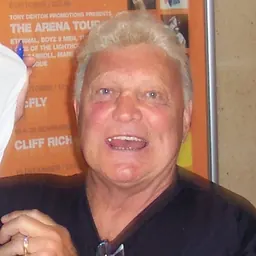
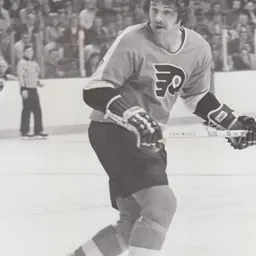


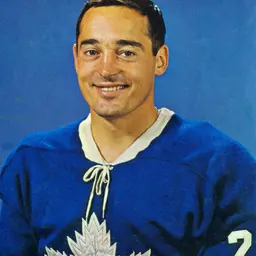
Related people
Same field, nearest in time

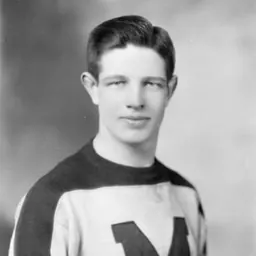
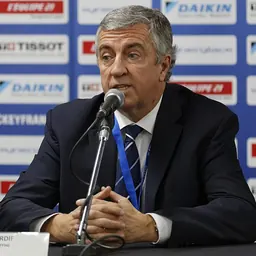
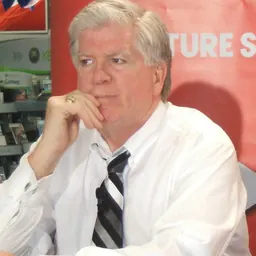
Contemporaries
People whose lives overlapped Howie Young's
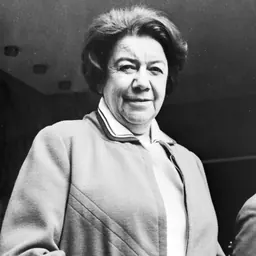



Frequently asked questions
Who was Howie Young?
Canadian ice hockey player (1937-1999)
When was Howie Young born?
Howie Young was born on 2 August 1937 in Scarborough.
When did Howie Young die?
Howie Young died on 24 November 1999 in Albuquerque, New Mexico.
What was Howie Young's occupation?
Howie Young was an ice hockey player.
What nationality was Howie Young?
Howie Young was Canadian.
Sources & further reading
Cite this page
APA: Biography.guide. (2026). Howie Young. https://biography.guide/howie-young/
MLA: "Howie Young." Biography.guide, https://biography.guide/howie-young/.
Chicago: "Howie Young." Biography.guide. https://biography.guide/howie-young/.
Data last updated: 2026-09-20 · Spot an error? Report a correction.
Page generated 2026-09-27 05:09 UTC