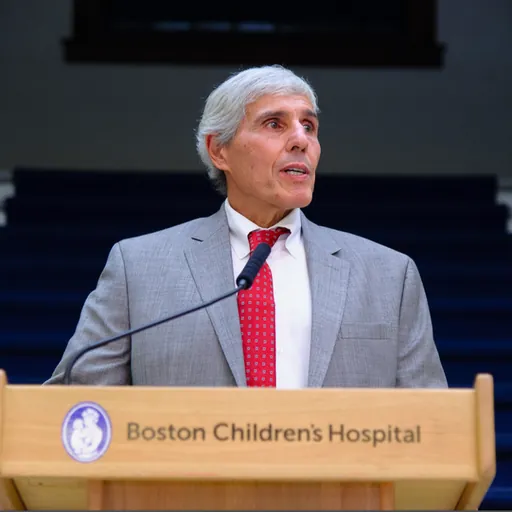
Howard Shane
American autism researcher
About Howard Shane
Howard Shane was a speech and language therapist and medical author.
Howard C. Shane is director of the Autism Language Program and Communication Enhancement Program at Children's Hospital in Boston, Massachusetts, former director of the Institute on Applied Technology, and associate professor at Harvard Medical School. He is internationally known for his research and development of augmented and alternative communication systems to support the communication needs of people with neuromuscular disorders, autism and other disabilities. He went on to earn an M.A. in speech pathology and audiology in 1972 (also from the University of Massachusetts)
Visual Immersion System Shane led a team to develop the Visual Immersion System (VIS), a visual curriculum to support the communication needs of people with disabilities. The curriculum makes use of communication technology, including the iPad, which allows people with autism to engage in visual activities that aid in the development of language skills. The effectiveness of the program is currently under study, with clinical evidence "still emerging", but, as Shane states, "the excitement and interest in these technologies exist because they are working."
QuickPic AAC With Christina Yu (Boston Children's Hospital) and Human–computer interaction scientist Mauricio Fontana de Vargas, Shane created the first artificial intelligence augmentative and alternative communication application for autistic users. QuickPic greatly accelerates the generation of vocabulary sets relevant to a given image, a useful tool used by speech language pathologists to teach grammar.
Facilitated Communication Facilitated Communication (FC), popularized in the early 1990s in the United States by Douglas Biklen,
In an interview with Susan Gerbic, Shane says that he first learned of FC in Sweden, when he attended an International Society for Augmentative and Alternative Communication (ISAAC) conference where Rosemary Crossley gave a speech. He questioned claims from promoters that individuals with severe disabilities, some as young as 5 or 6 years old, without formal training in reading or written language could produce messages that included "perfectly spelled sentences" and whether or not the communications were originating from the children or the adult facilitators. On the 1993 Frontline show, Prisoners of Silence, produced by Jon Palfreman, Shane questioned the sophistication of the sentences being typed using FC. Students, with the help of facilitators, were typing out grammatically correct and accurately spelled sentences that, according to Shane, held "insights that go far beyond their years." Shane criticized FC as "bogus nonsense" and "a complete waste of time."
Quotation|"It (Facilitated Communication) is not an accepted clinical practice and many associations have written it off because of its unreliability."|Howard Shane Rather than support people with autism in their efforts to communication, FC, according to Shane is "hurtful and harmful" and deprives "children of their right to independently communicate." Facilitator Boynton, realizing she had been the one doing the communication pressured her school administration to err on the side of caution and end the practice of FC. Over the years Shane kept in touch with Boynton and continued to encourage her to speak out about FC.
Shane believes that FC messages originate from facilitators who "subconsciously guide the hands and fingers of people they are assigned to help." via the ideomotor phenomenon.
Supporters of FC state that often people start out using a facilitator and eventually learn to type without physical support. Shane responded by saying '"If someone’s going to be a typist, they don’t need somebody to facilitate them."'
Memberships and appointments SpecialNeedsWare Advisory Board (Chair, 2012) Behavior Analysis Association of Michigan (BAAM) Conference, Eastern Michigan University, keynote speaker: "Using Technology to Educate Persons with Autism Spectrum Disorders: Do Professionals Get a Passing Grade?" (2009) The Herbert J. and E. Jane Oyer Annual Lecture on Communication Disorders and Human Development, Michigan State University. Topic: applying the visual strengths of person on the autism spectrum to communication intervention. (2008)
Awards and honors Frank R. Kleffner Lifetime Clinical Career Award (2019), conferred on November 22, 2019 at the annual America Speech-Language-Hearing Foundation Founders Breakfast in Orlando, Florida Award for Significant Contributions to the fields of public health and science (2017), presented by the School of Public Health and Sciences at UMassAmherst Honors of ASHA Award (2007), presented by the American Speech–Language–Hearing Association Teacher of the year, MGH Institute of Health Professions (2002) Kleffner Clinical Achievement Award for Technology, Massachusetts Speech-Language-Hearing Association (1995) Enhancing Communication For Individuals With Autism, with Jennifer S. Abramson, Kara Corley, Holly Fadie, Suzanne Flynn, Emily Laubscher, Ralf Schlosser, and James Sorce. Foreword by Connie Kasari. (2015) Visual Language in Autism, with Sharon Weiss-Kapp (2007) The Children's Hospital Guide to Your Child's Health and Development, with Margaret A. Kenna and Alan D. Woolf (2001) Facilitated Communication: The Clinical and Social Phenomenon (Editor) (1994)
Select articles The Persistence of Fad Interventions in the Face of Negative Scientific Evidence: Facilitated Communication for Autism as a Case Example, with Scott O. Lillienfeld, Julia Marshall, and James T. Todd (2015) Applying Technology to Visually Support Language and Communication in Individuals with Autism Spectrum Disorders, with Emily Laubscher, Ralf Schlosser, Suzanne Flynn, James Sorce, and Jennifer Abramson (2012) Using AAC Technology to Access the World, with Sarah Blackstone, Gregg Venderheiden, Michael Williams, and Frank DeRuyter (2012) Animation of Graphic Symbols Representing Verbs and Prepositions: Effects on Transparency, Name Agreement, and Identification, with Ralf Schlosser, James Sorce, Rajinder Koul, Emma Frances Bloomfield, and Lisa Debrowski (2011) There Isn't Always an App for That!, with Jessica Gosnell and John Costello (2011) Use of a Visual Graphic Language System to Support Communications for Persons on the Autism Spectrum, with M. O'Brien, and James Source (2009) Electronic Screen Media for Persons with Autism Spectrum Disorders: Results of a Survey, with Patti Ducoff Albert (2008) Facilitated Communication as an Ideomotor Effect, with Cheryl A. Burgess, Irving Kirsch, Kristen L. Niederauer, Steven M. Graham, Alyson Bacon (1998) An Examination of the Role of the Facilitator in "Facilitated Communication", with Kevin Kearns (1994) Decision Making in Early Augmentative Communication System Use (1981) Election Criteria for the Adoption of an Augmentative Communication System: Preliminary Considerations, with Anthony S. Bashir (1980)
Don’t just read it —
keep it.
Full-length biographies made to live with: read them, listen on the way to work, watch them tonight.
- E-book
- Audio
- Video
Instant download · yours to keep · every purchase keeps this site free
Important facts
Related people
Same field, nearest in time



Frequently asked questions
Who was Howard Shane?
American autism researcher
What was Howard Shane's occupation?
Howard Shane was a speech and language therapist and medical author.
Sources & further reading
Cite this page
APA: Biography.guide. (2026). Howard Shane. https://biography.guide/howard-shane/
MLA: "Howard Shane." Biography.guide, https://biography.guide/howard-shane/.
Chicago: "Howard Shane." Biography.guide. https://biography.guide/howard-shane/.
Data last updated: 2026-09-22 · Spot an error? Report a correction.
Portrait: Wikimedia Commons · author & licence
Page generated 2026-09-27 05:02 UTC