
Howard Erskine-Hill
English literary scholar
About Howard Erskine-Hill
Lived 1936 – 2014 (aged 77). Howard Erskine-Hill was a literary historian, literary critic, university teacher, scholar of English and literary scholar.
Howard Henry Erskine-Hill, (19 June 1936 – 26 February 2014) was an English literary scholar most notable for his work on the eighteenth century poet Alexander Pope.
Early life He was born in Wakefield and studied at a Methodist boarding school in Harrogate, Ashville College. He graduated with a BA in 1957 and then embarked on his PhD thesis (also at Nottingham), titled "Tradition and Affinity in the Poetry of Pope".
His next book, The Augustan Idea in English Literature, was published in 1983 and explored how writers from the time of Shakespeare to Pope used the Roman Emperor Augustus and his associated poets Virgil and Horace as a model to praise or criticise politics. Erskine-Hill explained in the preface:
The word ‘Idea’ in my title is not intended to suggest that the English reception of Rome's Augustan Age involved one idea alone, as it might be for example, of peaceful empire, or of enlightened patronage of poets. ‘Idea’ must perforce stand for a shifting pattern of ideas, some diametrically opposed, if pressed to their extreme forms. The grateful view of Virgil and Horace; the penetrating and hostile view of Tacitus; and the Christian providential view of Eusebius, each quite different from the others, are the major components of what may for the sake of brevity be termed the Augustan Idea. Separated out, they formed the arguments in a debate about the nature of Augustan Rome. Drawn together they composed a compound image in which compatibility was more evident than contradiction.
In the book's introduction he explained: "Evidence has been presented and conclusions based on that evidence. I acknowledge the principle of truth as the end of scholarship, and have no interest in the production of subjective myth in the guise of criticism, or in the mere multiplication of readings none of which has any greater probability than the rest". In his review, Frank Kermode complained of the "vanity" of Erskine-Hill's "mock-modest tone" in the introduction and said it was "quite deplorable" from "so pedestrian an author to put on such airs". Emrys Jones called it "an ambitious and impressive work" which was not only "exceptional in the scope and quality of its reading but deeply considered in what it has to say".
In 1992 Erskine-Hill unsuccessfully opposed Cambridge University's bestowal of an honorary degree on Jacques Derrida because he had derided the value of truth and that such academic recognition of Derrida would undermine educational standards. The pamphlet he wrote with Hugh Mellor exclaimed that "the major preoccupation and effect of [Derrida's] voluminous work has been to deny and to dissolve those standards of evidence and argument on which all academic disciples are based".
In 1996 Oxford University's Clarendon Press published his two companion volumes on the relationship between politics and literature from William Shakespeare to William Wordsworth, Poetry and the Realm of Politics and Poetry of Opposition and Revolution.
In 2008 Erskine-Hill's festschrift was published, edited by David Womersley and Richard McCabe. They said in the preface that Erskine-Hill's works "range from the most magisterial of research monographs to the most accessible of student introductions. ... In Howard the teacher and the scholar are one".
Personal life Erskine-Hill's political views were originally left-wing; he was a Labour voter and a supporter of the Campaign for Nuclear Disarmament but he moved to the right whilst at Cambridge. Although he voted for James Callaghan's Labour Party in 1979, he admired Margaret Thatcher's leadership during the Falklands War, during the 1983 general election he complained: "If you believe in democratic procedure and in defence, you cannot vote Labour this time. If you believe in government support for the economy and unemployment, you cannot vote Tory".
Later on he embraced Euroscepticism; in 1991 he wrote to Thatcher to try and dissuade her from retiring from the House of Commons so that she could lead the campaign against a federal Europe. He also supported her idea of a referendum on the subject. He later supported the UK Independence Party.
Throughout his life he was a supporter of Amnesty International.
Abandoning the atheism of his student days, he joined the Church of England. In 1994, after the Church of England decided to ordain women, he converted to the Roman Catholic Church.
Works (editor), Pope: Horatian Satires and Epistles (Oxford: Oxford University Press, 1964). The Social Milieu of Alexander Pope: Lives, Example, and the Poetic Response (New Haven: Yale University Press, 1975). The Augustan Idea in English Literature (London: Hodder Arnold, 1983). Swift: Gulliver's Travels (Cambridge: Cambridge University Press, 1993). Poetry and the Realm of Politics: Shakespeare to Dryden (Oxford: Clarendon Press, 1996). Poetry of Opposition and Revolution: Dryden to Wordsworth (Oxford: Clarendon Press, 1997).
Don’t just read it —
keep it.
Full-length biographies made to live with: read them, listen on the way to work, watch them tonight.
- E-book
- Audio
- Video
Instant download · yours to keep · every purchase keeps this site free
Important facts
People in Howard Erskine-Hill's life
Named in this biography and alive at the same time
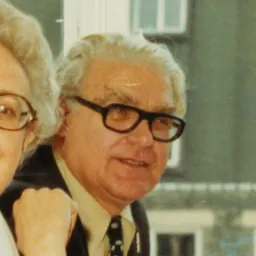




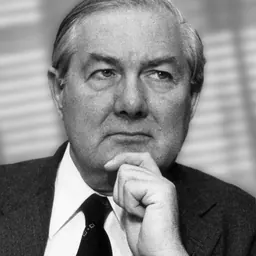


Related people
Same field, nearest in time
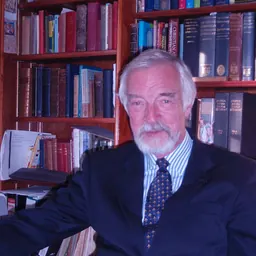
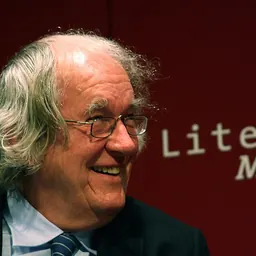


Contemporaries
People whose lives overlapped Howard Erskine-Hill's




Frequently asked questions
Who was Howard Erskine-Hill?
English literary scholar
When was Howard Erskine-Hill born?
Howard Erskine-Hill was born on 19 June 1936 in Wakefield.
When did Howard Erskine-Hill die?
Howard Erskine-Hill died on 26 February 2014.
What was Howard Erskine-Hill's occupation?
Howard Erskine-Hill was a literary historian, literary critic, university teacher, scholar of English and literary scholar.
Sources & further reading
· Wikipedia: Howard Erskine-Hill
· DBpedia: Howard Erskine-Hill
Cite this page
APA: Biography.guide. (2026). Howard Erskine-Hill. https://biography.guide/howard-erskine-hill/
MLA: "Howard Erskine-Hill." Biography.guide, https://biography.guide/howard-erskine-hill/.
Chicago: "Howard Erskine-Hill." Biography.guide. https://biography.guide/howard-erskine-hill/.
Data last updated: 2026-09-20 · Spot an error? Report a correction.
Page generated 2026-09-27 05:32 UTC