
About Hoshi Tōru
Lived 1850 – 1901 (aged 51). Hoshi Tōru was a Japanese lawyer and politician.
Hoshi Tōru (星 亨; 19 May 1850 – 21 June 1901) was a Japanese politician and cabinet minister in Meiji period Japan.
Early life and education Hoshi was born in Edo in what is now part of Tsukiji, Tokyo; little is known about his biological father other than that he was a plasterer. His mother remarried to a medical doctor in Uraga, and he adopted the Hoshi surname. Initially intending to pursue a career in medicine, he learned English at Yokohama, and eventually became an English language instructor. He travelled to England, where he studied at the Middle Temple, and in 1877 became the first Japanese to qualify as a barrister in the United Kingdom.
Career After the Meiji Restoration, he enjoyed the patronage of Mutsu Munemitsu and entered into the service of the new Meiji government, serving as head of the Yokohama Customs Office. At one point he precipitated a minor diplomatic incident over a disagreement with British minister Harry Smith Parkes over what kanji to use in translating the title of “queen” as in Queen Victoria, and refusing to agree to Parkes's position, resigned his post.
On his return to Japan from England, Hoshi entered the Ministry of Justice, and was outspoken in his criticism of the hanbatsu, or clan-based politics, and what he perceived as the weak position of the Japanese government over the revision of the imequal treaties with the western powers. He was briefly expelled from Tokyo under the Peace Preservation Law and forbidden to publish in 1887 and jailed in 1888. Hoshi left Japan for the United States and Canada in 1888 soon after his release, remaining for a year, and continued on to England and Germany, only returning to Japan in 1890.
In 1892, he was elected to the House of Representatives of Japan in the 1892 General Election under the Liberal Party and became Speaker of the House in May 1892. However, he was removed from office in December 1893 following a vote of no confidence. Well versed in legal issues concerning the United States from his time as Resident Minister in Washington, D.C., from 1896 to 1898, Hoshi was scheduled to be appointed Foreign Minister under the 1st Ōkuma administration; however, due to internal political issues within the Kenseitō party, the appointment never came through. Instead, Hoshi was appointed Communications Minister in the 4th Itō administration in October 1900.
Corruption scandal and death He also left the Kenseitō to join Itō’s party, Rikken Seiyūkai. However, the same month he was accused by the newspaper Mainichi Shimbun of involvement in a corruption scandal within the Tokyo City Assembly. Although he protested his innocence, he was forced to resign three months later due to a relentless campaign against his name by the newspaper. In March 1901, he was found innocent due to lack of evidence, but during the middle of the trial he was assassinated by Iba Sōtarō with a short sword.
Don’t just read it —
keep it.
Full-length biographies made to live with: read them, listen on the way to work, watch them tonight.
- E-book
- Audio
- Video
Instant download · yours to keep · every purchase keeps this site free
Important facts
People in Hoshi Tōru's life
Named in this biography and alive at the same time
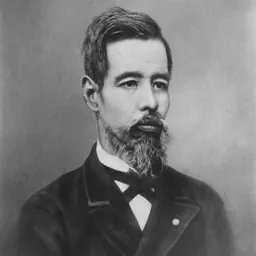

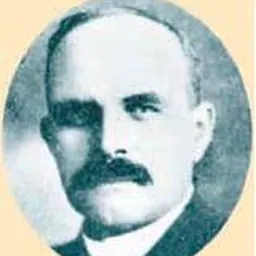

Related people
Same field, nearest in time
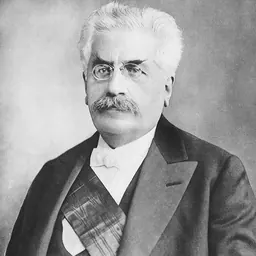
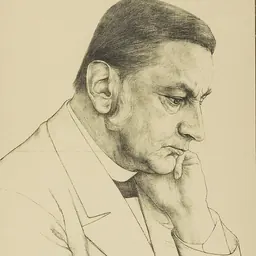


Contemporaries
People whose lives overlapped Hoshi Tōru's


Frequently asked questions
Who was Hoshi Tōru?
Japanese politician
When was Hoshi Tōru born?
Hoshi Tōru was born on 19 May 1850 in Edo.
When did Hoshi Tōru die?
Hoshi Tōru died on 21 June 1901 in Tokyo.
What was Hoshi Tōru's occupation?
Hoshi Tōru was a lawyer and politician.
What nationality was Hoshi Tōru?
Hoshi Tōru was Japanese.
Sources & further reading
Cite this page
APA: Biography.guide. (2026). Hoshi Tōru. https://biography.guide/hoshi-toru/
MLA: "Hoshi Tōru." Biography.guide, https://biography.guide/hoshi-toru/.
Chicago: "Hoshi Tōru." Biography.guide. https://biography.guide/hoshi-toru/.
Data last updated: 2026-09-25 · Spot an error? Report a correction.
Page generated 2026-09-27 05:11 UTC