
Horst-Eberhard Richter
German psychoanalyst
About Horst-Eberhard Richter
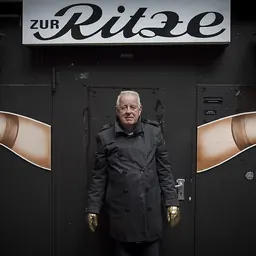
Lived 1923 – 2011 (aged 88). Horst-Eberhard Richter was a German medical specialist, university teacher, non-fiction writer, sociologist, psychoanalyst and philosopher.
Horst-Eberhard Richter (28 April 1923 – 19 December 2011) was a German psychoanalyst, psychosomatist and social philosopher. The author of numerous books was also regarded by many as the große alte Mann of the Federal German Peace movement.
Life Horst-Eberhard Richter was born in Berlin as the only child of the engineer Otto Richter and his wife Charlotte and grew up as an only child. He describes his mother as a very emotional woman who clung strongly to him. His father was a successful engineer, head of a Siemens plant and author of a standard reference book on precision mechanics. Richter himself experienced his father as a quiet, introverted brooding man. Richter was a member of the Hitler Youth and the Reich Labour Service.
After his school-leaving examination in 1941, Horst-Eberhard Richter was drafted into the Wehrmacht. In 1942, he served as a gunner in an on the Eastern front. In 1943, he was able to transfer to the medical corps. In 1945, he was deployed in the Italian campaign, where he deserted shortly before the end of the war and hid in a refuge in the Alps. There, French occupation soldiers tracked him down and suspected him of being a Nazi Freischar in hiding, a so-called Werwolf and held him for four months in an old Innsbruck prison until a French court-martial released him. After returning home to Germany, he learned that his parents had been murdered by Soviet soldiers months after the end of the war.
In 1946, Richter met Bergrun Luckow, who was married and pregnant at the time. After their divorce, Richter and Luckow married a year later. After Luckow's first husband agreed, Richter adopted the daughter and they had another son and daughter.
Richter studied medicine, philosophy and psychology in Berlin.
From 1952 to 1962, Richter ran a counselling and research centre for mentally disturbed children and adolescents in Berlin. In addition, he trained as a psychoanalyst and as a specialist in neurology and psychiatry. From 1959 to 1962, he directed the Berlin Psychoanalytic Institute. In 1962, he was appointed to the newly established chair of psychosomatics at the University of Giessen, where he built up a three-part interdisciplinary centre with a psychosomatic clinic and departments of medical psychology and medical sociology, of which he became director. In addition, he founded a psychoanalytic institute at the site. From 1964 to 1968, Richter was chairman of the . In 1971, he endorsed as an expert witness the Socialist Patients' Collective founded by Wolfgang Huber. He retired in 1991. In 2004, he held a visiting scholarship at the University of Vienna endowed by Peter Ustinov. From 1992 to 2002, he directed the Sigmund Freud Institute in Frankfurt.
Richter died on 19 December 2011 in Giessen at the age of 88 after a short illness. The funeral took place on 23 December 2011 at the state-owned Friedhof Heerstraße in Berlin Westend (grave location: 16-C-57). Spouse Bergrun Richter née Luckow (b. 1923) was buried at his side in August 2019. As a gravestone serves a boulder with a quotation by Max Scheler, which was already to be read in simplified form in the family's funeral announcement: "Man, before he is a thinking and a willing being, is a loving being."
Work
Richter first became internationally known as one of the pioneers of psychoanalytic family research and family therapy. Complementing Freud's analysis of the , he conversely investigated the pathogenic effect of disturbed parents on their children. In joint research work with Dieter Beckmann he wrote a textbook on cardiac neurosis and, together with , developed the . Richter "discovered the emancipatory potential of the group, both in psychotherapeutic and political terms."
After critical analyses of the new social movements of the 1970s, his cultural-philosophical work Der Gotteskomplex appeared: Man wants to replace the loss of faith security with a will to rule based on natural science - being God instead of having God. In the vacillation between fear of impotence and delusion of omnipotence, the scientific-technical revolution threatens to lose ethical control.
In 1981, Richter's book Alle redeten vom Frieden became one of the leading figures of the peace movement and in 1982 co-founded the West German section of the International Physicians for the Prevention of Nuclear War, which received the Nobel Peace Prize in 1985 for its commitment. In 1987, Richter co-initiated the International Foundation for the Survival and the Development of Humanity, supervised by Mikhail Gorbachev. There, he led a comparative study to improve understanding between German and Russian students. From 1991 to 2001, Richter moderated the East-West Symposium on Political Self-Reflection with leaders from politics, science, literature and the church from the old and new federal States. During both Iraq wars, he was one of the most respected intellectuals of the peace movement. What Carl Friedrich von Weizsäcker called the "mental illness of peacelessness" in the West has been the main topic of Richter's cultural psychology analyses in speeches and writings since 2007.
Richter drafted a Frankfurt Declaration, which was intended to make it possible for doctors to publicly declare by signature "to refuse any training and further education in war medicine." 2002: Goethe Plaque of the City of Frankfurt, for his "consistently pacifist stance", with which he had established himself as a "cautionary and widely recognised authority". 2003: Gandhi-Luther King-Ikeda Award of the Morehouse College, Atlanta, US. 2007: Medal of Honour of the Faculty of Medicine of the University of Gießen, in recognition of his life's work 2007: Honorary citizenship of the university town Gießen. 2008: , for outstanding services to the German health care system and the medical profession. 2010: , Awarded by Egon Vaupel, Lord Mayor of the City of Marburg and the Humanist Union.
Richter refused three times the Order of Merit of the Federal Republic of Germany on the grounds that "too many s" had received it.
Publications 1960–1969 Eltern, Kind und Neurose. Die Rolle des Kindes in der Familie/Psychoanalyse der kindlichen Rolle, new edition 1962 Rowohlt Verlag. with Dieter Beckmann: Herzneurose. Thieme, 1969. New edition Psychosozial-Verlag 1998.
1970–1979 Patient Familie. Entstehung, Struktur und Therapie von Konflikten in Ehe und Familie. 1970. New edition Rowohlt 2001. with Dieter Beckmann: Der Gießen-Test (GT). 1972. 4th edition 1991. Die Gruppe. Hoffnung auf einen neuen Weg, sich selbst und andere zu befreien; Psychoanalyse in Kooperation mit Gruppeninitiativen. 1972. New edition Psychosozial-Verlag 1995. Lernziel Solidarität, 1974. New edition Psychosozial-Verlag 1998. Flüchten oder Standhalten. 1976. 3rd Edition. Psychosozial-Verlag 2001. (No. 1 in the Spiegel bestseller list from 19 April to 10 October 1976) with Hans Strotzka und Jürg Willi: Familie und seelische Krankheit. Rowohlt, 1976. Der Gotteskomplex. 1979. New edition Psychosozial-Verlag 2005.
1980–1989 Alle redeten vom Frieden. Versuch einer paradoxen Intervention. Rowohlt, Reinbek 1984. Zur Psychologie des Friedens. Rowohlt, Reinbek 1984. Die Chance des Gewissens. Erinnerungen und Assoziationen. 1986. Neuauflage Psychosozial-Verlag 2002. Die hohe Kunst der Korruption. Erkenntnisse eines Politik-Beraters. 1989, Heyne-Sachbuch 158 .
1990–1999 Umgang mit Angst. 1992. New edition Econ 2000. Wer nicht leiden will, muss hassen. Zur Epidemie der Gewalt. 1993. New edition Psychosozial-Verlag 2004. Bedenken gegen Anpassung. Psychoanalyse und Politik. 1995. 2003 newly published under the title Psychoanalyse und Politik. Psychosozial-Verlag. Erinnerungsarbeit und das Menschenbild in der Psychotherapie. 1995. Lindauer text to the Lindauer Psychotherapiewochen, Springer-Verlag 1996 (PDF) Versuche, die Geschichte der RAF zu verstehen. Das Beispiel Birgit Hogefeld. Psychosozial-Verlag, 1996. Als Einstein nicht mehr weiterwußte 1997. New edition Econ 2000.
2000–2009 Wanderer zwischen den Fronten. Gedanken und Erinnerungen. (Autobiographie) Kiepenheuer und Witsch, 2000. Ullstein Verlag, Munich 2001. Kultur des Friedens. Psychosozial-Verlag, Gießen 2001. Das Ende der Egomanie. Die Krise des westlichen Bewusstseins. 2002, (as Taschenbuch: Knaur 77655, Munich 2003, ). with Bernard Cassen and Susan George: Eine andere Welt ist möglich! [Dokumentation des Attac-Kongresses vom 19.–21. Oktober 2001 in Berlin]. VSA, Hamburg 2002. with Frank Uhe: Aufstehen für die Menschlichkeit. Psychosozial-Verlag, Gießen 2003. Ist eine andere Welt möglich? Für eine solidarische Globalisierung. Kiepenheuer und Witsch, Cologne 2003 (KiWi 774, unchanged new edition: Psychosozial-Verlag, Gießen 2005, ). Die Krise der Männlichkeit in der unerwachsenen Gesellschaft. Psychosozial-Verlag, Gießen 2006. Die seelische Krankheit Friedlosigkeit ist heilbar Psychosozial-Verlag, Gießen 2008.
2010–2011 Moral in Zeiten der Krise. Suhrkamp, Frankfurt 2010,
Other publications Vorwort zu: Christiane F.: Wir Kinder vom Bahnhof Zoo. Written down from tape transcripts by Kai Hermann and Horst Rieck. Gruner & Jahr, Hamburg 1978 Niederlage des Intellekts. In: Freitag. Die Ost-West-Wochenzeitung. Nr. 31 from 23 July 2004 (Online)
Film Horst-Eberhard Richter, Psychoanalytiker. Dokumentarfilm, Deutschland, 2007, 43:30 Min., Buch und Regie: Wolfgang Schoen und Torsten Halsey, Produktion: tvschoenfilm, SWR, Arte, First broadcast: 3 March 2008 on Arte.
Don’t just read it —
keep it.
Full-length biographies made to live with: read them, listen on the way to work, watch them tonight.
- E-book
- Audio
- Video
Instant download · yours to keep · every purchase keeps this site free
Important facts
People in Horst-Eberhard Richter's life
Named in this biography and alive at the same time



Contemporaries
People whose lives overlapped Horst-Eberhard Richter's

Frequently asked questions
Who was Horst-Eberhard Richter?
German psychoanalyst (1923-2011)
When was Horst-Eberhard Richter born?
Horst-Eberhard Richter was born on 28 April 1923 in Berlin.
When did Horst-Eberhard Richter die?
Horst-Eberhard Richter died on 19 December 2011 in Giessen.
What was Horst-Eberhard Richter's occupation?
Horst-Eberhard Richter was a medical specialist, university teacher, non-fiction writer, sociologist, psychoanalyst and philosopher.
What nationality was Horst-Eberhard Richter?
Horst-Eberhard Richter was German.
Sources & further reading
· Wikipedia: Horst-Eberhard Richter
· DBpedia: Horst-Eberhard Richter
Cite this page
APA: Biography.guide. (2026). Horst-Eberhard Richter. https://biography.guide/horst-eberhard-richter/
MLA: "Horst-Eberhard Richter." Biography.guide, https://biography.guide/horst-eberhard-richter/.
Chicago: "Horst-Eberhard Richter." Biography.guide. https://biography.guide/horst-eberhard-richter/.
Data last updated: 2026-09-26 · Spot an error? Report a correction.
Page generated 2026-09-27 05:15 UTC