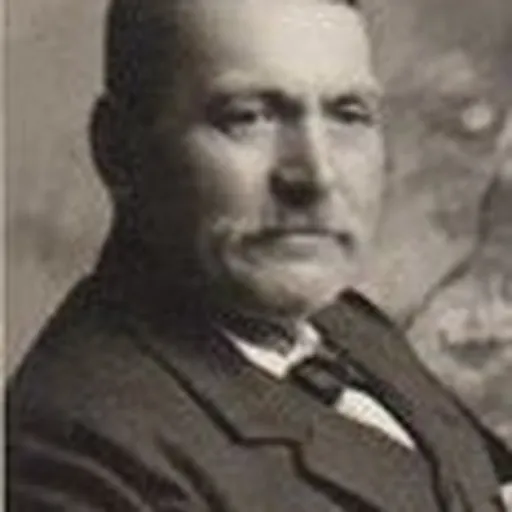
Hōri Pukehika
Te Ati Haunui-a-Paparangi leader, carver
About Hōri Pukehika
Lived 1900 – 1932. Hōri Pukehika was a New Zealand wood carver.
Hōri Pukehika (23 March 1851 – 30 May 1932) was a New Zealand Māori tribal leader and woodcarver.
Youth and Family Pukehika was born in Pipiriki, New Zealand. He was of the Ngatiruaka, Ngati Hinepango, Ngapaerangi, and Ngati Tuera hapū, and the iwi Te Ati Haunui-a-Paparangi. His father was Te Wikirini Te Tua of Te Āti Haunui-a-Pāpārangi iwi, and his mother was Peti Te Oiroa of Ngāti Pāmoana. When he was 17 years of age, he was among those who watched from the bank of the river as the chosen warriors fought in the battle of Moutoa Island in May 1864. He accompanied Te Keepa Te Rangihiwinui (also known as Major Kemp, the first Māori to command British soldiers) in pursuit of Te Kooti. He was honoured with the Māori War Medal for his bravery in 1869 at the Battle of Te Pōrere near Taupō, where Te Keepa attacked Te Kooti's pā. He was a popular orator for young men who looked up to him as the last of the great Māori warriors of the colonial wars. thumb
In 1868 Hōri Pukehika married Pango Ngākaari Tukia of Rānana, Whanganui River. Their son died young. where they had five children: Rawinia Pukehika later Johnston (1902), George Hōri Pukehika (1906–1970), Ngakari Tukia "Pango" Pukehika later Park (1907–1971), Tarawa Pukehika (1910–1959), and Ngamare Pukehika (1913–1948). He was a strong supporter of the Rātana movement and believed in abstaining from alcohol.
Hōri Pukehika served as a civic leader in his home community, and he coordinated the annual New Zealand riverboat and Māori canoe championships. He was a strong supporter of maintaining and enhancing Māori culture. While a young man, he had hidden the armour of Chief Hongi Hika, fearing that this precious artifact of early history—a gift from King George IV while Hongi was on a visit to England—would fall into the hands of European speculators. In 1908, while serving as the Native Sanitary Inspector he retrieved the armour which was then archived in the Dominion Museum in Wellington. He was elected a life member of the Whanganui Regional Museum board of trustees.
Christchurch International Exposition He is best known for creating the entrance of the model pā at the New Zealand International Exhibition in Christchurch in 1906–07. thumb Entry to Maori pā at 1906 Christchurch International Exposition, carving by Hori Pukehika His carving was reproduced and used on the cover of the souvenir booklet for the Exhibition. He and Tuta Niho-Niho lived at the model pā for nearly six months. Approximately 65,000 people visited the pā. His wife, Tira Rātana Pukehika, also attended and participated in various events. She was highlighted in the exposition report by James Cowan: thumb Tira Rātana aka Erita Pukehika (1868–1935), weaver at Christchurch International Exposition 1906–07, sitting at right in front of raupo house. Amongst the handicrafts in which the Maoris employed themselves in the pa was the ancient art of weaving flax and feather mats or cloaks. One particularly fine specimen of a kahu-kiwi, or mat of kiwi (apteryz) feathers-the feathers are woven or stitched on the outside of a soft flax fabric-was made by Tiria Hori, a young woman of the Ngatituera Tribe, from Pukerimu, on the Wanganui River. This beautiful cloak was ornamented with a handsome border of the pattern known as taniko: the dyes used were made from the bark of native trees—the toatoa for the red colouring, and the raurekau for the black.
Sir Peter Henry Buck KCMG DSO, also known as Te Rangi Hīroa or Te Rangihīroa, who led the exposition pā's sanitary infrastructure design and maintenance, admitted that he first learned about Māori weaving from by Tira Pukehika. He was quoted in a 1949 newspaper article: “If it weren’t for Tira's patience in the first place a subsequent paper I wrote on weaving would never have been recognised.” His paper brought him success and led to his receiving a Fellowship of the Royal Society of New Zealand.
Death and legacy Before his death in 1932, a complete carving of the whakamahau (verandah) of a wharepuni completed by Pukehika and Te Ture was presented by Trihapehi Parewa—granddaughter of Te Reimana, chief of Te Tawhitinui—to the Whanganui Regional Museum in 1930.
Hōri Pukehika died at Pungarehu on 30 May 1932, said to be aged 85, and was survived by his second wife Tira, three daughters and two sons. A Māori mantelpiece, brought from the great meeting house Waiherehere, at Koriniti (Whanganui River), was preserved in the Whanganui Regional Museum.
Don’t just read it —
keep it.
Full-length biographies made to live with: read them, listen on the way to work, watch them tonight.
- E-book
- Audio
- Video
Instant download · yours to keep · every purchase keeps this site free
Important facts
People in Hōri Pukehika's life
Named in this biography and alive at the same time

Related people
Same field, nearest in time

Contemporaries
People whose lives overlapped Hōri Pukehika's




Frequently asked questions
Who was Hōri Pukehika?
Te Ati Haunui-a-Paparangi leader, carver
When was Hōri Pukehika born?
Hōri Pukehika was born in 1900.
When did Hōri Pukehika die?
Hōri Pukehika died in 1932.
What was Hōri Pukehika's occupation?
Hōri Pukehika was a wood carver.
What nationality was Hōri Pukehika?
Hōri Pukehika was New Zealand.
Sources & further reading
Cite this page
APA: Biography.guide. (2026). Hōri Pukehika. https://biography.guide/hori-pukehika/
MLA: "Hōri Pukehika." Biography.guide, https://biography.guide/hori-pukehika/.
Chicago: "Hōri Pukehika." Biography.guide. https://biography.guide/hori-pukehika/.
Data last updated: 2026-09-20 · Spot an error? Report a correction.
Page generated 2026-09-27 05:09 UTC