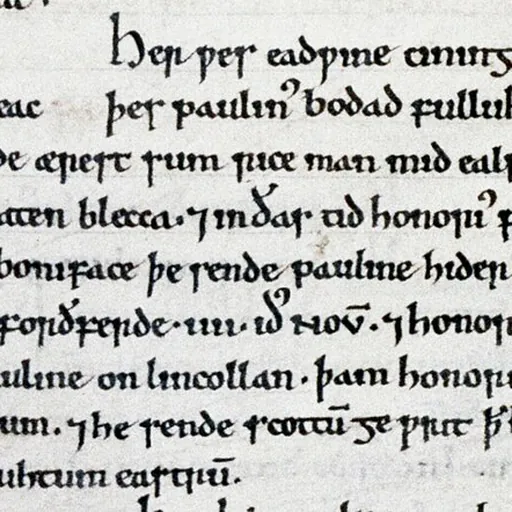
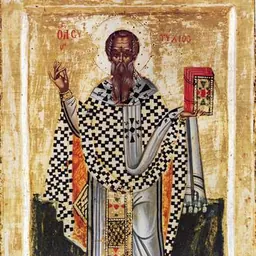
Honorius
Member of the Gregorian mission to the Anglo-Saxons and Archbishop of Canterbury
About Honorius
Lived 550 – 653 (aged 102–103). Honorius was a missionary and catholic priest.
Honorius (died 30 September 653) was a member of the Gregorian mission to Christianize the Anglo-Saxons from their native Anglo-Saxon paganism in 597 AD who later became Archbishop of Canterbury. During his archiepiscopate, he consecrated the first native English bishop of Rochester as well as helping the missionary efforts of Felix among the East Anglians. Honorius was the last to die among the Gregorian missionaries.
Early life A Roman by birth, Honorius may have been one of those chosen by Pope Gregory the Great for the Gregorian mission to England, although it seems more likely that he was a member of the second party of missionaries, sent in 601. It is not known if his name was given to him at birth or if he chose it when he became archbishop.
Archbishop In 627, Honorius was consecrated as archbishop by Paulinus of York at Lincoln. Honorius wrote to Pope Honorius I asking the pope to raise the see of York to an archbishopric, so that when one archbishop in England died, the other would be able to consecrate the deceased bishop's successor. The pope agreed, and sent a pallium for Paulinus, but by this time, Paulinus had already been forced to flee from Northumbria. When Paulinus, after the death of King Edwin of Northumbria in October 633, fled Northumbria, he was received by Honorius and appointed to the bishopric of Rochester. The papal letter may also mean that the traditional date of consecration for Honorius may need re-dating, as the long gap between 627, when he is said to have been consecrated, and 634, when he finally received a pallium, is much longer than usually found. It may be that Honorius was consecrated closer to 634.
Honorius consolidated the work of converting the English by sending Felix, a Burgundian, to Dunwich after Felix came to the archbishop and made known his desire to go to East Anglia as a missionary. or Felix may have already been consecrated on the continent. The dating of this episode is unclear, but it is probably close to 631. It is possible that King Sigeberht of East Anglia, who converted to Christianity while he was in exile on the continent, had already met Felix and was behind Felix's journey to Honorius. As well as his help to Felix, Honorius consecrated the first Anglo-Saxon bishop, Ithamar of Rochester,
Death and legacy
Honorius died on 30 September 653, the last of the Gregorian missionaries. In the 1120s his relics were still being venerated at St Augustine's.
Don’t just read it —
keep it.
Full-length biographies made to live with: read them, listen on the way to work, watch them tonight.
- E-book
- Audio
- Video
Instant download · yours to keep · every purchase keeps this site free
Important facts
People in Honorius's life
Named in this biography and alive at the same time

Related people
Same field, nearest in time


Contemporaries
People whose lives overlapped Honorius's



Frequently asked questions
Who was Honorius?
member of the Gregorian mission to the Anglo-Saxons and Archbishop of Canterbury
When was Honorius born?
Honorius was born in 550 in Rome.
When did Honorius die?
Honorius died on 30 September 653 in Canterbury.
What was Honorius's occupation?
Honorius was a missionary and catholic priest.
Sources & further reading
· DBpedia: Honorius of Canterbury
Cite this page
APA: Biography.guide. (2026). Honorius. https://biography.guide/honorius-missionary/
MLA: "Honorius." Biography.guide, https://biography.guide/honorius-missionary/.
Chicago: "Honorius." Biography.guide. https://biography.guide/honorius-missionary/.
Data last updated: 2026-09-22 · Spot an error? Report a correction.
Portrait: Wikimedia Commons · author & licence
Page generated 2026-09-27 05:02 UTC