
About Hjalmar Andersen
Lived 1923 – 2013 (aged 90). Hjalmar Andersen was a Norwegian speed skater and rower.
Hjalmar "Hjallis" Johan Andersen (12 March 1923 – 27 March 2013) was a speed skater from Norway who won three gold medals at the 1952 Winter Olympic Games of Oslo, Norway. He was the only triple gold medalist at the 1952 Winter Olympics, and as such, became the most successful athlete there.
Nicknamed King Glad for his famous cheerful mood, he was one of Norway's most popular sportsmen ever. Four statues of him were raised during his lifetime; in Trondheim, Hamar, Rødøy and outside Bislett Stadium in Oslo. He was honored with a funeral at the state’s expense.
Early life Andersen was born on Rødøya, an island off the coast of Nordland in Norway, where his mother hailed from. His father, who originally was from Hammerfest, was a boatswain. While Andersen was still a toddler, the family moved to Lademoen, a working-class neighborhood in Trondheim, where sport and friendship was an important part of life.
He began speed skating at the age of 10, and became a member of the sports club Falken. The club was part of the Workers' Sports Federation (AIF), and the first competitions he participated in were small, local competitions organized by the AIF. Other members of the club were Sverre Farstad and Henry Wahl; later Andersen, Farstad and Wahl would be known by the nickname The Falken Trio. Like others of his generation, he had to wait until the winter of 1946 to take up his sports career again.
Professionally, he began working as a delivery boy in a sports store after having completed the folkeskole at about 14. He later worked as a lorry driver for several years. In 1950, when he was at the height of his speed skating career, he opened his own sports store in Trondheim, which he ran until 1960.
During the event, Andersen won the three first distances and was a clear favourite to become allround champion before the 10,000 metres. After 11 laps, however, Andersen fell.
The record created enormous interest in Andersen in the 1952 Winter Olympics that started in Oslo one week later. On 17 February, Andersen won his first Olympic gold medal in the 5,000 meters with a new Olympic record. The next day, he won gold in the 1,500 meters, and he ended the competition by setting a new Olympic record in winning the 10,000 meters on 19 February. The three days of skating competitions were attended by 75,000 enthusiastic spectators.
During his career, he set four world records. His 10,000 m world record in 1949 (16:57.4) was the first official world record below 17 minutes for the distance. As it was skated outside of Norway, it did not count as a Norwegian national record, of which Andersen set eight during his skating career. Andersen represented Sportsklubben Falken (Sports Club Falcon) in Trondheim.
Later years After he ended his skating career, Andersen moved to Tønsberg. In addition to his skating triumphs, Andersen was also a great cyclist on a national level, and he was awarded the Egebergs Ærespris in 1951 for his achievements in speed skating and cycling. He also published several books, partly memories from his sports career and partly humoristic stories.
He received the King's Medal of Merit in gold in 1998 and The Honor Prize at Idrettsgallaen together with Knut Johannesen in 2013,
The Norwegian government decided that Hjalmar Andersen should be honored with a funeral at the state’s expense. He was the third athlete to be given this honor since 1998.
Prime minister Jens Stoltenberg stated that “Hjalmar Andersen became a sport legend at a time when speed skating was part of the Norwegian identity, and got involved in the work for sailors at time when ship transport was interwoven with the nation’s soul. In this way, "Hjallis contributed to forming post-war Norway in an important way and won a huge place in the hearts of several generations of Norwegians.”
The funeral ceremony in Tønsberg Cathedral on 4 April 2013 was attended by King Harald V and by Norway's Prime minister Jens Stoltenberg who gave a speech.
Medals and Records An overview of medals won by Andersen at important championships he participated in, listing the years in which he won each:
Championships Gold medal Silver medal Bronze medal Winter Olympics 1952 (1500 m) 1952 (5000 m) 1952 (10000 m) – – World Allround 1950 1951 1952 – – European Allround 1950 1951 1952 1949 1954 – Norwegian Allround 1950 1951 1952 1954 – 1949 1956
Over the course of his career, Andersen skated four world records:
Source: SpeedSkatingStats.com
Norwegian records
EventResultDateVenue
Note that in the days Hjalmar skated a Norwegian record could only be skated in Norway itself, so his Davos world record could not become a Norwegian record as well.
Personal records
To put these personal records in perspective, the WR column lists the official world records on the dates that Andersen skated his personal records.
EventResultDateVenueWR
Ranking as speed skater Andersen had a final Adelskalender score of 187.446 points. He held first place on the Adelskalender for 708 days between 1952 and 1954.
First as of 500m 1500m 5000m 10000m Total points Bumped by 24 January 1952 42,2 2.17,4 8.03,7 17.08,8 187,810 Nikolay Mamonov 10 February 1952 43,7 2.16,4 8.07,3 16.32,6 187,526 18 January 1954 42,2 2.17,4 8.03,7 16.52,2 186,980 Nikolay Mamonov
Awards Morgenbladets gold medal, 1949 Egebergs Ærespris, 1951 Fearnleys olympiske ærespris, 1952 Norwegian Sportsperson of the Year, 1952 Olavstatuetten (awarded by Adresseavisen), 1976 King's Medal of Merit in gold, 1998 The Honor Prize at Idrettsgallaen, 2013
Books Hjalmar Andersen: Harde løp (1951). Self-published. Hjalmar Andersen:Siste runde (1952). Norsk idrettsforlag. Hjalmar Andersen and Sverre E. Mortensen: Hva idretten ga meg (1983). Gyldendal Norsk Forlag. Hjalmar Andersen and Sverre E. Mortensen: Medaljens bakside (1985). Gyldendal Norsk Forlag. Hjalmar Andersen: Den gode, gamle, gale istida (1989). Det Norske Samlaget. Hjalmar Andersen and Knut-Anders Løken: Gull og glis (1990) Det Norske Samlaget.
Don’t just read it —
keep it.
Full-length biographies made to live with: read them, listen on the way to work, watch them tonight.
- E-book
- Audio
- Video
Instant download · yours to keep · every purchase keeps this site free
Important facts
People in Hjalmar Andersen's life
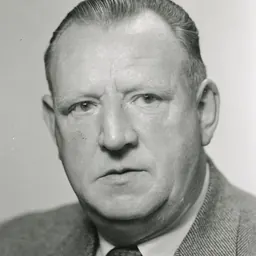
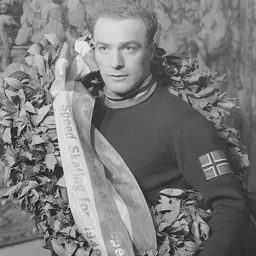
Named in this biography and alive at the same time




Related people
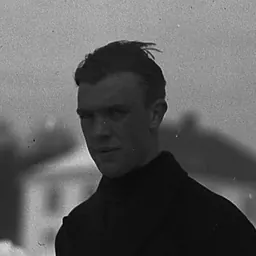
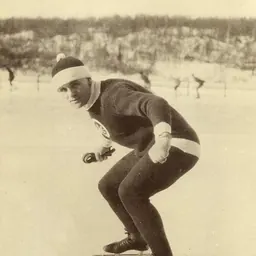
Same field, nearest in time

Contemporaries
People whose lives overlapped Hjalmar Andersen's
Frequently asked questions
Who was Hjalmar Andersen?
speed skater from Norway (1923-2013)
When was Hjalmar Andersen born?
Hjalmar Andersen was born on 12 March 1923 in Rødøy Municipality.
When did Hjalmar Andersen die?
Hjalmar Andersen died on 27 March 2013 in Oslo.
What was Hjalmar Andersen's occupation?
Hjalmar Andersen was a speed skater and rower.
What nationality was Hjalmar Andersen?
Hjalmar Andersen was Norwegian.
Sources & further reading
Cite this page
APA: Biography.guide. (2026). Hjalmar Andersen. https://biography.guide/hjalmar-andersen/
MLA: "Hjalmar Andersen." Biography.guide, https://biography.guide/hjalmar-andersen/.
Chicago: "Hjalmar Andersen." Biography.guide. https://biography.guide/hjalmar-andersen/.
Data last updated: 2026-09-20 · Spot an error? Report a correction.
Page generated 2026-09-27 05:18 UTC