
About Hirotaka Sugawara
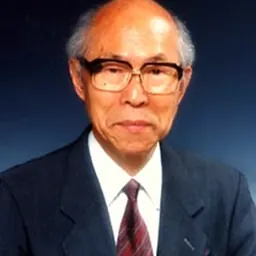
Born 1938. Hirotaka Sugawara is a Japanese physicist.
is a Japanese physicist, specializing in the theoretical study of particle physics. He is known for the "Lee-Sugawara relation" and "A Field Theory of Currents" aka "Sugawara Construction" of the energy-momentum tensor.
Early life
Sugawara was born in 1938 as a son of a Zen Buddhist in Miyagi, Japan. He obtained his BSc in Physics (1961), MSc in Physics (1963), and PhD in Physics (1966), from the University of Tokyo.
Academic career
When Sugawara was still a graduate student at the University of Tokyo, he derived a relation for non-leptonic hyperon decay amplitudes called "Lee-Sugawara relation" while studying the symmetry of weak interactions. He received his doctorate from the University of Tokyo in 1966, and has held postdoctoral research positions at Cornell University, University of California, Berkeley, and University of Chicago. Upon his return to Japan in 1968, he became a research associate at Tokyo University of Education, and he joined the University of Tokyo as an assistant professor in 1971. which opened the door to the algebraic formulation of field theories.
In 1975, he was promoted to a full professor at the National Laboratory for High Energy Physics (today known as High Energy Accelerator Research Organization (KEK)), where he served as the Director General from 1989 to 2003. KEKB, also called a B-factory for its copious production of B-mesons, is a particle accelerator used in the Belle experiment to study CP violation. He contributed significantly to the B-factory project as the Director General of KEK (the Japanese National Laboratory for High Energy Physics). He led the launch of J-PARC (Japan Proton Accelerator Research Complex) that was jointly developed between KEK and JAEA (the Japan Atomic Energy Agency). Concurrently he also served on the Mombusho Council for Research, and for other science councils in Japan. In 2004, he held an Executive Director position at Sokendai Graduate University for Advanced Studies. He became a Director (Washington DC Office) of Japanese Society for the Promotion of Science (JSPS) in 2008.
Awards and honors Sugawara wore the Order of the Sacred Treasure, Gold Rays with Neck Ribbon around his neck. (May 13, 2013)
17th Nishina Memorial Prize, 1971 Medal of Honor with Purple Ribbon, Japan, 1999
Selected publications Hirotaka Sugawara, "Application of Current Commutation Rules to Nonleptonic Decay of Hyperons", Physical Review Letters, Vol.15, Issue 22, American Physical Society, November 29, 1965, pp. 870–873. Hirotaka Sugawara, "A Field Theory of Currents", Physical Review, Vol.170, Issue 5, American Physical Society, June 25, 1968, pp. 1659–1662. Tohru Eguchi and Hirotaka Sugawara, "Extended model of elementary particles based on an analogy with superconductivity", Physical Review D, Vol.10, Issue 12, American Physical Society, December 15, 1974, pp. 4257–4262. H. Sugawara, "Isobar production and the SU3 symmetry", Physics Letters, Vol.9, Issue 1, Elsevier, March 15, 1964, pp. 60–62. Hirotaka Sugawara, "Application of Current Commutation Rules to Nonleptonic Decay of Hyperons", Physical Review Letters, Vol.15, Issue 25, American Physical Society, December 20, 1965, pp. 870–873. Hirotaka Sugawara and Frank von Hippel, "Zero-Parameter Model of the N–N Potential", Physical Review, Vol.172, Issue 5, American Physical Society, August 25, 1968, pp. 1764–1788. Hirotaka Sugawara, "Theory of Currents-How to Break the Symmetry", Physical Review Letters, Vol.21, Issue 11, American Physical Society, September 9, 1968, pp. 772–775. Jiro Arafune and Hirotaka Sugawara, "Breakdown of the Pomeranchuk Theorem and the Behavior of the Leading J-Plane Singularity", Physical Review Letters, Vol.25, Issue 21, American Physical Society, November 23, 1970, pp. 1516–1518. Hirotaka Sugawara, "Relativistic collective motion", Physical Review D, Vol.12, Issue 10, American Physical Society, November 15, 1975, pp. 3272–3278. Sandip Pakvasa and Hirotaka Sugawara, "CP violation in the six-quark model", Physical Review D, Vol.14, Issue 1, American Physical Society, July 1, 1976, pp. 305–308. Hirotaka Sugawara, "Theory of quark confinement based on an analogy with a theory of magnetic monopoles", Physical Review D, Vol.14, Issue 10, American Physical Society, November 15, 1976, pp. 2764–2772. Sandip Pakvasa and Hirotaka Sugawara, "Evading the axion without massless quarks", Physical Review D, Vol.19, Issue 7, American Physical Society, April 1, 1979, pp. 2225–2226. Hirotaka Sugawara, "Dynamical calculation of quark, lepton, and gauge-boson masses", Physical Review D, Vol.30, Issue 11, American Physical Society, December 1, 1984, pp. 2396–2407. Hirotaka Sugawara, "String in curved space: Use of spinor representation of a noncompact group", Physical Review Letters, Vol.56, Issue 2, American Physical Society, January 13, 1986, pp. 103–106.
Don’t just read it —
keep it.
Full-length biographies made to live with: read them, listen on the way to work, watch them tonight.
- E-book
- Audio
- Video
Instant download · yours to keep · every purchase keeps this site free
Important facts
Related people
Same field, nearest in time




Contemporaries
People whose lives overlapped Hirotaka Sugawara's




Frequently asked questions
Who is Hirotaka Sugawara?
Japanese physicist
When was Hirotaka Sugawara born?
Hirotaka Sugawara was born on 15 March 1938 in Miyagi Prefecture.
What is Hirotaka Sugawara's occupation?
Hirotaka Sugawara is a physicist.
What nationality is Hirotaka Sugawara?
Hirotaka Sugawara is Japanese.
Sources & further reading
· Wikipedia: Hirotaka Sugawara
Cite this page
APA: Biography.guide. (2026). Hirotaka Sugawara. https://biography.guide/hirotaka-sugawara/
MLA: "Hirotaka Sugawara." Biography.guide, https://biography.guide/hirotaka-sugawara/.
Chicago: "Hirotaka Sugawara." Biography.guide. https://biography.guide/hirotaka-sugawara/.
Data last updated: 2026-09-20 · Spot an error? Report a correction.
Page generated 2026-09-27 05:21 UTC