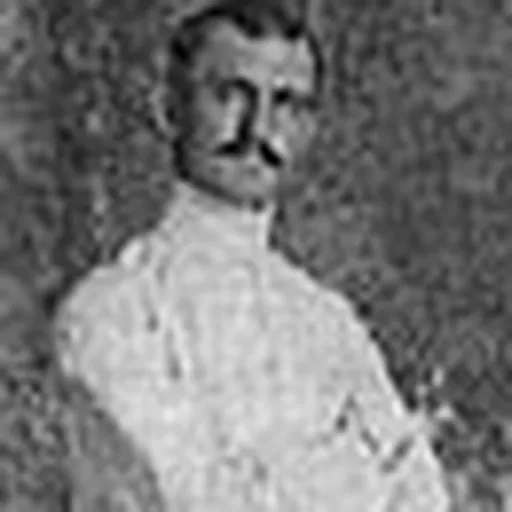
About Hiram M. Hiller, Jr.
Lived 1867 – 1921 (aged 54). Hiram M. Hiller, Jr. was an American explorer, anthropologist and physician.
Hiller's interest in the South Seas must have begun early in his life, as shown by this letter to him from Latrobe, Tasmania, postmarked April 25, 1883, when he was 16.
Hiram Milliken Hiller Jr. (March 8, 1867 – August 8, 1921) was an American physician, medical missionary, explorer, and ethnographer. He traveled in Oceania and in South, Southeast, and East Asia, returning with archeological, cultural, zoological, and botanical specimens and data for museums, lectures and publications. His notes and collections provide valuable information about those regions and their people from the late 19th century. In later life, he was involved in the study of polio during the epidemics that hit the United States in the early 20th century.
Family and early life He was born on March 8, 1867, near Kahoka, Missouri, to Colonel Hiram Milliken Hiller Sr. (1834–1895) and the former Sarah Fulton Bell (1837–1915), who were both from Pennsylvania. He was the third of their six children who survived to adulthood. The elder Hiller, a Civil War veteran and lawyer, was a prominent citizen of Clark County, Missouri, and was instrumental in the success of Kahoka until his death in a railroad accident. His house in Kahoka is a registered historic landmark.
The younger Hiller attended Parsons College in Iowa, earning his B.S. in 1887. He moved to Philadelphia to attend medical school at the University of Pennsylvania. While there, he met several other men of similar interests, including William Henry Furness III (1867–1920, the son of Shakespearean scholar Horace Howard Furness and nephew of architect Frank Furness), and Alfred Craven Harrison Jr. (1869–1925, nephew of Charles Custis Harrison, Provost of the University of Pennsylvania from 1894 to 1911). Hiller graduated in 1891 and served his residency at the University of Pennsylvania Hospital and at nearby Blockley Hospital. He traveled in Europe (1893–1894) Edward S. Morse, a Harvard zoologist, was giving lectures about Japan, then a subject of great fascination in the West, throughout Boston; Hiller appears to have been inspired by these. Hiller, Furness, and Harrison embarked on a series of expeditions to East and Southeast Asia and Oceania. The three did not always travel together, and the records of their travels are fragmentary in places. Their first two voyages are the best-documented; the last voyage the worst.
Unlike their other expeditions, the third was an eastward journey. They sailed for England on June 14, 1899, traveling from London to Paris and Marseilles before boarding the Ernest Simon for Asia. The voyage took them through the Suez Canal and to Djibouti before arriving in Colombo, Ceylon. They traveled in Ceylon, India, Burma, and Australia before sailing for Hawaii (recently annexed by the United States) and Vancouver, circling the world before returning home in May 1900. before proceeding to the East Indies. Once Hiller returned home, he stayed in contact with Oyabe, who wrote him friendly letters encouraging him to "tell the world about my beloved Ainu people." While there, he encountered a devastating outbreak of a disease that spread rapidly and paralyzed its victims, especially children. A few physicians in other towns were experiencing similar outbreaks. They communicated, shared experiences, and realized not only that they were dealing with the same disease ("infantile paralysis"), but that it was a form of polio, which apparently had taken a more damaging, virulent, epidemic form. The Hillers had two daughters.
Death Hiller died on August 8, 1921, in Bellefonte, Pennsylvania, possibly from complications from polio. His widow moved with her daughters to Lower Merion, Pennsylvania, closer to Philadelphia, where she lived until her death in 1944.
Collections Thanks in significant part to Hiller, the Penn Museum's collection of Ainu artifacts is one of the largest in any museum. The Foundation for Research and Promotion of Ainu Culture (FRPAC) borrowed a sizable portion of the Penn Museum's collection to display in the Ainu Craft Exhibition 2008 at the Niigata Prefectural Museum of History in Nagaoka City, Japan. The Penn Museum also holds 57 artifacts and 3 diaries Furness and Hiller brought back from Amami and Okinawa, and the university library has additional materials.
Don’t just read it —
keep it.
Full-length biographies made to live with: read them, listen on the way to work, watch them tonight.
- E-book
- Audio
- Video
Instant download · yours to keep · every purchase keeps this site free
Important facts
People in Hiram M. Hiller, Jr.'s life
Named in this biography and alive at the same time



Related people
Same field, nearest in time


Contemporaries
People whose lives overlapped Hiram M. Hiller, Jr.'s


Frequently asked questions
Who was Hiram M. Hiller, Jr.?
American physician (1867–1921)
When was Hiram M. Hiller, Jr. born?
Hiram M. Hiller, Jr. was born on 8 March 1867 in Missouri.
When did Hiram M. Hiller, Jr. die?
Hiram M. Hiller, Jr. died on 8 August 1921 in Delaware County.
What was Hiram M. Hiller, Jr.'s occupation?
Hiram M. Hiller, Jr. was an explorer, anthropologist and physician.
What nationality was Hiram M. Hiller, Jr.?
Hiram M. Hiller, Jr. was American.
Sources & further reading
· Wikipedia: Hiram M. Hiller, Jr.
· DBpedia: Hiram M. Hiller Jr.
Cite this page
APA: Biography.guide. (2026). Hiram M. Hiller, Jr.. https://biography.guide/hiram-m-hiller-jr/
MLA: "Hiram M. Hiller, Jr.." Biography.guide, https://biography.guide/hiram-m-hiller-jr/.
Chicago: "Hiram M. Hiller, Jr.." Biography.guide. https://biography.guide/hiram-m-hiller-jr/.
Data last updated: 2026-09-21 · Spot an error? Report a correction.
Portrait: Wikimedia Commons · author & licence
Page generated 2026-09-27 04:59 UTC