
About Hipólito da Costa
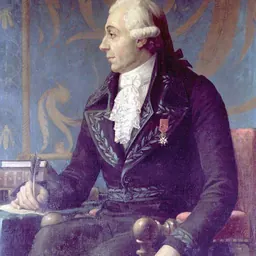
Lived 1774 – 1823 (aged 49). Hipólito da Costa was a Brazilian linguist, journalist, diplomat and translator.
Hipólito José da Costa Pereira Furtado de Mendonça (13 August 1774 – 11 September 1823) was a Brazilian journalist and diplomat considered to be the "father of Brazilian press".
Hipólito was born on a rich family in Colônia do Sacramento. After the territory was annexed to the Spanish Empire, he moved to Capão do Leão, where Pelotas is located nowadays. He was educated by his uncles and left to study in Lisbon, at University of Coimbra. There, he became acquainted with Rodrigo de Sousa Coutinho and went on a diplomatic mission to the United States, where he was initiated in the Freemasonry.
Back in the Kingdom of Portugal, he was employed on the Impressão Régia, the Court's journal, and went to England to buy equipment for the press, but on his way back he was arrested by the Portuguese Inquisition for engaging with Freemasonry and liberal ideas. Three years later, his fellow freemasons helped him escape prison and he moved to London, where he was under the protection of Prince Augustus Frederick, Duke of Sussex. He maintained his involvement with Freemasonry and in 1808 inaugurated the journal Correio Braziliense, that he used to criticize the reign of Dom João VI. The periodical was forbitten to circulate in the United Kingdom of Portugal, Brazil and the Algarves, but it would commonly be smuggled inside of the Kingdom of Brazil and it was read even by important authorities.
He is considered an important historical figure to Brazil, influencing the Independence movement. Even though it was not published on Brazilian soil, Correio Braziliense is considered to be the first Brazilian journal. He received many homages after his death. He is the patron of the 17th chair of the Brazilian Academy of Letters, the National Day of the Press is celebrated on the day Correio Braziliense began circulating and his name was added to the Book of Heroes of the Homeland by José Alencar Gomes da Silva.
Biography
First years
Costa was born in Colônia do Sacramento, Captaincy of São Pedro do Rio Grande do Sul, now part of Uruguay, to alferes Félix da Costa Furtado de Mendonça and Ana Josefa Pereira. His brother was José Saturnino da Costa Pereira, who would be a senator of the Empire of Brazil and commander of the Brazilian Army. Although they had converted to Christianity, his family, the da Costas, came from a long line of Sephardic Jews who were active in Portugal, England and the West Indies.
In 1777, the Cisplatina region was annexed to the Spanish Empire due the First Treaty of San Ildefonso. His family had to move out and after a short stay in Buenos Aires, they have stablished themselves in Capão do Leão, where Pelotas is located nowadays. Costa and his brothers were educated by two of their uncles, both being priests. His main educator was Pedro Pereira Fernandes de Mesquita, the "Doctor Priest". His uncles had written several recommendation letters, one destined to Rodrigo de Sousa Coutinho. There, he became personal friends with the Prince Augustus Frederick, Duke of Sussex.
Travel through the United States
Three months after his graduation, Costa was sent by the then-Portuguese prime minister Rodrigo de Sousa Coutinho on a diplomatic mission to the United States to research "examples to be followed" by the Lusitan colony. He studied agriculture techniques for the tropical climate, mining, economy and industrial advancements.
During his stay in Maryland and Virginia, he paid special attention to the tobacco plantations. He also travelled to New Spain to observe the gold and silver mines and the extraction of the scale insect from the plants, Through it, Costa would spread Liberal ideas. However, the Portuguese ambassador in London, Domingos António de Sousa Coutinho, was an extreme combatant of Costa's journal, and would create one journal himself, entitled O Investigador Portuguez em Inglaterra (The Portuguese Investigator in England), which ran from 1811 to 1819. Many other journals which fought Correio Braziliense were created. The journal nonetheless was smuggled inside of Brazil and read including by the local authorities.
In March 1817, during the Pernambucan revolution, Hipólito was invited to be the ambassador in London in name of the Provisional Government of the Republic, but he refused.
Costa closed his journal in 1822, after the independence of Brazil, for considering his objectives were met.
Personal life
Hipólito assumed the paternity of Félix José da Costa. His mother, Mary Anne Lyons, was the daughter of his friend W. Lewis, owner of the first typography Correio Braziliense was printed. Hipólito adopted the boy after she died without a husband, making some speculate that he had a bastard child.
On 7 July 1817, Later, he would change his position from a "reformist" perspective to a "Brazilian patriot" one, defending the Liberal Revolution of 1820 and the Independence of Brazil. Amongst those that have written biographies of Hipólito, are Adolfo Varnhargen, Baron Homem de Mello, Carlos Rizzini, Mecenas Dourado, Barbosa Lima Sobrinho, Riopardense de Macedo, Cláudio Moreira Bento, Raul Quevedo, Paulo Xavier, Isabel Lustosa, José Marques de Melo, Antonio Hohlfeldt
Assis Chateaubriand considered Hipólito as an important Brazilian cultural reference and a cosmopolitan citizen. In 1942, he named an airplane in São Paulo as "Hipólito da Costa".
Hipólito is also considered an important historical figure in Rio Grande do Sul. In 1973, the sesquicentennial of his death was celebrated, and in 1974 the bicentenary of his birth was celebrated. During the celebrations, the historian Francisco Riopardense de Macedo won the contest of best monography with his thesis Hipólito da Costa e o Universo da Liberdade (Hipólito da Costa and the Univese of Freedom). The museum was idealized by Sérgio Dillenburg, with the support of Associação Riograndense de Imprensa. Since Estado Novo, the date was celebrated on 10 September, the beginning of the circulation of Gazeta do Rio de Janeiro, the first journal published on Brazilian soil. The project was created by Nelson Marchezan (PSDB-RS), with support of Associação Riograndense de Imprensa, Fundação Assis Chateaubriand, Loja Maçônica Província de São Pedro, the historian Claúdio Moreira Bento, the journalist Raul Quevedo and the professor Alberto André. In 1996, several of the involved released the Manifest to the Nation, debunking the thesis that Gazeta do Rio de Janeiro was the first Brazilian Journal.
Hipólito's name was included on the Book of Heroes of the Homeland through the Law nº 12,283, from 5 July 2010, by the vice-president José Alencar Gomes da Silva and the minister of culture João Luiz Silva Ferreira.
Don’t just read it —
keep it.
Full-length biographies made to live with: read them, listen on the way to work, watch them tonight.
- E-book
- Audio
- Video
Instant download · yours to keep · every purchase keeps this site free
Important facts
People in Hipólito da Costa's life
Named in this biography and alive at the same time
Related people
Same field, nearest in time




Contemporaries
People whose lives overlapped Hipólito da Costa's



Frequently asked questions
Who was Hipólito da Costa?
Brazilian journalist and diplomat (1774-1823)
When was Hipólito da Costa born?
Hipólito da Costa was born on 13 August 1774 in Colonia del Sacramento.
When did Hipólito da Costa die?
Hipólito da Costa died on 11 September 1823 in London.
What was Hipólito da Costa's occupation?
Hipólito da Costa was a linguist, journalist, diplomat and translator.
What nationality was Hipólito da Costa?
Hipólito da Costa was Brazilian.
Sources & further reading
· Wikipedia: Hipólito da Costa
Cite this page
APA: Biography.guide. (2026). Hipólito da Costa. https://biography.guide/hipolito-da-costa/
MLA: "Hipólito da Costa." Biography.guide, https://biography.guide/hipolito-da-costa/.
Chicago: "Hipólito da Costa." Biography.guide. https://biography.guide/hipolito-da-costa/.
Data last updated: 2026-09-26 · Spot an error? Report a correction.
Page generated 2026-09-27 05:14 UTC