
About Hewritt Dixon
Lived 1940 – 1992 (aged 52). Hewritt Dixon was an American american football player.
Hewritt Frederick Dixon Jr. (January 8, 1940 – November 24, 1992) was an American professional football halfback who played for seven seasons in the American Football League (AFL) and National Football League (NFL). He played for the Denver Broncos and the Oakland Raiders.
Early life and college Dixon was born in Alachua, Florida on January 8, 1940. He attended Albert Leonidas Mebane High School in Alachua.
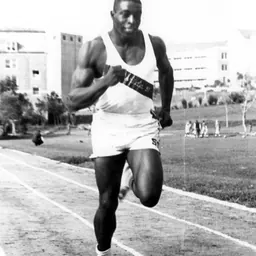
He was originally a tackle on the high school football team because of his size, but he was converted to a fullback when the coach witnessed Dixon's running ability. He was all-conference four years. Future Hall of Fame receiver Bob Hayes was Dixon's teammate at Florida A&M.
Dixon would have played in the 1962 Shrine North-South All-Star Game, but he had a leg injury. His coach Jake Gaither was concerned that playing would exacerbate the injury and harm Dixon's professional prospects. Gaither was a future College Football Hall of Fame coach, who was Florida A&M's head coach for 25 years, winning six black college national championships.
Dixon was inducted into Florida A&M's Hall of Fame in 1981.
Professional football In the 1963 American Football League draft, Dixon was selected in the eighth round (60th overall) by the Denver Broncos. Dixon chose to play for Denver.
Denver Broncos In his rookie year (1963), Dixon only played in five games for the Broncos, at running back. In 1964, the Broncos moved him to tight end. He started 12 of 14 games. Dixon had 38 pass receptions for 585 yards (15.4 yards per reception), including a 62-yard reception (the longest of his career). He also rushed the ball 18 times.
In 1966, Dixon started seven games at fullback, rushing for 277 yards on 68 attempts. He also caught 29 passes for 354 yards, averaging nearly 12 yards per catch. He scored five rushing touchdowns and four receiving touchdowns. He was selected to play in the AFL All-Star Game in 1966. The Raiders next met the Green Bay Packers for the AFL-NFL championship game, later known as Super Bowl II, which the Raiders lost 33–14. Dixon ran for 54 yards in 12 attempts.
In 1968, without Daniels, Dixon's rushing attempts increased to 206, and he ran for 865 yards. He also had 38 pass receptions for 360 yards. He again was chosen to play in the All-Star game, but this year he was named first-team All-AFL by the AP, UPI, and The Sporting News, as well as the Newspaper Enterprise Association (NEA) and Pro Football Weekly.
In 1969, Dixon played in only 11 games (starting 10) and had only 106 rushing attempts. Dixon rebounded in 1970, with 861 rushing yards on 197 carries, a 4.4 yards per attempt average which was the highest of his career; and 31 pass receptions for 207 yards. The Raiders lost in the American Football Conference (AFC) championship game to the Baltimore Colts, with Dixon rushing 10 times for 51 yards, and catching three passes. He was selected to play in the 1970 Pro Bowl, and both the AP and UPI named him first-team All-Conference.
Dixon suffered a significant injury during the 1971 preseason, but was expected to return at some point in October. He joined the Raiders' taxi squad that season, and was reportedly ready to play, but did not play for the Raiders in 1971. It was reported at the time that because the Raiders five running backs were performing well that season, coach John Madden chose not to bring Dixon back to the Raiders off of the taxi squad. Dixon was in the Raiders' 1972 training camp, but his chances of making the team were tenuous. At the end of August he underwent knee surgery. He never played for the Raiders again. His nickname was "Hewie the Tank".
Over his entire career, he played in 99 games, with 3,090 rushing yards on 772 carries and 15 touchdowns; along with 263 pass receptions for 2,819 yards and 13 touchdowns. Dixon later moved to Los Angeles and worked for many years with youth offenders at Eastlake Juvenile Hall.
Death Dixon died of cancer in Los Angeles, California, on November 24, 1992. He was survived by his wife Elizabeth.
Don’t just read it —
keep it.
Full-length biographies made to live with: read them, listen on the way to work, watch them tonight.
- E-book
- Audio
- Video
Instant download · yours to keep · every purchase keeps this site free
Important facts
People in Hewritt Dixon's life
Named in this biography and alive at the same time


Related people
Same field, nearest in time




Contemporaries
People whose lives overlapped Hewritt Dixon's



Frequently asked questions
Who was Hewritt Dixon?
American football player (1940-1992)
When was Hewritt Dixon born?
Hewritt Dixon was born on 8 January 1940 in La Crosse.
When did Hewritt Dixon die?
Hewritt Dixon died on 24 November 1992 in Los Angeles, California.
What was Hewritt Dixon's occupation?
Hewritt Dixon was an american football player.
What nationality was Hewritt Dixon?
Hewritt Dixon was American.
Sources & further reading
Cite this page
APA: Biography.guide. (2026). Hewritt Dixon. https://biography.guide/hewritt-dixon/
MLA: "Hewritt Dixon." Biography.guide, https://biography.guide/hewritt-dixon/.
Chicago: "Hewritt Dixon." Biography.guide. https://biography.guide/hewritt-dixon/.
Data last updated: 2026-09-20 · Spot an error? Report a correction.
Page generated 2026-09-27 05:23 UTC