
About Hewahewa
Lived 1775 – 1837 (aged 61–62). Hewahewa was a priest.
Hewahewa ( – February 16, 1837) was a Hawaiian religious leader who served as kahuna nui (high priest) of King Kamehameha I and his successor Kamehameha II. Hewahewa was a powerful figure in the royal court of Hawai’i and played a major role in the abolition of the kapu system, the decline of the native religion of Hawai’i, and the introduction of Christianity to the Hawaiian Kingdom.
Biography
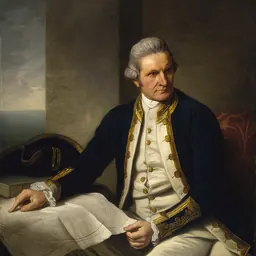
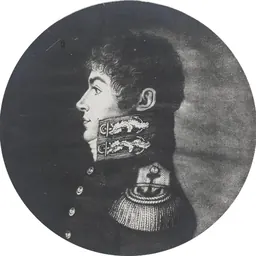
Kahuna Nui Hewahewa was born in the late 18th century. In 1819, French explorer Louis de Freycinet estimated Hewahewa was born around 1774. He grew up as part of the aristocracy of the pre-unified kingdom of the island of Hawaiʻi and was a descendant of Paʻao, a lineage that added to his prestige as a spiritual leader. Hewahewa's great-grandfather was Holoʻae, the kahuna of Alapaʻinui and Kalaniʻōpuʻu, the latter of whom ruled during James Cook's fatal visit to the islands. Hewahewa's grandfather was Pailili (or Pailiki) and his father was Puʻou, a kahuna of Kalaniʻōpuʻu's successor Kamehameha I. A cousin of Hewahewa was Kekūhaupiʻo, the instructor and military advisor of Kamehameha.
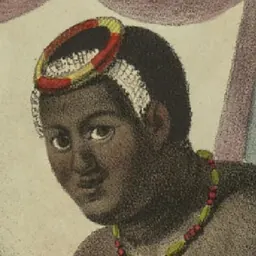
Hewahewa was educated as a kahuna and rose to prominence in the court of Kamehameha. Hewahewa and his family line were of the order of the war god Kū (moʻo Kū), which rose to prominence during the conflict that led up to the unification of the Hawaiian Islands and displaced the priestly order of the fertility god Lono. After Kamehameha united the Hawaiian islands into the Hawaiian Kingdom, he granted Hewahewa control over the Waimea Valley on Oahu, a powerful position within the kingdom. By the 1810s, Hewahewa was serving as kahuna-nui (high priest) and was responsible for maintaining the kapu code of conduct at the behest of King Kamehameha. Acting on his views, Hewahewa and other court officials—including several female members of the royal family—planned to abolish the kapu. The reformers' first target was a law that forbade women to eat certain foods and from eating with noblemen. At a grand feast held six months after Kamehameha I's death, his son was persuaded to eat alongside his female relatives; the women also ate forbidden foods at the feast, ushering the era of ʻAi Noa (free eating). While this display was criticized by more conservative members of Hawaiian society, it was also seen as breaking the monarchy's support of the kapu.
Soon after the feast, Hewahewa embarked on a campaign to rid the kingdom of the kapu system. He was supported by a reformist faction within the kahunas and by two of Kamehameha I's queens, Kaʻahumanu—who persuaded Hewahewa to support the adoption of ʻAi Noa—and the king’s mother Keōpūolani. Acting in his role as kahuna-nui, Hewahewa ordered the burning of religious idols, the destruction of heiaus, and the end of the kapu. Not all of the native Hawaiian religion was interfered with; family ʻaumākua remained untouched and the kahuna retained much of their political power as scholars and healers.
Some Hawaiian leaders opposed Hewahewa's efforts to abolish the Hawaiian religion. A reactionary faction led by Keaoua Kekuaokalani, a nephew of Kamehameha I and former student of Hewahewa, revolted against Kamehameha II and his court. Despite gathering some support, the rebels were defeated at the Battle of Kuamo'o in December 1819, marking the end of organized resistance against Hewahewa and his supporters.
Introduction of Christianity
In 1820, Christian missionaries arrived on the island. Many members of the Hawaiian nobility, including Hewahewa, eventually converted to Christianity; According to some sources, Hewahewa had predicted the arrival of a new god from the sea in the days before the first missionaries arrived in the islands.
As the Christian faith spread throughout the Hawaiian islands, Hewahewa remained supportive of many of the new faith's systems of belief; rather than the traditional Hawaiian deities, he thanked Jehovah for food during a feast in place and composed a chant to worship the new god. Hewahewa's dialogue with the missionaries also persuaded the powerful chiefess Kapiʻolani to adopt the Christian faith. As an old man, he was called upon by Kamehameha III in an attempt to restore the native Hawaiian faith but Hewahewa persuaded the king to abandon the effort. There is, however, some discrepancy about his date of death; in 1893, Nathaniel Bright Emerson, who was born 1839, remembered Hewahewa "as a silent and wrinkled old man, who lived in a retired valley in Waialua, Island of Oahu, about the year 1848".
Legacy Thousands of Hawaiians,
The Hawaiian insect Hevaheva Kirkaldy, 1902, a genus of true bugs in the family Triozidae may have been named in honor of Hewahewa, although that is not explicitly stated (see open access original publication BHL).
In 2000, Hewahewa was posthumously inducted into the Hawaiian Music Hall of Fame with a group of historical Hawaiian chanters.
Don’t just read it —
keep it.
Full-length biographies made to live with: read them, listen on the way to work, watch them tonight.
- E-book
- Audio
- Video
Instant download · yours to keep · every purchase keeps this site free
Important facts
People in Hewahewa's life
Named in this biography and alive at the same time
Related people
Same field, nearest in time


Contemporaries
People whose lives overlapped Hewahewa's




Frequently asked questions
Who was Hewahewa?
Hawaiian religious leader
When was Hewahewa born?
Hewahewa was born in 1775 in Hawaii.
When did Hewahewa die?
Hewahewa died on 16 February 1837 in Oahu.
What was Hewahewa's occupation?
Hewahewa was a priest.
What nationality was Hewahewa?
Hewahewa's recorded nationality: Hawaiian Kingdom.
Sources & further reading
Cite this page
APA: Biography.guide. (2026). Hewahewa. https://biography.guide/hewahewa/
MLA: "Hewahewa." Biography.guide, https://biography.guide/hewahewa/.
Chicago: "Hewahewa." Biography.guide. https://biography.guide/hewahewa/.
Data last updated: 2026-09-22 · Spot an error? Report a correction.
Page generated 2026-09-27 05:32 UTC