
Hermeto Pascoal
Brazilian composer, musician and record producer
About Hermeto Pascoal
Lived 1936 – 2025 (aged 89). Hermeto Pascoal was a Brazilian composer, saxophonist, jazz musician, pianist, guitarist and jazz guitarist.
Hermeto Pascoal (22 June 1936 – 13 September 2025) was a Brazilian composer and multi-instrumentalist. Pascoal was best known in Brazilian music for his orchestration and improvisation, as well as for being a record producer and contributor to many Brazilian and international albums.
Life and career Early life and career
Pascoal was born on 22 June 1936 in Olho d'Água das Flores in Northeastern Brazil, in an area that lacked electricity at the time he was born. He learned the accordion from his father and practiced for hours indoors, as, being born with albinism, he was incapable of working in the countryside with the rest of his family. As a child, Pascoal idolised baião accordionist Luiz Gonzaga, and he inspired both Pascoal and his brother, José Neto, to pursue music.
From an early age, Pascoal played the button accordion. When he was eleven, he started performing in musical groups with his brother and father. He and his family moved between Recife and Caruaru several times. Pascoal starting playing in some groups there that would start getting radio time.
In 1964, he played in the Sambrasa Trio, with Airto Moreira and Humberto Clayber. They released only one album, Em Som Maior. Then he joined Trio Novo (Airto Moreira, Heraldo do Monte, Theo de Barros) and in 1967 the group, renamed Quarteto Novo, released an album that launched the careers of Pascoal and Moreira. Pascoal would then go on to join the multi-faceted group Brazilian Octopus. In 1969, at the invitation of Flora Purim and Airto Moreira , he traveled to the United States and recorded two LPs with them on Buddah Records, serving as composer, arranger, and instrumentalist: Pascoal also managed to record his debut album in 1970 for Cobblestone Records with the help of Airto Moreira, Flora Purim, Joe Farrell and Googie Coppola.
International fame
Pascoal initially caught the international public's attention with an appearance on Miles Davis's 1971 album Live-Evil, which featured him on three pieces, which he also composed. Later collaborations involved fellow Brazilian musicians Airto Moreira and Flora Purim. From the late 1970s onward, he has mostly led his own groups, playing at many prestigious venues, such as the Montreux Jazz Festival in 1979. Other members of the group have included bassist Itibere Zwarg, pianist Jovino Santos-Neto and percussionists Nene, Pernambuco, and Zabelê.
Personal life Pascoal was married to Ilza da Silva, to whom he dedicated many compositions, from 1954 until her death in 2000. They had six children, Jorge, Fábio, Flávia, Fátima, Fabiula, and Flávio, and many grandchildren. Hermeto was later married to Aline Morena from 2003 until 2016, while living in Curitiba, Paraná, Brazil.
Pascoal died from multiple organ failure in Rio de Janeiro, on 13 September 2025, at the age of 89.
Music Pascoal was a multi-instrumentalist who would switch between instruments in performance. Known as o Bruxo (the Sorcerer), he often made music with unconventional objects such as teapots, children's toys, and animals, as well as keyboards, button accordions, melodica, saxophones, guitars, flutes, voices, various brass and folkloric instruments. He used nature as a basis for his compositions, as in his Música da Lagoa, in which the musicians burble water and play glass bottles and flutes while immersed in a lagoon: a Brazilian television broadcast from 1999 showed him soloing at one point by singing into a cup with his mouth partially submerged in water. Folk music from rural Brazil is another important influence in his work. Hermeto Pascoal & Grupo (Som da Gente, 1982) Lagoa da Canoa, Município de Arapiraca (Som da Gente, 1984) Brasil Universo (Som da Gente, 1985) Só não toca quem não quer (Som da Gente, 1987) Hermeto solo: por diferentes caminhos (Som da Gente, 1988) Festa dos deuses (Polygram 1992) Eu e eles (Radio MEC, 1999) Chimarrão com rapadura (self released, 2006), with Aline Morena No Mundo dos Sons (SESC-SP, 2017) Natureza Universal (self-released, 2017) E sua visão original do forró (2018, recorded 1999) Pra Você, Ilza (Rocinante, 2024) Sinfonia em Quadrinhos (2026)
As contributor
Ritmos Alucinantes (1956), by Clovis Pereira Batucando no Morro (Tiger, 1958–1960), by Pernambuco do Pandeiro e seu regional Caminho (RCA, 1965), by Walter Santos Tide (A&M, 1970), with Tom Jobim Natural Feelings (Buddha, 1970), by Airto Moreira Electric Byrd (Blue Note 1970), by Donald Byrd Sergio Mendes Presents Lobo (A&M, 1970), by Edu Lobo It Could Only Happen with You (Blue Note 1970), by Duke Pearson Imyra, Tayra, Ipy (Odeon, 1976), by Taiguara Open Your Eyes You Can Fly (Milestone, 1976), by Flora Purim Goldenwings (Milestone, 1976), by Opa Stone Alliance (PM, 1977), by Márcio Montarroyos Orós (CBS/Columbia, 1977), by Raimundo Fagner Robertinho no passo (CBS, 1978), by Robertinho de Recife Live in Montreux (Elektra, 1982), by Elis Regina Cordas vivas (Som Da Gente, 1983) by Heraldo do Monte Ponto do músicos (Maracatu, 1984) by Nenê Balãozinho (Continental, 1986), by Eduardo Gudin Cordas mágicas (Som da Gente, 1986), by Heraldo do Monte Pindorama (Copacabana, 1979), by Pau Brasil Dharana (Natale Produções Artísticas, 1987), by Dharana Oferenda (self-released, 1996), by Aleuda Marítimo (Sony, 1998) by Adriana Calcanhotto (on track "Canção por Acaso") Nação Nordestina (BMG, 2000), by Zé Ramalho (on track "Violando com Hermeto") Serenata: The Music of Hermeto Pascoal (Adventure Music, 2003), by Mike Marshall and Jovino Santos Neto Roda Carioca (Adventure Music, 2006), by Jovino Santos Neto Beams (self-released, 2023), by Dan Costa
Don’t just read it —
keep it.
Full-length biographies made to live with: read them, listen on the way to work, watch them tonight.
- E-book
- Audio
- Video
Instant download · yours to keep · every purchase keeps this site free
Important facts
People in Hermeto Pascoal's life
Named in this biography and alive at the same time
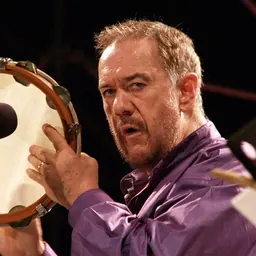
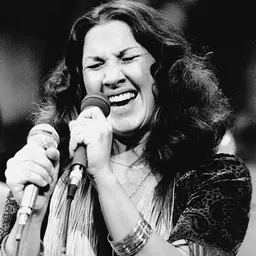

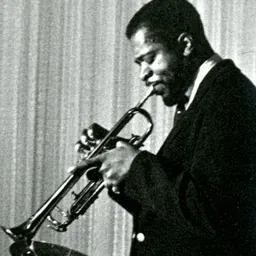



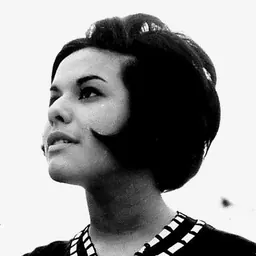
Related people
Same field, nearest in time



Contemporaries
People whose lives overlapped Hermeto Pascoal's





Frequently asked questions
Who was Hermeto Pascoal?
Brazilian composer, musician and record producer (1936–2025)
When was Hermeto Pascoal born?
Hermeto Pascoal was born on 22 June 1936 in Arapiraca, Lagoa da Canoa.
When did Hermeto Pascoal die?
Hermeto Pascoal died on 13 September 2025 in Samaritano Barra Hospital, Rio de Janeiro.
What was Hermeto Pascoal's occupation?
Hermeto Pascoal was a composer, saxophonist, jazz musician, pianist, guitarist and jazz guitarist.
What nationality was Hermeto Pascoal?
Hermeto Pascoal was Brazilian.
Sources & further reading
Cite this page
APA: Biography.guide. (2026). Hermeto Pascoal. https://biography.guide/hermeto-pascoal/
MLA: "Hermeto Pascoal." Biography.guide, https://biography.guide/hermeto-pascoal/.
Chicago: "Hermeto Pascoal." Biography.guide. https://biography.guide/hermeto-pascoal/.
Data last updated: 2026-09-20 · Spot an error? Report a correction.
Page generated 2026-09-27 05:20 UTC