
About Hermann Struve
Lived 1854 – 1920 (aged 65). Hermann Struve was a Russian astronomer and university teacher.
Karl Hermann von Struve ( – 12 August 1920) was a Baltic German astronomer. In Russian, his name is sometimes given as German Ottovich Struve or German Ottonovich Struve .
Hermann von Struve was a part of the famous group of astronomers from the Struve family, which also included his grandfather Friedrich Georg Wilhelm von Struve, father Otto Wilhelm von Struve, brother Ludwig Struve and nephew Otto Struve. Unlike other astronomers of the Struve family, Herman spent most of his career in Germany. Continuing the family tradition, Struve's research was focused on determining the positions of stellar objects. He was particularly known for his work on satellites of planets of the Solar System and development of the intersatellite method of correcting their orbital position. The mathematical Struve function is named after him.
Biography Herman was born in 1854 in Tsarskoye Selo, a former Russian residence of the imperial family and visiting nobility, located south from the center of St. Petersburg. He attended gymnasium in Vyborg and in 1872 entered the Imperial University of Dorpat (now known as Tartu). While studying there, in 1874–1875, Struve participated in an expedition to observe transit of Venus through the disk of the Sun. That observation was carried out at Port Poisset on the Asiatic East Coast. After graduation in 1877, he became a member of the Pulkovo Observatory and was sent abroad for two-year post-graduate studies. Accompanied by his cousin's husband, Struve stayed in several cities, including Straßburg , Paris, Milan, Graz and Berlin, learning from such celebrities as Helmholtz, Kirchhoff, Boltzmann and Weierstrass. After returning to Russia, he joined the staff of Pulkovo Observatory, studying the satellites of Saturn among other things.
By then, the Struve family was highly respected in Russia and Tsar Alexander III had a strong wish for Hermann to succeed his father Otto as the director of the Pulkovo Observatory. However, Hermann politely declined the offer, mentioning that he was in the middle of crucial observations of Saturn which would be interrupted by administrative tasks. In 1890, Struve was appointed as the senior astronomer at Pulkovo with the understanding that he should become director after completing his Saturn work. However, the death of Alexander III in 1894 freed Struve from this task. Pro-Russian views were gradually developing in Russian society, including science, and foreigners felt progressively more alienated. Therefore, when in 1895 Struve was offered the position of professor at Königsberg University, he gladly accepted and moved his family to Germany. and from 1904 until his death in 1920, he served as director of the Berlin-Babelsberg Observatory. Struve's death was accelerated by a heart illness which he suffered from during his late years and by a bad fall from a tram car in 1919. He broke a thigh, and while recovering in a sanatorium in Bad Herrenalb, died of a heart attack. Hermann's wife Eva Struve played an important role in rescuing his nephew Otto. After escaping from Soviet Russia in 1920, for a year and a half he was stranded penniless in Turkey. Otto wrote to his uncle for help, unaware of his death, but Eva asked assistance of Paul Guthnick, her late husband's successor at the Berlin-Babelsberg Observatory. Whereas Guthnick was not in a position to offer a job to Struve in Germany, he highly recommended Struve to the director of Yerkes Observatory in Chicago, who not only found a job for Struve at Yerkes, but also arranged a visa for him and paid for his travel.
Research As with all astronomers of the Struve family, Herman was mostly working on establishing positions and movements of single and double stars and satellites of the planets of the Solar System. In 1885, a 30-inch refracting telescope was installed at Pulkovo, at the time the largest in the world (a great refractor). Struve was the first user of that telescope, which he used mostly for determining positions of a large number of double stars. His other major topic was Saturn, but he also studied Mars, Neptune and the fifth moon of Jupiter. He could not observe Uranus from Pulkovo because it was too far south. In 1888, Struve discovered libration of Hyperion (the seventh moon of Saturn) and explained it by the perturbing action of the largest Saturn's moon, Titan. In 1892, Struve discovered libration of two other moons of Saturn, Mimas and Enceladus. His observations of the moon of Mars, Phobos, were later used by B. Sharpless in studying the secular acceleration of its orbit.
Struve was known not only as an astronomer, but also as a mathematician. In 1882, he introduced a function to describe the intensity of a luminous line. This function also describes solutions of Bessel's differential equation; it therefore is widely used in mathematics and is named the Struve function.
After moving to Königsberg Observatory, Struve built a 32.5-inch refractor telescope there and continued his work on the moons of Saturn, the last observations of which he made in 1916. His other topics included a study of atmospheric refraction, stellar parallaxes, drawings of Jupiter, determination of the position of Mars' equator, the amount of its oblateness and the rate of motion of the nodes. The asteroid 768 Struveana was named in honor of Herman, Otto Wilhelm and Friedrich Georg Wilhelm Struve.
Don’t just read it —
keep it.
Full-length biographies made to live with: read them, listen on the way to work, watch them tonight.
- E-book
- Audio
- Video
Instant download · yours to keep · every purchase keeps this site free
Important facts
People in Hermann Struve's life
Named in this biography and alive at the same time
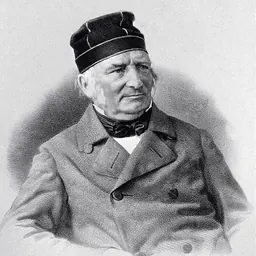



Related people
Same field, nearest in time

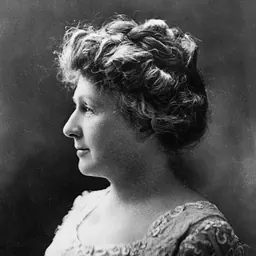

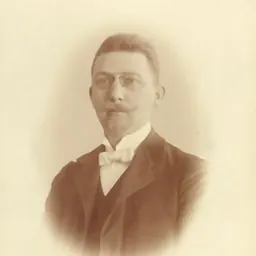

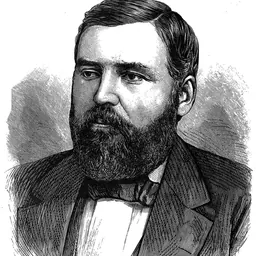
Contemporaries
People whose lives overlapped Hermann Struve's


Frequently asked questions
Who was Hermann Struve?
Baltic German astronomer (1854–1920)
When was Hermann Struve born?
Hermann Struve was born on 3 October 1854 in Pulkovo.
When did Hermann Struve die?
Hermann Struve died on 12 August 1920 in Bad Herrenalb.
What was Hermann Struve's occupation?
Hermann Struve was an astronomer and university teacher.
What nationality was Hermann Struve?
Hermann Struve was Russian.
Sources & further reading
Cite this page
APA: Biography.guide. (2026). Hermann Struve. https://biography.guide/hermann-struve/
MLA: "Hermann Struve." Biography.guide, https://biography.guide/hermann-struve/.
Chicago: "Hermann Struve." Biography.guide. https://biography.guide/hermann-struve/.
Data last updated: 2026-09-26 · Spot an error? Report a correction.
Page generated 2026-09-27 05:16 UTC