
About Hermann Schmiechen
Lived 1855 – 1925 (aged 69). Hermann Schmiechen was a German painter and theosophy (Blavatskian).
Hermann Schmiechen (22 July 1855 – c. 1923 or 1925) was a German portrait painter and Theosophist.
Biography Hermann Schmiechen was born in Neumarkt, Prussian Silesia. In 1872, he entered the Royal Academy of Arts and Crafts at Breslau, where he studied with Albrecht Bräuer (1830–1897). In 1873, he shifted into Düsseldorf school of painting and became student of Karl Müller and Eduard von Gebhardt, and was also a member of the artists association Malkasten. After studying at the Kunstakademie Düsseldorf, he learned in Paris at the Académie Julian.
In 1883, on the recommendation of August Becker, Schmichen, almost simultaneously with Karl Rudolf Sohn, was invited into England to paint portraits of the British aristocracy. From 1884 to 1895 he was a member of the Royal Academy of Arts.
Theosophical portraits June 20, 1884, a year after arriving in London, Schmiechen became a member the Theosophical Society. Then, fulfilling the request of Helena Blavatsky, he began to paint portraits of the Theosophical mahatmas. The portrait of the mahatma Koot Hoomi she assessed as "excellent" and immediately asked Schmiechen to begin working on a portrait of the mahatma Morya. It took him about three weeks, to complete these paintings.
A Russian writer Vsevolod Solovyov reported his impression of the portraits of the Theosophical mahatmas as follows: "Subsequently, when I had thoroughly examined these portraits, I found in them much that was unsatisfactory from an artistic point of view; but their life-likeness was remarkable, and the eyes of the two mysterious strangers gazed straight at the spectator, their lips could almost have been said to move... Schmiechen had painted two beautiful young men. Mahatma Koot Hoomi, clad in a graceful sort of robe, trimmed with fur, had a tender, almost feminine face and gazed sweetly with a pair of charming light eyes. But as soon as one looked at 'the master' [of Blavatsky], Koot Hoomi, for all his tender beauty, was at once forgotten. The fiery black eyes of the tall Morya fixed themselves sternly and piercingly upon one, and it was impossible to tear oneself away from them." In 1901, Schmiechen, returning into Germany, settled in Berlin and joined the German section of the Theosophical Society.
Paintings
Bildnis einer Dame (in German) Opernsängerin Lillian Nordica, 1878 (in German) Princess Victoria of Hesse Princess Elizabeth of Hesse Princess Mary Adelaide, Duchess of Teck, 1882 Princess Frederica of Hanover, Baroness von Pawel-Rammingen, 1884 Turtelndes Liebespaar am Fenster, 1895 (in German) Dame mit Rosenkorb, 1895 (in German)
Don’t just read it —
keep it.
Full-length biographies made to live with: read them, listen on the way to work, watch them tonight.
- E-book
- Audio
- Video
Instant download · yours to keep · every purchase keeps this site free
Important facts
People in Hermann Schmiechen's life
Named in this biography and alive at the same time
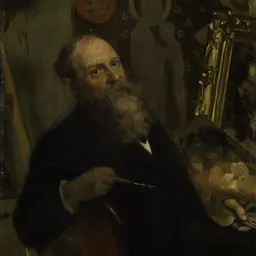






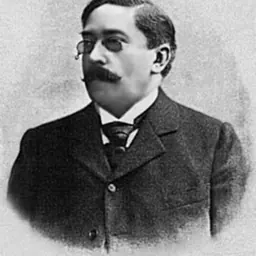
Related people
Same field, nearest in time
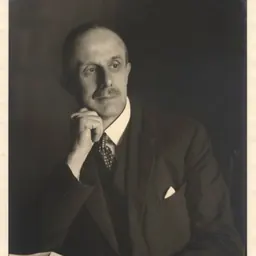
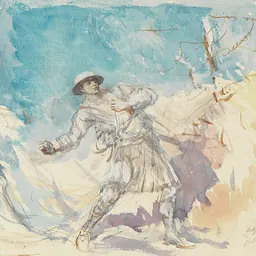
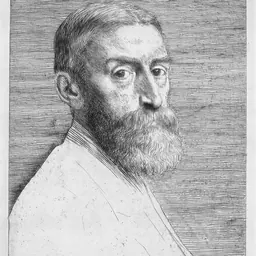


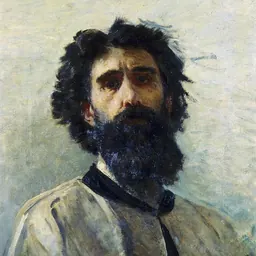
Contemporaries
People whose lives overlapped Hermann Schmiechen's
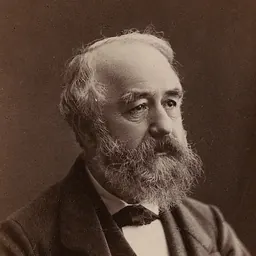

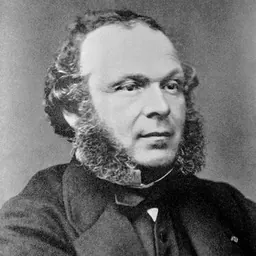

Frequently asked questions
Who was Hermann Schmiechen?
German painter (1855–1925)
When was Hermann Schmiechen born?
Hermann Schmiechen was born on 22 July 1855 in Środa Śląska.
When did Hermann Schmiechen die?
Hermann Schmiechen died on 1 March 1925 in Berlin.
What was Hermann Schmiechen's occupation?
Hermann Schmiechen was a painter and theosophy (Blavatskian).
What nationality was Hermann Schmiechen?
Hermann Schmiechen was German.
Sources & further reading
· Wikipedia: Hermann Schmiechen
Cite this page
APA: Biography.guide. (2026). Hermann Schmiechen. https://biography.guide/hermann-schmiechen/
MLA: "Hermann Schmiechen." Biography.guide, https://biography.guide/hermann-schmiechen/.
Chicago: "Hermann Schmiechen." Biography.guide. https://biography.guide/hermann-schmiechen/.
Data last updated: 2026-09-22 · Spot an error? Report a correction.
Page generated 2026-09-27 05:28 UTC