
About Hermann Kutter
Lived 1863 – 1931 (aged 67). Hermann Kutter was a Swiss parson and protestant theologian.
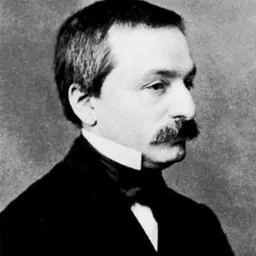
Hermann Kutter (12 September 1863 – 31 March 1931) was a Swiss Reformed pastor and theologian. Together with Leonhard Ragaz, he was one of the founders of Christian socialism in Switzerland. He was heavily influenced by Christoph Blumhardt. He combined Blumhardt's expectation of a coming Kingdom of God with a belief in socialist progress. He saw social democracy as a "tool" of the living God, and its followers as unwitting servants of God. He authored 11 books.
Biography
Early life and academic pursuits Hermann Kutter, born on September 12, 1863, in Bern, Switzerland, was the son of Wilhelm Rudolf and Maria Albertine König. Raised in a pietistic household, Kutter's formative years were deeply influenced by the religious atmosphere of his family. His academic journey led him to study theology in Basel and Berlin, culminating in a Licentiate in Theology earned in 1896. Ordained in 1886, Kutter commenced his pastoral career, beginning in Vinelz in 1887 and later serving at Zürich's Neumünster from 1898 to 1926. His early inclination towards academia was evident, driven by a desire for a broader understanding of faith and spirituality.
Theological contributions and social engagement Hermann Kutter's theological outlook was molded by encounters with thinkers like Christoph Blumhardt and philosophical influences from Kant, Fichte, and Schelling. Notably, his work "Das Unmittelbare, eine Menschheitsfrage" (1902) challenged prevailing theological intellectualism, advocating for a direct experience of the divine. Kutter's engagement extended beyond theology; in "Sie müssen" (1904), he expressed support for social democracy as a divine instrument. His publication "Wir Pfarrer" (1907) cautioned against narrow social pastoral activities, emphasizing the preaching of a living God. However, political differences emerged, leading to a distancing from Leonhard Ragaz during World War I. Despite this, Kutter's lasting impact on dialectical theology and his role as a prominent figure in Swiss religious socialism endure as key aspects of his legacy. In recognition of his contributions, he received an honorary doctorate in theology from the University of Zurich in 1923. Leonhard Ragaz, a pacifist, parted ways with Kutter. In the midst of World War II, Kutter embraced a pacifist Christian stand.
Pastoral visionary Beyond Hermann Kutter's academic pursuits, his pastoral career and social advocacy were integral to his life's work. Ordained in 1886, he began his pastoral journey in Vinelz in 1887, cultivating a reputation for connecting with congregants. His subsequent move to Zürich's Neumünster in 1898 marked a significant chapter in his pastoral service, where he continued to impact the lives of those he served. Kutter's approach to pastoral care was characterized by a balance between spiritual guidance and a commitment to addressing social issues. In the early 20th century, his work "Sie müssen" (1904) notably expressed his positive stance towards social democracy, framing it as a tool aligned with divine intentions. Additionally, his active involvement with organizations like the Knights of St. John and YMI, along with volunteering for Meals on Wheels, underscored his dedication to community well-being.
Theological pioneer Hermann Kutter's intellectual legacy extended far beyond his immediate pastoral and social engagements. Inspired by the eschatological ideas of Christoph Blumhardt, Kutter's theological approach emphasized a clear distinction between the Kingdom of God and the worldly realm. His writings, such as "Das Unmittelbare, eine Menschheitsfrage" (1902), were instrumental in shaping early dialectical theology, influencing subsequent theologians like Karl Barth, Emil Brunner, and Eduard Thurneysen. Kutter's commitment to theological renewal and his insistence on the immediate experience of God left an indelible mark on the theological landscape of his time. Despite political differences and theological debates, Kutter's enduring influence is evident in the continued exploration of his ideas by scholars and theologians in the realms of religious socialism and dialectical theology.
Don’t just read it —
keep it.
Full-length biographies made to live with: read them, listen on the way to work, watch them tonight.
- E-book
- Audio
- Video
Instant download · yours to keep · every purchase keeps this site free
Important facts
People in Hermann Kutter's life
Named in this biography and alive at the same time





Related people
Same field, nearest in time

Contemporaries
People whose lives overlapped Hermann Kutter's



Frequently asked questions
Who was Hermann Kutter?
Swiss theologian (1863–1931)
When was Hermann Kutter born?
Hermann Kutter was born on 12 September 1863 in Bern.
When did Hermann Kutter die?
Hermann Kutter died on 31 March 1931 in St. Gallen.
What was Hermann Kutter's occupation?
Hermann Kutter was a parson and protestant theologian.
What nationality was Hermann Kutter?
Hermann Kutter was Swiss.
Sources & further reading
Cite this page
APA: Biography.guide. (2026). Hermann Kutter. https://biography.guide/hermann-kutter/
MLA: "Hermann Kutter." Biography.guide, https://biography.guide/hermann-kutter/.
Chicago: "Hermann Kutter." Biography.guide. https://biography.guide/hermann-kutter/.
Data last updated: 2026-09-20 · Spot an error? Report a correction.
Page generated 2026-09-27 05:19 UTC