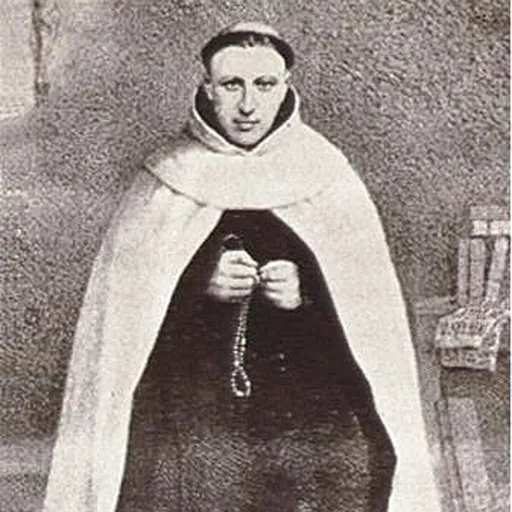
Hermann Cohen
German-Jewish pianist and Carmelite priest
About Hermann Cohen
Lived 1820 – 1871 (aged 50). Hermann Cohen was a German pianist, composer, catholic priest, musician and catholic theologian.
Hermann Cohen, religious name Augustine Mary of the Blessed Sacrament, ; 10 November 1820 – 20 January 1871) was a noted German Jewish pianist, who was baptised in to the Roman Catholic Church.
He became a Discalced Carmelite priest involved in re-establishing the order in both France and England. He was a popular preacher throughout Europe, and was instrumental in introducing the widespread practice of nocturnal adoration of the Blessed Sacrament. The Archbishop of Bordeaux, Jean-Pierre Ricard, opened Augustin Maria Cohen's beatification process in April 2016.
Life
Early life and musical career Cohen was born in Hamburg, one of the four children of David Abraham Cohen and Rosalie Benjamin, part of a large and prosperous Jewish banking family. Although not pious, his parents were members of the Reform Judaism movement there and taught their son Hebrew and the basics of the Jewish faith.
A gifted student, at the age of 4 he began to study the piano, at which he soon became accomplished. Praised by his teacher, who had arranged successful concerts for him at the age of 7 in Altona and Frankfurt, he became the spoiled focus of the family's attention. From his teacher, he also acquired a serious gambling habit, which was to plague him for many years. At the age of 12, his mother resolved to take him to Paris to advance his musical training, against the wishes of her husband, who was experiencing financial difficulties. Undeterred, she approached the Grand Dukes George of Mecklenburg-Strelitz and Francis I of Mecklenburg-Schwerin, in order to obtain their financial support for her son. Successful in her quest, she took her children and moved to Paris. The family arrived there in July 1834, only to learn that, as a foreigner, Hermann was denied admission to the famed Paris Conservatory.
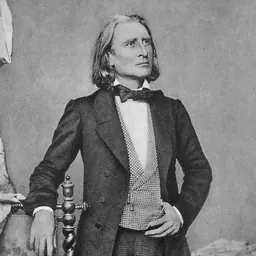
Franz Liszt
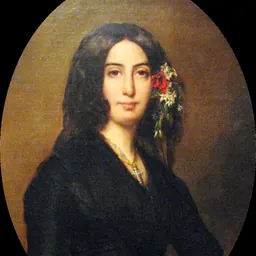
This rejection led to a significant direction in Cohen's life. Rosalie Cohen was able to persuade the renowned pianist Franz Liszt to take her son on as a pupil. Despite his early reluctance, after hearing him play and taken by his good looks, Liszt accepted him as a pupil. Cohen soon became his favorite student. As Liszt himself had been nicknamed Putzig (German for "little cute guy") by his own teacher, Carl Czerny, he began to call Cohen Puzzi, a diminutive form of the word. Liszt accepted Cohen into his social circle, introducing him to his friends, the author George Sand and the Abbé de Lamennais, who both also became charmed by the boy. Sand began to dote on the boy and called him Le Mélancolique Puzzi. Lamennais gave the young Jewish boy an autographed copy of his work, Paroles d'un croyant — for which the priest had just been excommunicated by Pope Gregory XVI — with the inscription: Souvenirs offerts à mon cher petit Puzzi. After a journey to Ems he resolved to do so.
Cohen was introduced to Marie Theodor Ratisbonne, a fellow Jewish convert, who, in turn introduced him to the Abbé Legrande. Under his instruction, Cohen became to know the Catholic faith and was baptized as Marie-Augustin Henri on 28 August, the feast day of his patron saint Augustine of Hippo. The baptism took place in the Chapel of Our Lady of Zion, in the presence of Ratisbonne, its founder, and many Jewish Catholics. At his baptism, he experienced an apparition of Christ, the Blessed Virgin Mary, and a multitude of saints, all bathed in a brilliant light, as well as an overwhelming experience of love. to support his work. He opened the new priory with a public religious procession, the first held by English Catholics since the time of the Tudors. In 2016, his beatification process was opened.
Works of Augustin-Marie Le Catholicisme en Angleterre, a speech delivered at Mechlin, also in English (Paris, 1864) Gloire à Marie (1849) Amour à Jésus (1851) His musical setting for the Holy Mass (1856) Fleurs du Carmel (1870) Couronnement de la Madonne (1870) Thabor (1870), five collections of sacred songs with accompaniment
Don’t just read it —
keep it.
Full-length biographies made to live with: read them, listen on the way to work, watch them tonight.
- E-book
- Audio
- Video
Instant download · yours to keep · every purchase keeps this site free
Important facts
People in Hermann Cohen's life
Named in this biography and alive at the same time

Related people
Same field, nearest in time




Contemporaries
People whose lives overlapped Hermann Cohen's




Frequently asked questions
Who was Hermann Cohen?
German-Jewish pianist and Carmelite priest (1820-1871)
When was Hermann Cohen born?
Hermann Cohen was born on 10 November 1820 in Hamburg.
When did Hermann Cohen die?
Hermann Cohen died on 20 January 1871 in Spandau.
What was Hermann Cohen's occupation?
Hermann Cohen was a pianist, composer, catholic priest, musician and catholic theologian.
What nationality was Hermann Cohen?
Hermann Cohen was German.
Sources & further reading
· DBpedia: Hermann Cohen (Carmelite)
Cite this page
APA: Biography.guide. (2026). Hermann Cohen. https://biography.guide/hermann-cohen/
MLA: "Hermann Cohen." Biography.guide, https://biography.guide/hermann-cohen/.
Chicago: "Hermann Cohen." Biography.guide. https://biography.guide/hermann-cohen/.
Data last updated: 2026-09-24 · Spot an error? Report a correction.
Portrait: Wikimedia Commons · author & licence
Page generated 2026-09-27 05:08 UTC