
About Herman Vandenburg Ames
Lived 1865 – 1935 (aged 69). Herman Vandenburg Ames was an American historian and archivist.
Herman Vandenburg Ames (; August 7, 1865 – February 7, 1935) was an American legal historian, archivist, and professor of United States constitutional history at the University of Pennsylvania and, from 1907 to 1928, dean of its graduate school. His 1897 monograph, The Proposed Amendments to the Constitution of the United States During the First Century of Its History, was a landmark work in American constitutional history. Other works by Ames included John C. Calhoun and the Secession Movement of 1850, Slavery and the Union 1845–1861, and The X.Y.Z. Letters, the latter of which he authored with John Bach McMaster. Among his notable students were Ezra Pound, John Musser, and Herbert Eugene Bolton.
A member of the Ames family, Herman Ames was born in Massachusetts and educated at Amherst College. He received his doctorate from Harvard University, where he was the Ozias Goodwin Memorial Fellow in Constitutional and International Law, and studied under Albert Bushnell Hart. Like Hart, Ames spent time in Europe learning German historical methodology and was influenced in his own research by its approach. He was a driving force behind the establishment of the Pennsylvania State Archives and helped guide the widespread establishment of government archives throughout the United States. His papers are housed at the University of Pennsylvania's University Archives.
Early life
Childhood and family Herman Ames was born in Lancaster, Massachusetts, in 1865 to Marcus Ames and Jane Angeline Ames (née Vandenburg).
Ames' father, Marcus, was educated at Philips Andover Academy, where he graduated as valedictorian before studying medicine at Harvard Medical School. He was ordained in 1854, becoming in the words of David Ford a "brilliant, fervent, and impressive" Congregational preacher who ministered throughout Massachusetts, later serving as superintendent of the Lancaster Industrial School for Girls and chaplain of Rhode Island's asylum, prison, workhouse, and almshouse. Herman Ames' great-grandfather, Job Ames, served in the Massachusetts Militia during the American Revolution.
Education Ames was educated at the Mowry and Goff School in Providence, Rhode Island. During the Delta Upsilon convention of 1887, Ames played a central role in resolving an intra-fraternity dispute concerning the authority by which the Executive Council of Delta Upsilon had admitted the DePauw University chapter some months earlier. As a student at Amherst, he was particularly influenced by Anson D. Morse, whom he credited with cultivating in him "a judicial attitude in the study of history", years later recalling that he had "never come in contact with a teacher who was so judicially minded". Though his interest was in U.S. history, at Michigan Ames was charged with teaching courses covering a variety of periods of world history, an assignment to which he would admit he was "not particularly prepared", but he resigned himself to the idea that "one must make a beginning somewhere, and this was the opening offered". He later recalled this first teaching experience "was a valuable one to me, far more so, I fear, than to the students taught. I was afforded the opportunity to become acquainted with the life and work of the leading state university of the time".
Ames spent 1895 abroad, taking advanced studies in history at Leipzig University and Heidelberg University. As dean, Ames made his office in room 105 of College Hall, a room which he shared with the rest of the graduate school staff. Ames was the editor of one volume of the multi-issue State Documents on Federal Relations. alt=A 1918 note from Ames to W.E.B. DuBois concerning a student recommendation A 1918 note from Ames to W.E.B. DuBois concerning a student recommendation
During the 1901–02 academic year, Ames was one of Ezra Pound's instructors at Pennsylvania; Pound scholar David Ten Eyck credits him with stimulating the poet's interest in American history. Pound would later recall that Ames' "courses had a vitality outlasting the mere time of his lectures" and would humorously note that Ames was "undisturbed and undistracted" by students playing ping pong outside his office. According to Ten Eyck, studies of Pound's notes from Ames' courses indicate his "deep interest in the subject that must have provided a foundation for [Pound's] later reflections on American history". (While Ames was among Bolton's instructors, Bolton's dissertation supervisor was John Bach McMaster, with whom Ames would later collaborate on the X.Y.Z.) Letters. At the same time, however, he cautioned about passing moral judgments on leaders of the past based on modern expectations. Musser offered contradictory recollections of Ames' academic approach, describing him as having a completely objective and impartial view towards both history and current affairs and viewing with skepticism the idea that concerns such as politics or national interest should influence his teaching or research. He also held visiting lectureships at Columbia University and the University of California at Berkeley. He was the commencement speaker during the 1923 graduation exercises at New Brunswick High School in New Brunswick, New Jersey, delivering an address titled "Preparing for Citizenship". During the 1925 University of Pennsylvania commencement exercises, Ames and John Carew Rolfe both received honorary Doctor of Letters degrees.
After 21 years as head of Pennsylvania's graduate school, Ames resigned his post in 1928 and was succeeded by the classicist H. Lamar Crosby. He continued his teaching duties until his death. Ames personally visited a large number of state and federal offices to record the details of the thousands of amending resolutions that had been proposed during the preceding hundred years. It was reprinted in 1970.
Archival preservation At the turn of the 20th century, the American Historical Association (AHA) undertook a nationwide effort to examine repositories of manuscripts and archival documents, and make specific recommendations for their future preservation.
Ames continued his advocacy of archival preservation as a member of the AHA's Public Archives Commission, serving as its chair from 1903 to 1913, and continuing as a member for many years thereafter. By 1904, the commission had secured the services of historians in 32 states to study the status of public records and in 1907 Ames authored a detailed status report regarding archival preservation legislation throughout the United States, which would later be credited as the first report of its kind. In February 1912, Jameson wrote Ames to ask him to "lay before the committee whatever there has been in the practice or experience of states that deserves attention by persons who are planning a national building". He also served as president of the History Teachers' Association of the Middle States and Maryland.
Death Ames had planned his retirement for 1936, and was intending to spend his final year at Pennsylvania laying the groundwork for two new research projects: a biography of Robert J. Walker, and a study of the presidential veto power. Funeral services were held at the Second Presbyterian Church of Philadelphia, with Thomas Sovereign Gates, Roland S. Morris, Emory Richard Johnson, Conyers Read, Roy Franklin Nichols, Lewis M. Stevens, Julian P. Boyd, H. Lamar Crosby, and Edward Cheyney serving as honorary pallbearers.
On May 7, 1935, three months after his death, a memorial meeting was held at Houston Hall in which Ames was eulogized by his colleagues and former students. A record of these speeches, along with letters contributed by those who could not attend—including his doctoral supervisor Albert Bushnell Hart—was compiled and edited by Edward Cheyney and Roy Franklin Nichols. and the Society of Mayflower Descendants. He served, for a time, as president of the Delta Upsilon Club of Philadelphia and as the international historian of Delta Upsilon. Ames was also a member of the Presbyterian polity. Honorary Doctor of Letters (Litt.D.), University of Pennsylvania (1925) Honorary Legum Doctor (LL.D.), LaSalle College (1927) The Ella E. and Herman V. Ames Fund, established in 1951 through a bequest by Ames' sister, who left most of her estate to the University of Pennsylvania, supports the acquisition of materials in American history by the University of Pennsylvania library system. His papers are housed at the University of Pennsylvania's University Archives. Ames, Herman V. (1904). Slavery and the Constitution, 1789–1845. Philadelphia, Pennsylvania: University of Pennsylvania Press. Ames, Herman V. and Root, Winfred (1912). Syllabus of American Colonial History from the Beginning of Colonial Expansion to the Formation of the Federal Union. New York: Longmans, Green, and Co.
Journal articles
Published lectures Ames, Herman V. (1921). "Dalmatia and Adjacent Lands of the Jugo-Slavs". (delivered to the University of Pennsylvania Free Public Lecture Course on April 7, 1920, and published in University Lectures Delivered by Members of the Faculty in the Free Public Lecture Course Volume 7 1919–1920).
Reports Ames, Herman V. (1898). "History of Delta Upsilon". (published in The Delta Upsilon: An Annual Containing the Records of the Sixty-fourth Annual Convention of the Delta Upsilon Fraternity) Ames, Herman V. and Shimmel, L.S. (1900). "Report on the Public Archives of Pennsylvania". (published in the Annual Report of the American Historical Association) Ames, Herman V. and McKinley, Albert. (1901). "Report on the Public Archives of the City and County of Philadelphia". (published in the Annual Report of the American Historical Association) Ames, Herman V. and Kelker, Luther. (1904). "List of the Contents of the Pennsylvania Archives". (published in the Annual Report of the American Historical Association) Ames, Herman V. (1906). "The Work of the Public Archives Commission". (published in the Annual Report of the American Historical Association)
Don’t just read it —
keep it.
Full-length biographies made to live with: read them, listen on the way to work, watch them tonight.
- E-book
- Audio
- Video
Instant download · yours to keep · every purchase keeps this site free
Important facts
People in Herman Vandenburg Ames's life
Named in this biography and alive at the same time

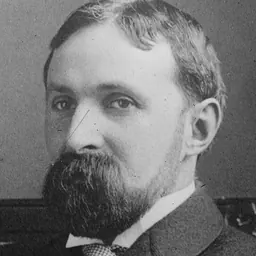

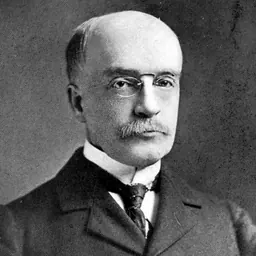

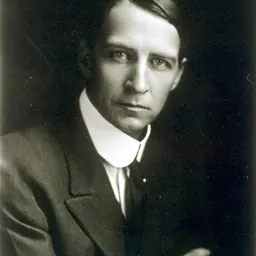

Related people
Same field, nearest in time

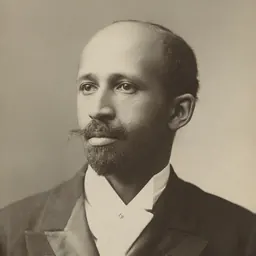
Contemporaries
People whose lives overlapped Herman Vandenburg Ames's





Frequently asked questions
Who was Herman Vandenburg Ames?
Author and academic
When was Herman Vandenburg Ames born?
Herman Vandenburg Ames was born on 7 August 1865 in Lancaster.
When did Herman Vandenburg Ames die?
Herman Vandenburg Ames died on 7 February 1935 in Philadelphia.
What was Herman Vandenburg Ames's occupation?
Herman Vandenburg Ames was a historian and archivist.
What nationality was Herman Vandenburg Ames?
Herman Vandenburg Ames was American.
Sources & further reading
· Wikipedia: Herman Vandenburg Ames
· DBpedia: Herman Vandenburg Ames
Cite this page
APA: Biography.guide. (2026). Herman Vandenburg Ames. https://biography.guide/herman-vandenburg-ames/
MLA: "Herman Vandenburg Ames." Biography.guide, https://biography.guide/herman-vandenburg-ames/.
Chicago: "Herman Vandenburg Ames." Biography.guide. https://biography.guide/herman-vandenburg-ames/.
Data last updated: 2026-09-20 · Spot an error? Report a correction.
Page generated 2026-09-27 05:20 UTC