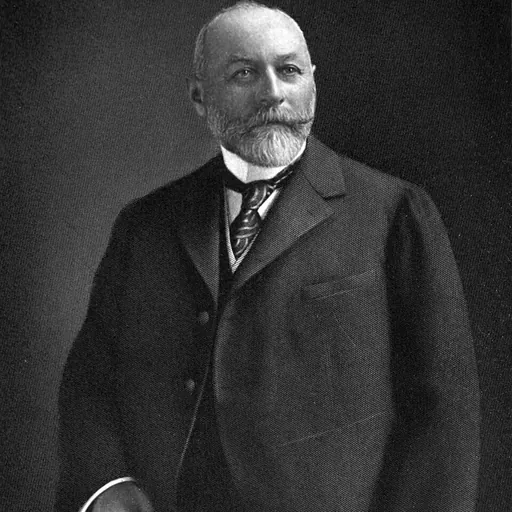
About Herman Frasch
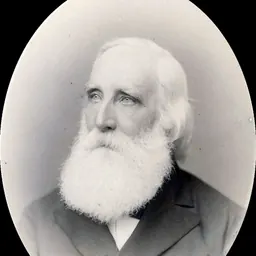
Lived 1851 – 1914 (aged 62). Herman Frasch was an American chemist, inventor, mining engineer and process technician.
Biography Early life He was the son of Johannes and Frieda Henrietta (Bauer) Frasch. Both his parents were natives of Stuttgart. His father was burgomaster of Gaildorf. Herman attended the Latin school in Gaildorf and was then apprenticed to a bookseller in nearby Schwäbisch Hall. Imperial then hired Frasch to assist them in retrofitting their Silver Star refinery with his refining process. The partners purchased a refinery in London, and Frasch began experimenting on a way to remove the sulfur in kerosene refined from Petrolia oil. Canadians nicknamed the kerosene "skunk oil," and refiners had a difficult time marketing their products at home and abroad. Recognizing that any improvement in the Canadian oil could also be applied to the Ohio oil, Standard hired Frasch in July 1886, offering him "a salary higher than that of any other scientist in the country," and an exchange of his shares in the Empire Oil Company for Standard Oil shares. Once Frasch returned to the United States, he began working for the Solar Refining Company, a Standard Oil subsidiary in Lima, Ohio, and perfected his desulfurization method.
In 1894, Frasch started drilling well No. 14 using a 10-inch pipe, finally getting through the quicksand to the caprock after three months. He then drilled an 8-inch bore to the bottom of the sulfur deposit. A strainer, consisting of perforated 6 inch casing, was placed at the bottom of the 623 feet long test tube. Above the strainer were larger holes acting as the hot water outlet. A 3-inch pipe inside the 6 inch casing descended to the strainer, and was connected to a sucker rod pump. Water, from the surrounding swamp, was heated in a 20 feet high cylinder 30 inches in diameter, from steam supplied by 4 boilers. The superheated water was poured into the well for 24 hours, and on Christmas Day, melted sulfur was pumped to the surface filling 40 barrels in 15 minutes. The excess was then directed to a levee, where it solidified. As Frasch himself said about the first demonstration of the first Frasch Process, "We had melted the mineral in the ground and brought it to the surface as liquid."
Frasch married his second wife Elizabeth Blee (1858–1924) on June 16, 1890, shortly after his first wife died.
Herman Frasch died at his home in Paris on May 1, 1914, and was buried in Gaildorf. His body and that of his widow were brought to the United States and re-interred in the Sleepy Hollow Cemetery, Sleepy Hollow, New York, following the death of Elizabeth in Paris in 1924 .
Honors Frasch was awarded the Perkin Medal in 1912.
Frasch Elementary school, a public school in Calcasieu Parish, and Frasch Hall, a building at McNeese State University, were named after him. Frasch's surname is often misspelled Frash.
Don’t just read it —
keep it.
Full-length biographies made to live with: read them, listen on the way to work, watch them tonight.
- E-book
- Audio
- Video
Instant download · yours to keep · every purchase keeps this site free
Important facts
Related people
Same field, nearest in time



Contemporaries
People whose lives overlapped Herman Frasch's



Frequently asked questions
Who was Herman Frasch?
United States mining engineer and inventor (1851–1914)
When was Herman Frasch born?
Herman Frasch was born on 25 December 1851 in Oberrot.
When did Herman Frasch die?
Herman Frasch died on 1 May 1914 in Paris.
What was Herman Frasch's occupation?
Herman Frasch was a chemist, inventor, mining engineer and process technician.
What nationality was Herman Frasch?
Herman Frasch was American.
Sources & further reading
Cite this page
APA: Biography.guide. (2026). Herman Frasch. https://biography.guide/herman-frasch/
MLA: "Herman Frasch." Biography.guide, https://biography.guide/herman-frasch/.
Chicago: "Herman Frasch." Biography.guide. https://biography.guide/herman-frasch/.
Data last updated: 2026-09-23 · Spot an error? Report a correction.
Portrait: Wikimedia Commons · author & licence
Page generated 2026-09-27 05:06 UTC