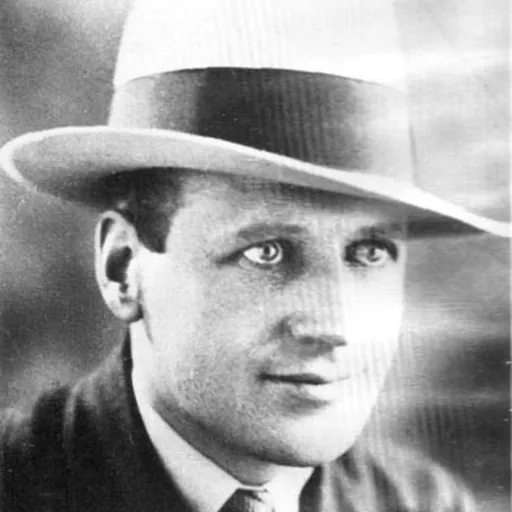
About Herman Charles Bosman
Lived 1905 – 1951 (aged 46). Herman Charles Bosman was a South African writer, journalist and playwright.
Herman Charles Bosman (3 February 1905 – 14 October 1951) was widely regarded as South Africa's greatest short-story writer. He studied the works of Edgar Allan Poe and Mark Twain and developed a style emphasizing the use of satire. His English-language works utilize primarily Afrikaner characters and highlight the many contradictions in Afrikaner society during the first half of the twentieth century.
Early life Bosman was born at Kuils River, near Cape Town, in the Cape Colony, to an Afrikaner family. He was raised with English as well as Afrikaans. While Bosman was still young, his family travelled frequently, he spent a short time at Potchefstroom College which would later become Potchefstroom High School for Boys, he later moved to Johannesburg where he went to school at Jeppe High School for Boys in Kensington. While there he contributed to the school magazine. When Bosman was sixteen, he started writing short stories for the national Sunday newspaper (the Sunday Times). He attended the Johannesburg College of Education (which in 2002 was incorporated into the University of the Witwatersrand) and submitted various pieces to student literary competitions.
Career and adult life After graduation, Bosman accepted a teaching position in the Groot Marico district in an Afrikaans-language school. The area provided the backdrop for his best-known short stories, the Oom Schalk Lourens series (featuring an older character named Oom Schalk Lourens) and the Voorkamer sketches.
In January 1926 he married Vera Sawyer in Johannesburg. They never lived together, and Bosman seldom told anyone about the marriage, but they remained on good terms throughout Bosman's life.
Over the June school holidays in 1926, Bosman visited his family in Johannesburg. During an argument, he shot and killed his stepbrother. Bosman was sentenced to death for this crime and was sent to death row at the Pretoria Central Prison. His sentence was later reduced to ten years with hard labour. In 1930, Bosman was released on parole after serving half his sentence. His prison experiences formed the basis for his semi-autobiographical book, Cold Stone Jug.
Bosman then started his own printing-press company and was part of a literary set in Johannesburg, associating with poets, journalists and writers, including Aegidius Jean Blignaut. He toured overseas for nine years, spending most of his time in London. The short stories that he wrote during this period formed the basis for another of his best-known books, Mafeking Road. At the start of the Second World War, he returned to South Africa and worked as a journalist. During this time, in early 1947, he translated the Rubaiyat of Omar Khayyam into Afrikaans.
Bosman lamented the fact that Johannesburg neglected its heritage. In The Standard Theatre he complained that the city's residents:
"will pull down the Standard Theatre like they have pulled down all the old buildings, theatres, gin-palaces, dosshouses, temples, shops, arcades, cafes and joints that were intimately associated with the mining-camp days of Johannesburg. Because I know Johannesburg. And I am satisfied that there is no other city in the world that is so anxious to shake off the memories of its early origins."
Bosman's second wife was Ellalean Manson, known as Ella, a pianist and poet. They met in 1931 and married in October 1932 in Johannesburg. The couple were renowned for their bohemian lifestyle and parties, which featured witty conversation and usually ended well after midnight.
Bosman's third and last wife was Helena Stegmann, a schoolteacher and artist. They married in Johannesburg in March 1944. From 1948 to his death in 1951, Bosman was employed as proof editor at The Sunday Express. In addition, he was contracted to write a weekly Voorkamer story for The Forum magazine.
Only three of his books were published during his lifetime: Mafeking Road published by Dassie, and Jacaranda in the Night and Cold Stone Jug published by APB. Mafeking Road has never been out of print since its publication in 1947. followed by Herman Charles Bosman, a Pictorial Biography (1981), and lastly by Herman Charles Bosman: Between the Lines (2005). The last of these contains much new research and deals in detail with aspects of Bosman's life and parentage that were previously considered taboo.
Because many of his stories were originally published in long-forgotten magazines and journals, there are a number of anthologies by different collators each containing a different selection. His original books have also been published many times by different publishers.
The Herman Charles Bosman Literary Society meets annually for readings, performances and discussions of his works.
Books Some of the ISBNs and publishers below may not be for the original edition. Mafeking Road & Other Stories (1947), Human & Rousseau, Archipelago Books (2008) Rubaijat van Omar Khajjam (1948), Colin Reed-McDonald Cold Stone Jug (1949), Human & Rousseau Veld-trails and Pavements Central News Agency Unto Dust (1963), edited by Lionel Abrahams, Anthony Blond Bosman at his Best: a choice of stories and sketches (1965) edited by Lionel Abrahams Human & Rousseau Bosman's Johannesburg (1986) edited by Stephen Gray Human & Rousseau Ramoutsa Road (1987) Ad. Donker A Bekkersdal Marathon (1971), Human & Rousseau The Earth is Waiting (1974) Willemsdorp (1977), Human & Rousseau Almost Forgotten Stories (1979) H. Timmins My Friend Herman Charles Bosman Perskor. author: Aegidius Jean Blignaut Dead End Road AD.Donker. author: Aegidius Jean Blignaut Selected Stories (1980), edited by Stephen Gray, Human & Rousseau The Collected Works of Herman Charles Bosman (1981), edited by Lionel Abrahams, Jonathan Ball The Bosman I like (1981), edited by Patrick Mynhardt, Human & Rousseau Death Hath Eloquence (1981), edited by Aegidius Jean Blignaut, Christelike Uitgewersmaatskappy Uncollected Essays (1981), Timmins The Illustrated Bosman (1985), Jonathan Ball Makapan's Cave and other stories (1987), edited by Stephen Gray, Penguin Books. A Bosman Treasury (1991), edited by Ian Lusted, Human & Rousseau Jurie Steyn's Post Office (1991), Human & Rousseau Herman Charles Bosman : the prose juvenilia (1998), collected and introduced by M. C. Andersen, University of South Africa Idle Talk : voorkamer stories (1999), edited by Craig MacKenzie, Human & Rousseau Old Transvaal Stories (2000), edited by Craig MacKenzie, Human & Rousseau The Rooinek and Other Boer War Stories (2000), edited by Craig MacKenzie, Human & Rousseau Jacaranda in the Night (2000), Human & Rousseau Best of Bosman (2001), edited by Stephen Gray and Craig MacKenzie, Human & Rousseau Seed-Time and Harvest, and Other Stories (2001), edited by Craig MacKenzie, Human & Rousseau Verborge Skatte: Herman Charles Bosman in/on Afrikaans (2001), collected by Leon de Kock, Human & Rousseau
Plays Cold Stone Jug (1982) adapted by Barney Simon from the play by Stephen Gray Human & Rousseau
Don’t just read it —
keep it.
Full-length biographies made to live with: read them, listen on the way to work, watch them tonight.
- E-book
- Audio
- Video
Instant download · yours to keep · every purchase keeps this site free
Important facts
People in Herman Charles Bosman's life
Named in this biography and alive at the same time






Related people
Same field, nearest in time
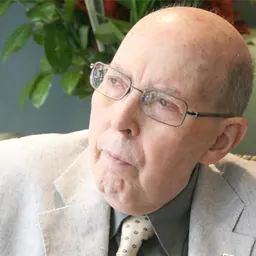
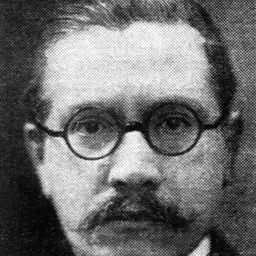
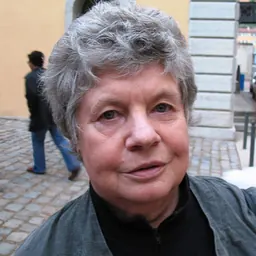
Contemporaries
People whose lives overlapped Herman Charles Bosman's



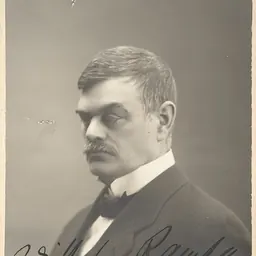

Frequently asked questions
Who was Herman Charles Bosman?
South African writer (1905–1951)
When was Herman Charles Bosman born?
Herman Charles Bosman was born on 3 February 1905 in Kuils River (town).
When did Herman Charles Bosman die?
Herman Charles Bosman died on 14 October 1951 in Edenvale.
What was Herman Charles Bosman's occupation?
Herman Charles Bosman was a writer, journalist and playwright.
What nationality was Herman Charles Bosman?
Herman Charles Bosman was South African.
Sources & further reading
· Wikipedia: Herman Charles Bosman
· DBpedia: Herman Charles Bosman
Cite this page
APA: Biography.guide. (2026). Herman Charles Bosman. https://biography.guide/herman-charles-bosman/
MLA: "Herman Charles Bosman." Biography.guide, https://biography.guide/herman-charles-bosman/.
Chicago: "Herman Charles Bosman." Biography.guide. https://biography.guide/herman-charles-bosman/.
Data last updated: 2026-09-20 · Spot an error? Report a correction.
Portrait: Wikimedia Commons · author & licence
Page generated 2026-09-27 04:57 UTC