
About Herbert Zipper
Lived 1904 – 1997 (aged 92). Herbert Zipper was an Austrian composer, conductor, music educator, music director, music teacher and pianist.
Herbert Zipper (April 27, 1904 in Vienna, Austria – April 21, 1997 in Santa Monica, California) was a composer, conductor, and arts activist. As an inmate at Dachau concentration camp in the late 1930s, he arranged to have crude musical instruments constructed out of stolen material, and formed a small secret orchestra which performed on Sunday afternoons for the other inmates. Together with friend Jura Soyfer, he composed the "Dachau Lied" ("Dachau Song"), which was learned by the other prisoners. Released in 1939, he accepted an invitation to conduct the Manila Symphony Orchestra. and promoted music education.
Early life He was born to a prosperous engineer and inventor in Vienna, Austria. Zipper arrived at Dachau on May 31. He would spend a year in this camp, but instead of sinking into despair, he used the experience to develop his character and his love for humanity, often volunteering for the most demeaning of jobs. Zipper used music and poetry to bolster the spirits of the other inmates. He eventually had instruments made from stolen wood and wire and gathered a group of 14 musician prisoners to form an orchestra, The orchestra held secret rehearsals and gave concerts on Sunday afternoons in an unused latrine.
On September 23, 1938, Zipper was transferred to Buchenwald Zipper’s fiancée, renowned dancer Trudl Dubsky, had been working in Manila since 1937 and had recommended him for the post. Zipper accepted and joined Trudl in Manila, where they were married on October 1, 1939.
Although the orchestra was of poor quality, Zipper’s skill and enthusiasm soon led to successful concerts. Then disaster struck. The Japanese invaded Manila, and Zipper found himself a prisoner again. After four months of imprisonment and interrogations, he was released, and he and Trudl spent the next few years helping friends and trying to stay alive, having lost what few belongings they had accumulated. Zipper made many friends while in Manila, including General MacArthur’s wife, who helped him organize a victory concert after the Allies liberated the island.
The Zippers had many brushes with death during the 30-day Battle of Manila in early 1945. On more than one occasion the buildings they occupied were directly hit by artillery shells. On February 26, 1945, at 4:00am, Herbert left their seven story, partially destroyed, apartment building to fetch the daily water. News of the fall of the Nazi regime reached Zipper the day following the concert.
Emigration to the United States In 1946, Zipper and his wife joined the rest of his family in the United States. His main reason for the trip was as a fundraising mission for the Philippine Cultural Rehabilitation Program that he had helped start. After only a few months, he received word that the program had been put on hold. While that project was stalled, Zipper saw as a deficit in arts education in U.S. schools and embarked on what would be his major life work — to help start community arts programs.
In 1947, Zipper was offered a teaching post at The New School for Social Research in New York, founded in 1918 by Alvin Johnson as one of the country’s first adult education centers. Over the next few decades, Zipper went on to start many community art centers throughout the country. He also worked on reviving the disbanded Brooklyn Symphony, a group which had not been active since their conductor, Sir Thomas Beecham, had returned to England. Zipper’s role of conductor with the Brooklyn Symphony focused much of their work on school outreach programs, while Zipper became increasingly involved in championing racial equality, social justice, and environmental causes.
In 1953, Zipper took the position of director of the Winnetka School of Music in the Chicago area, where he worked during the school year and then returned to Manila each summer to conduct a concert series. Winnetka was a community art school that served children and adults in afternoon and evening programs. In 1954, through a large fundraising effort, the school was relocated, expanded, and renamed Music Center of the North Shore (now the Music Institute of Chicago). Through this school, Zipper organized a professional orchestra whose purpose was to play concerts in area schools.
In 1972, Zipper accepted a job as project director for the Community School of Performing Arts at the University of Southern California. His beloved wife and partner Trudl died of cancer in 1976. Despite his grief, Zipper continued his zeal for the arts and in the early 1980s began trips to China where he served as a teacher, arts advocate, and conductor. Zipper helped the Community School of Performing Arts become the independent Colburn School in Los Angeles.
Zipper remained active in the arts until his death in 1997 at age 92. He was the subject of the Oscar-nominated documentary Never Give Up: The 20th Century Odyssey of Herbert Zipper (1995). When the Colburn School moved to its own building in 1998, it named its primary performance space, Zipper Hall, in his honor.
Don’t just read it —
keep it.
Full-length biographies made to live with: read them, listen on the way to work, watch them tonight.
- E-book
- Audio
- Video
Instant download · yours to keep · every purchase keeps this site free
Important facts
People in Herbert Zipper's life
Named in this biography and alive at the same time


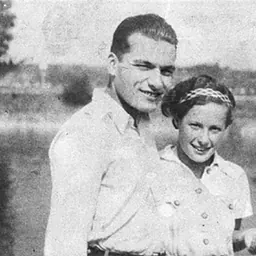

Related people
Same field, nearest in time
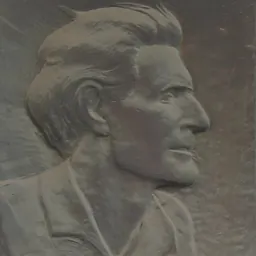




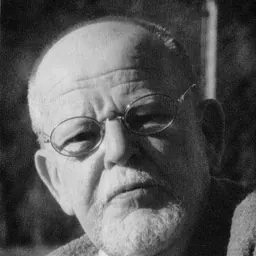
Contemporaries
People whose lives overlapped Herbert Zipper's

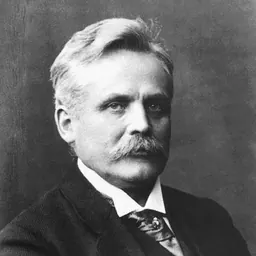



Frequently asked questions
Who was Herbert Zipper?
American composer (1904-1997)
When was Herbert Zipper born?
Herbert Zipper was born on 27 April 1904 in Vienna.
When did Herbert Zipper die?
Herbert Zipper died on 21 April 1997 in Santa Monica.
What was Herbert Zipper's occupation?
Herbert Zipper was a composer, conductor, music educator, music director, music teacher and pianist.
What nationality was Herbert Zipper?
Herbert Zipper was Austrian.
Sources & further reading
Cite this page
APA: Biography.guide. (2026). Herbert Zipper. https://biography.guide/herbert-zipper/
MLA: "Herbert Zipper." Biography.guide, https://biography.guide/herbert-zipper/.
Chicago: "Herbert Zipper." Biography.guide. https://biography.guide/herbert-zipper/.
Data last updated: 2026-09-20 · Spot an error? Report a correction.
Page generated 2026-09-27 05:06 UTC