
About Herbert S. Terrace
Born 1936. Herbert S. Terrace is a psychiatrist and psychologist.
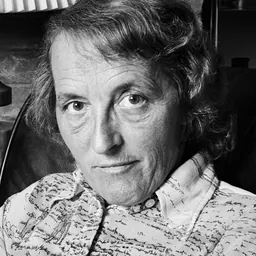
Herbert S. Terrace (born 29 November 1936) is a professor of Psychology and Psychiatry at Columbia University. His work covers a broad set of research interests that include behaviorism, animal cognition, ape language and the evolution of language. He is the author of Nim: A Chimpanzee Who Learned Sign Language and Why Chimpanzees Can't Learn Language and Only Humans Can (2019). Terrace has made important contributions to comparative psychology, many of which have important implications for human psychology. These include discrimination learning, ape language, the evolution of language, and animal cognition.
Background Early life Terrace was born and raised in Brooklyn as the youngest child of two Polish immigrants. He attended Stuyvesant High School in New York. His interest in science was instilled by an older sister, Dr. Dorothy Krieger, who won a Lasker Award for her research in endocrinology.
Education Terrace obtained a Bachelor of Arts in psychology (1957) and a Master of Arts in Experimental Psychology (1958) from Cornell University, where he was a Josiah Macy, Jr. Foundation Fellow (1957–1958). His mentor during graduate studies was Julian Hochberg. He obtained his PhD in psychology (1961) from Harvard University, where his mentor was B. F. Skinner. At Harvard, he was a USPHS Pre-Doctoral Fellow (1959–1961)
Contributions to psychological theory Discrimination learning Learning by trial and error is a basic feature of conditioning theory. He did this with pigeons who learned to discriminate two narrowly spaced stimuli by starting with a large distance between the discriminative stimuli that was gradually reduced. When a discrimination is trained with errors, subjects exhibit frustration. Such aversive effects are absent when a discrimination is trained without errors. Skinner cited a similar difference in the case of the teaching machine, a device he invented to train human subjects to learn different types of technical material. The teaching machine introduces a new topic with simple questions that are gradually made more difficult. Subjects who learn with few or no errors do not exhibit the frustration they would have experienced had they learned by trial and error. Were it not for his teacher, Nim would try to grab a reward directly. When that failed, Nim's only alternative was to sign. Anticipating his signing, Nim's teachers unwittingly made one or more appropriate signs, about a quarter of a second before he signed. Terrace also showed that prompting explained the signing of other chimpanzees who were trained to use ASL.
The negative results of Project Nim posed two questions: why can a chimpanzee not learn language, words in particular, and which of our ancestors was the first species to use words? To answer the first question, Terrace cited recent discoveries by developmental psychologists who showed that infants experience two non-verbal relations with their caretakers, intersubjectivity and joint attention, before they learn to name objects. and a linguist who suggested that the caloric requirements of Homo erectus’ large brain was the motivation for their invention of words. Meat was the most efficient way to get those calories, necessitating Homo erectus hunt or scavenge large animals, primarily the latter. That required a group effort, in which a scout had to inform members of his group about the location of a dead animal they could not see. Because it required displaced reference, such communication was assumed to be the occasion for the first use of words. and that the origin of words remained a mystery. and a documentary film based on the book, Project Nim (2011). Following the project's conclusion, Nim was effectively abandoned by Terrace, who visited the chimpanzee only once in spite of Nim's sale to a new facility, and his documented difficulties adapting to his new environment.
Animal cognition Although chimpanzees cannot learn language, there is evidence that their behavior, and that of other animals, is more intelligent than behavior that could result from conditioning. To explain intelligent behavior in animals without language and without the principles of conditioning, Terrace argued that it is necessary to show that they can represent objects, that is, solve a problem in the absence of external cues that can guide their behavior. When learning a sequence by the simultaneous training paradigm, monkeys were shown an array of photographs on a touch-sensitive video display. On each trial, the position of the photographs varied randomly. As a result, subjects could not rely on its physical location as an external cue for determining to which photograph it should respond first, second, and so on. Instead, they had to memorize the order of each photograph.
Because the simultaneous training paradigm requires the subject to represent each item's ordinal position, it provides an opportunity to study animal cognition. In the early 80s, Terrace helped organize an international conference on animal cognition at Columbia University that discussed the simultaneous training paradigm and other instances in which animals are able to represent stimuli. to acquire serial expertise [the ability to become progressively better at learning arbitrary sequences] and to imitate another monkey's sequential performance.
Metacognition Terrace also studied a monkey's ability to think about its own behavior, that is, its ability to engage in metacognition. In humans, metacognition is assessed by asking subjects how certain they are about their knowledge of a particular topic, for example, how well they did on an exam. To assess metacognition in monkeys, Terrace devised a task in which the monkeys had to place a “bet” that was commensurate with their confidence in the accuracy of a response on a cognitive task. Following each response, monkeys learned to select a “high confidence” symbol if their response was correct and a “low confidence” symbol after an error. They did so correctly even when the appearance of the confidence symbols was delayed for as much as 5 sec after a trial ended. This was the first demonstration that a monkey could think about its behavior.
Honors and awards
John Simon Guggenheim Fellowship, 1969–1970 (University of Sussex, England) Harry Frank Guggenheim Fellowship 1976–1977 (Columbia University) All Souls College Fellowship, 1983–1984 (Oxford University) Fulbright Senior Research Scholar, 1983–1984 (Oxford University) Election to Society of Experimental Psychologists, 1988 Howard Crosby Warren Medal, Society of Experimental Psychologists, 2004 Lifetime Achievement Award, Comparative Cognition Society, 2009
Grants Since 1962, Terrace's research has been funded by grants from the NIH, NSF and the James McDonnell Foundation.
Don’t just read it —
keep it.
Full-length biographies made to live with: read them, listen on the way to work, watch them tonight.
- E-book
- Audio
- Video
Instant download · yours to keep · every purchase keeps this site free
Important facts
People in Herbert S. Terrace's life
Named in this biography and alive at the same time



Related people
Same field, nearest in time





Contemporaries
People whose lives overlapped Herbert S. Terrace's






Frequently asked questions
Who is Herbert S. Terrace?
American professor of psychology (b. 1936)
When was Herbert S. Terrace born?
Herbert S. Terrace was born in 1936.
What is Herbert S. Terrace's occupation?
Herbert S. Terrace is a psychiatrist and psychologist.
Sources & further reading
· Wikipedia: Herbert S. Terrace
Cite this page
APA: Biography.guide. (2026). Herbert S. Terrace. https://biography.guide/herbert-s-terrace/
MLA: "Herbert S. Terrace." Biography.guide, https://biography.guide/herbert-s-terrace/.
Chicago: "Herbert S. Terrace." Biography.guide. https://biography.guide/herbert-s-terrace/.
Data last updated: 2026-09-23 · Spot an error? Report a correction.
Portrait: Wikimedia Commons · author & licence
Page generated 2026-09-27 05:05 UTC