
About Herbert Häber
Lived 1930 – 2020 (aged 89). Herbert Häber was a German politician.
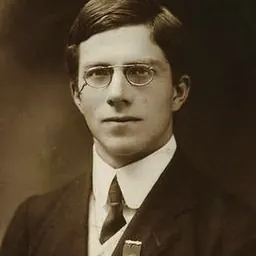
Herbert Häber (15 November 1930 – 10 April 2020) was a German politician and high-ranking party functionary of the Socialist Unity Party (SED).
Häber was one of the most influential foreign policy experts in the GDR, serving as the longtime head of the West Department at the Central Committee of the SED. In this role, he held contacts with many West German politicians.
Häber supported SED leader Erich Honecker's policy of German-German dialogue and rapprochement, leading to his surprising ascension to the SED Politburo in May 1984. Häber was however removed and institutionalized in August 1985, as a scapegoat for the worsening relationship with the Soviet Union.
Life and career Early career Herbert Häber was born in 1930 in Zwickau, Saxony, into a working-class family. In 1945, Häber worked as a laborer in the Zwickau metalworks.
In 1946, he joined the Free German Youth (FDJ) and the ruling Socialist Unity Party (SED). From 1947 to 1949, he was a member of the FDJ district association and the SED district leadership in Zwickau, as well as a correspondent for the Soviet News Agency and the state news agency Allgemeiner Deutscher Nachrichtendienst.
In 1951, at the age of 20, Häber moved to Berlin. Until the end of 1952, he worked as a political employee of the West Commission at the SED Politburo, and in early 1953, he assumed the leadership of the sector for all-German issues in the Press and Broadcasting Department of the SED Central Committee.
The State Secretariat for West German Affairs was abolished in July 1971 as part of the SED's broader shift away from reunification.
SED Central Committee
In December 1973, he was made head of the West Department, later renamed the Department of International Politics and Economics, at the SED Central Committee. which was not realized due to the support of the billion-dollar credit negotiated between Franz Josef Strauß and Alexander Schalck-Golodkowski on the "South route" by Erich Honecker and Helmut Kohl. Honecker's policy of German-German dialogue made him the ideal advocate for Honecker's Western policy within the Politburo. However, this policy faced significant resistance in the Soviet Union, especially from Chernenko and Ustinov.
In May 1984, he was surprisingly made a full member of the Politburo of the Central Committee, the de facto highest leadership body in East Germany, responsible for International Politics and Economics, "The hidden threat from Chernenko, that deviating from the previous role of the SED as a follower of the CPSU could also have consequences for Honecker personally, prompted him to look for a scapegoat. He quickly found one in Herbert Häber." He was even abandoned by his longtime friend and colleague Joachim Herrmann. suffered a nervous breakdown and was admitted to the Government Hospital in Berlin-Buch "at his own request." Afterward, he worked until 1989 as an employee at the Academy of Social Sciences at the SED Central Committee. This, the 40th Grand Criminal Chamber, concluded the proceedings against Häber on 25 March 2004. His case, viewed differently from the beginning in the second Politburo trial, not least due to the statements of many witnesses – especially West German politicians, historians, and political observers – was concluded in three trial days with the surprising verdict quoted at the beginning.
Don’t just read it —
keep it.
Full-length biographies made to live with: read them, listen on the way to work, watch them tonight.
- E-book
- Audio
- Video
Instant download · yours to keep · every purchase keeps this site free
Important facts
People in Herbert Häber's life
Named in this biography and alive at the same time

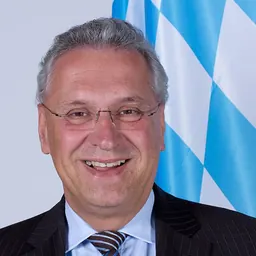

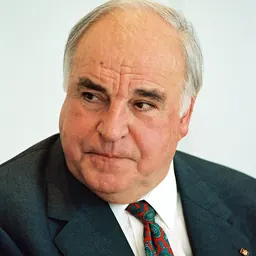

Related people
Same field, nearest in time


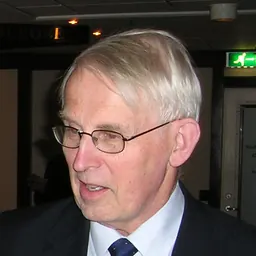
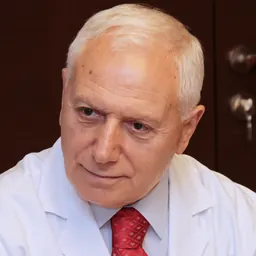
Contemporaries
People whose lives overlapped Herbert Häber's

Frequently asked questions
Who was Herbert Häber?
German politician, East Germany (1930–2020)
When was Herbert Häber born?
Herbert Häber was born on 15 November 1930 in Zwickau.
When did Herbert Häber die?
Herbert Häber died on 10 April 2020 in Berlin.
What was Herbert Häber's occupation?
Herbert Häber was a politician.
What nationality was Herbert Häber?
Herbert Häber was German.
Sources & further reading
Cite this page
APA: Biography.guide. (2026). Herbert Häber. https://biography.guide/herbert-haber/
MLA: "Herbert Häber." Biography.guide, https://biography.guide/herbert-haber/.
Chicago: "Herbert Häber." Biography.guide. https://biography.guide/herbert-haber/.
Data last updated: 2026-09-20 · Spot an error? Report a correction.
Page generated 2026-09-27 05:30 UTC