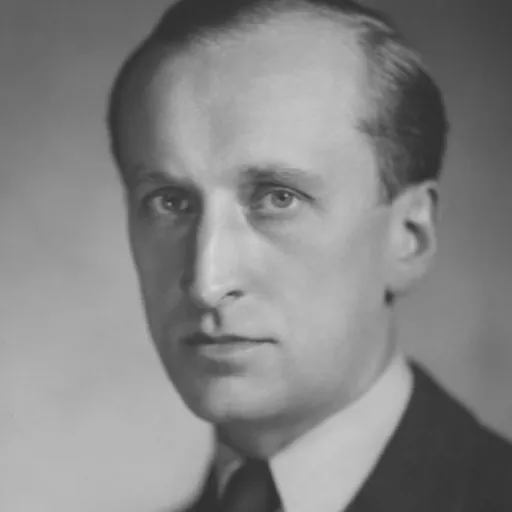
About Henryk Sztompka
Lived 1901 – 1964 (aged 63). Henryk Sztompka was a Polish pianist, music educator, university teacher, composer and musician.
Henryk Sztompka ( ; ; – 21 June 1964) was a Polish pianist. He studied at the Warsaw Conservatory under Józef Turczyński and later trained in Paris under Ignacy Jan Paderewski from 1928 to 1932. He competed in the first International Chopin Piano Competition in 1927, winning the Polish Radio award for the best performance of mazurkas.
He toured widely across Poland, Western Europe, and the Soviet Union, and also became known for bringing recitals to rural audiences. After World War II, he taught at the Academy of Music in Kraków and recorded the complete Nocturnes and Mazurkas of Chopin in 1957.
Sztompka helped establish the Chopin Festival in Duszniki in 1946 and repeatedly served on the juries of the International Chopin Piano Competition, the Long-Thibaud-Crespin Competition, and the International Tchaikovsky Competition. He served as vice president of the Frederic Chopin Society until his death.
Early life and education Sztompka was born in 1901 in Bogusławka, a village in the Volhynia Governorate of northwestern Ukraine near the city of Lutsk, then part of the Russian Empire. His parents were Józefa (; d. 1918) and Stanisław Sztompka (d. 1930). He graduated from the St. Stanisław Kostka gymnasium in 1920 He moved to Paris in 1928 to begin his international performing career, studying under Ignacy Jan Paderewski until 1932.
Career On 24 October 1926, Sztompka made his debut performance of Rachmaninoff's Piano Concerto No. 2 with the Warsaw Philharmonic. and as a Polish contestant, was initially favored to win. Although the 1st place prize went to Lev Oborin, Sztompka won the Polish Radio award for the best performance of mazurkas. thumb
After moving to France, he made his Paris debut as a soloist at the Salle Pleyel. After studying with Paderewski, Sztompka performed with an orchestra in Paris for the first time on 24 January 1932, playing Paderewski's Polish Fantasy with the Colonne Orchestra under the baton of Gabriel Pierné.
Sztompka performed in Poland with Karol Szymanowski and accompanied vocal artists including Ewa Bandrowska-Turska, , Jan Kiepura, and the violinist Eugenia Umińska. He was part of a program that introduced people in rural Poland to classical music. Sztompka "claimed to prefer the audiences in the provinces to those of major cities", remarking that in rural areas:
We feel needed by everyone, by the people of all of Poland, and not only by a small handful of snobs and by the even fewer who are truly devoted to music. — Henryk Sztompka The audience included members of the "Blue Squadron", a group of French Red Cross nurses and ambulance drivers who worked in Poland after the war, including Madeleine Pauliac. and performed at the 2nd festival the following year.
Sztompka resumed his activity and began teaching piano at the Academy of Music in Kraków. He became an associate professor in 1955 and attained tenure three years later. In 1957, he became head of the piano department and served as vice rector until 1963. He was a noted interpreter of Chopin and recorded the complete set of Nocturnes and Mazurkas in 1957 for the Polskie Nagrania Muza label. Sztompka's style was described as a "predominantly lyrical performer".
Sztompka was on the jury for the International Chopin Piano Competition three times, including the fourth competition in 1949, the fifth competition 1955, and vice-chaired the sixth competition in 1960. He was on the jury of the Long-Thibaud-Crespin Competition four times between 1953 and 1961 and twice on the jury of the International Tchaikovsky Competition, including for its inaugural edition in 1958. He later served as vice president of the Frederic Chopin Society.
His most notable students include the pianist Regina Smendzianka, composer Andrzej Kurylewicz, and Iranian pianist , who won the 3rd prize in the VI International Chopin Piano Competition in 1960. Other students include Joachim Gudel and .
Personal life
Sztompka married Helena in 1938. Their son, Piotr Sztompka, became a Polish sociologist.
After the Warsaw Uprising in 1944, he and his wife and infant son received shelter from Władysław Strakacz, the owner of a brewery in Skierniewice.
Awards City of Kraków Award (1958) State Artistic Award, 1st degree (1950) Order of the Banner of Labour 2nd class (22 July 1949)
Publications Artur Rubinstein. Polish Musical Publishing House (PWM Edition). Kraków (1966) Konkursowe refleksje (English: Reflections on the competition). Dziennik Polski; issue 13 (1955)
Don’t just read it —
keep it.
Full-length biographies made to live with: read them, listen on the way to work, watch them tonight.
- E-book
- Audio
- Video
Instant download · yours to keep · every purchase keeps this site free
Important facts
People in Henryk Sztompka's life
Named in this biography and alive at the same time




Related people
Same field, nearest in time
Contemporaries
People whose lives overlapped Henryk Sztompka's


Frequently asked questions
Who was Henryk Sztompka?
Polish pianist (1901-1964)
When was Henryk Sztompka born?
Henryk Sztompka was born on 1 April 1901 in Bahuslaŭka.
When did Henryk Sztompka die?
Henryk Sztompka died on 21 June 1964 in Kraków.
What was Henryk Sztompka's occupation?
Henryk Sztompka was a pianist, music educator, university teacher, composer and musician.
What nationality was Henryk Sztompka?
Henryk Sztompka was Polish.
Sources & further reading
Cite this page
APA: Biography.guide. (2026). Henryk Sztompka. https://biography.guide/henryk-sztompka/
MLA: "Henryk Sztompka." Biography.guide, https://biography.guide/henryk-sztompka/.
Chicago: "Henryk Sztompka." Biography.guide. https://biography.guide/henryk-sztompka/.
Data last updated: 2026-09-22 · Spot an error? Report a correction.
Portrait: Wikimedia Commons · author & licence
Page generated 2026-09-27 05:02 UTC