
About Henryk Stażewski
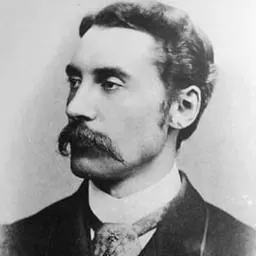
Lived 1894 – 1988 (aged 94). Henryk Stażewski was a Polish painter and sculptor.
Henryk Stażewski (pronounced: ; 9 January 1894 – 10 June 1988) was a Polish painter, visual artist and writer. Stażewski has been described as the "father of the Polish avant-garde" and is considered a pivotal figure in the history of constructivism and geometric abstraction in Central and Eastern Europe. His career spanned seven decades and he was one of the few prominent Polish artists of the interwar period who remained active and gained further international recognition in the second half of the 20th century.
Stażewski rose to prominence as a co-founder of Blok, Praesens, and a.r. group, three interwar artist collectives which spearheaded the development of Polish Constructivist art. During the 1920s and 1930s, he became acquainted with and influenced by prominent European avant-garde artists, including the Soviet Suprematist painters Kazimir Malevich and El Lissitzky, the Dutch de Stijl artists Theo van Doesburg and Piet Mondrian, as well as the French Cubist painter and later founder of the Abstraction-Création collective Albert Gleizes, among others. As a member of the a.r. group, Stażewski was also one of the key artists—alongside Władysław Strzemiński and Katarzyna Kobro—involved in the formation of Muzeum Sztuki in Łódź in 1931, the first museum in Europe dedicated to showcasing and collecting modern art. Stażewski's career was hindered by the outbreak of World War II and most of his work was destroyed during the Nazi occupation of Poland. After the end of the war in 1945, he returned to painting but faced the cultural constraints resulting from the imposition of Stalinism and Socialist Realism in Poland.
Following the cultural and political Thaw of 1956, Stażewski began working on abstract relief sculptures, a medium that preoccupied him in the following decades and became his most recognized body of work. First exhibited in 1959, Stażewski's reliefs deployed diverse media and embraced various non-figurative visual vocabularies inspired by his interwar investigations into geometric abstraction. During the 1960s, still working behind the Iron Curtain, Stażewski helped facilitate unofficial cultural exchanges with numerous Western artists. In 1966, he initiated a years-long collaboration with the non-commercial gallery space Galeria Foksal in Warsaw, which played a critical role in the development of the Polish post-war avant-garde. Working alongside Christian Boltanski, Tadeusz Kantor, Allan Kaprow, Edward Krasiński, Annette Messager and other contemporary artists who exhibited at Foksal throughout the 1980s, Stażewski continued to cultivate international artistic connections with the West during the late communist period in Poland. He enrolled at the Warsaw Academy of Fine Arts in 1913, where he studied under the prominent portraitist and illustrator Stanisław Lentz. A surviving series of figurative watercolor paintings from 1915—including nudes, portraits, and landscapes—reveals the influence of Impressionist art in Stażewski's early work. Later in 1921, Stażewski showed his work—together with several early compositions by a fellow Polish painter Mieczysław Szczuka—at the Polish Artists' Club in Warsaw.
Polish Constructivism (1924–1930s)
The Vilnius exhibition in 1923, which included works by avant-garde artists from across Eastern Europe and Russia, is credited with introducing constructivist tendencies to Polish art.
For Stażewski, the connection between art and science was crucial, and he argued that "a painting's systematic quality connected it to contemporary civilization in a unilateral action—from science and machines to works of art". In a text from 1924, Stażewski emphasized the important role that abstraction plays in constructing a modern society:
At Blok, Stażewski collaborated with Henryk Berlewi and Szczuka who were considered leading figures in Polish avant-garde typography. After Blok was dissolved in 1926 due to internal disagreements, Stazewski became one of the co-founders of the avant-garde collectives Praesens (1926–1929) and later a.r. group (1929–1936), both of which also became critical in defining the direction of Constructivism in Poland. Though predominantly idealistic and of limited impact on the Polish post-World War I society, the Constructivists completed some important architectural projects (Praesens, for instance, participated in the design of apartment buildings for the Warsaw Housing Cooperative in the Rakowiec district)
Kazimir Malevich's Exhibition in Warsaw (1927) Banquet celebrating Kazimir Malevich's solo exhibition at the Hotel Polonia in Warsaw, 1927. Henryk Stażewski is standing to the far right. In March 1927, Stażewski was among several Polish artists hosting the Russian Suprematist painter Kazimir Malevich during his trip to Warsaw. A pioneer of abstraction, Malevich coined the term Suprematism to promote the supremacy of "non-objective art of 'pure feeling', unconcerned with representation of the visible world". Malevich's theories of painting had served as a crucial point of reference for Russian Constructivists and avant-garde artists across Central and Eastern Europe.
In Warsaw, Malevich faced criticism from some contemporary artists, including Mieczysław Szczuka, who argued that Suprematism, as understood by Malevich, was no longer relevant for Polish utilitarianism-oriented avant-garde and that the artist was "a Romantic who loves painterly means for their own sake". Nonetheless, Malevich is said to have made a lasting impact on Stażewski in particular, who examined some of the key ideas of the movement regarding the autonomy of art and the superiority of non-objective visual forms in relation to his own artistic practice during the late 1920s and the early 1930s. While working with Constructivist groups in Poland during the 1920s, Stażewski traveled frequently and participated in several international exhibitions, including the 1926 Paris Exhibition of Theatrical Art and the New York Machine Age Exposition in 1927. He also developed and cultivated relationships with representatives of Western European avant-garde groups, including Theo van Doesburg and Piet Mondrian of the Dutch De Stijl movement, as well as the French painter Albert Gleizes. The influence of De Stijl can be found in Stażewski's work from around that time, including oil paintings titled Kompozycja (c. 1929–1930) and Kompozycja Fakturowa (Textural Composition) from 1931, which rely on interlocking vertical and horizontal shapes to form a geometrical grid.
In 1929, Stażewski became a member of the Cercle et Carré and in 1931 joined Abstraction-Création, two Paris-based groups gathering international abstract painters.
By the second half of the 1930s, Stażewski returned to representational art while still exhibiting abstract paintings and graphic design in Poland and other European countries. He also supported himself financially through portrait commissions. During Hitler's invasion of Poland in early September 1939, the building which housed Stażewski's studio in Warsaw was bombed, destroying most of his work.
Post-war career
Stalinist Poland (1948–1956)
In 1945, shortly after the war ended, Stażewski moved to Warsaw and was hired as the head of the art studio at the Military Geographical Institute. He took an apartment on Piękna Street with the artists Jan Rogoyski and Maria Ewa Łunkiewicz-Rogoyska, a space that would become a nexus of Warsaw avant-garde artists and intellectuals in the following years. Earlier that year, Stażewski had co-designed decorative glass panels for the large-scale Wystawa Ziem Odzyskanych (Exhibition of Recovered Territories)—a sweeping display celebrating the Polish post-war annexation of parts of Germany—which had become a centerpiece of the early Stalinist propaganda and was held in the city of Wrocław between July and October 1948. Although fired from his position at the Institute in 1949, Stażewski was able to carefully navigate the new socio-political system, avoiding the fate of his fellow avant-garde collaborators, Strzemiński and Kobro, who had been accused of reactionary cultural activities and whose careers had been effectively destroyed by the emergent Stalinist regime.
Soon, Stażewski turned to Socialist Realism—a Soviet figurative art doctrine reliant on idealized depictions of life under socialism—that had been officially imposed by the communist regime in 1949. However, he had never fully committed to the naturalistic academicism expected of Soviet Socialist Realist artists. The death of Stalin in 1953 and the subsequent political Thaw of 1956 precipitated the return of modernism. While Poland had become one of the first countries among the Soviet satellite states to embrace the Thaw, the cultural shift was a gradual process. Toward the end of the Stalinist regime, Stażewski and Łunkiewicz-Rogoyska were commissioned to paint a worker-themed realistic mural at the new headquarters of state-controlled Metalexport company in Warsaw, which opened in 1954. In recognition for his artistic contributions to the Polish People's Republic, Stażewski received a Gold Cross of Merit, a medal awarded for distinguished contributions to the state, in 1955.
Reliefs (1956–1970s) In 1955, Stażewski became a member of Klub Krzywego Koła (Crooked Circle Club) in Warsaw, an independent cultural initiative for avant-garde artists, writers, and intellectuals. Around 1956, Stażewski began exploring the relief form as his medium. Stażewski's reliefs broke away from the traditional pictorial flatness and underscored the artist's interest in the tactile qualities of used materials, forging a new theoretical space with which to articulate color. Moreover, the artist's emphasis on tactility and materiality recalls the Russian Constructivist engagement with faktura, an intention to accentuate the work's physical qualities as a way to challenge traditional illusionism in painting. Well received by contemporary critics, the Kordegarda show helped to re-position Stażewski as a leading figure in the Polish contemporary art scene. At the same time, scholar Christina Lodder points to the continued relevance of Russian avant-garde art, including that of Malevich, whose Suprematist Composition: Aeroplane Flying from 1915 Stażewski had reproduced in 1962.
Also in 1961, art dealers Madeleine Chalette-Lejwa and Arthur Lejwa, the founders of Galerie Chalette in New York, featured Stażewski's work in a group exhibition, offering him an early exposure to the American market. Distancing himself from the influences of Malevich and Mondrian, Stażewski stressed in an essay written in 1968 the impact of Johannes Itten and Josef Albers, two Bauhaus artists whose engagement with color theory was influential in both Europe and the US. In 1964, Kazimir Karpuszko, a Polish expatriate art dealer, organized a show of Stażewski's work at Chicago's Contemporary Art Gallery, the artist's first solo exhibition in the United States and an opportunity to introduce his reliefs to the wider American public. In subsequent years, Stażewski's work was also shown at Marlborough-Gerson Gallery and Sidney Janis Gallery in New York. By 1968, Stażewski had returned to polychromatic relief compositions, often made with wood on Masonite board and painted over with acrylic, frequently juxtaposing simple geometrical figures in contrasting colors to achieve a sense of visually dynamic arrangement. Referring to his sustained engagement with color during a 1968 interview, the artist said: "I gradually move from cold to warm colors according to their wavelengths, from pure to grey, from light to dark, using vertical and horizontal combinations. This gives me an infinite number of variants".
Foksal Gallery Infinite Vertical Composition, 1970. The artwork was made from color light beams projected onto the night sky during the Wrocław 70 symposium in Wrocław, Poland Nr. 14, 1973. During the 1970s, Stażewski's work often examined the compositional properties of a straight line (private collection)In 1966, Stażewski was one of the artists representing Poland at the XXXIII Venice Biennale, where his relief works received an honorable mention. Unlike traditional exhibition venues, Foksal revolved around robust collaboration between participating artists and was supposed to present displays that "problematized the artistic process itself" while keeping an "apparent distance from governmental endeavors to instrumentalize art", even though the gallery was publicly funded.
Participating in the artistic program of Foksal provided Stażewski with an opportunity to exhibit his work in a more experimental space. He also continued to facilitate connections with international artists. Throughout the 1970s, he worked alongside Włodzimierz Borowski, Tadeusz Kantor, the American happening artist Allan Kaprow (exhibited at Foksal in 1976), the French conceptual and installation artists Christian Boltanski (1978) and Anette Messager (1978), and the American conceptualist Lawrence Weiner (1979), among others. He also developed a close artistic relationship with Edward Krasiński. He and Krasiński shared an apartment at Aleja Solidarnosci in Warsaw from 1970 until Stażewski's death in 1988. The space, which had served as a salon for Polish artists and intellectuals during the last three decades of communist rule in Poland, was later renamed the (Avant-garde Institute) and opened to the public in 2007.
Late career (1970s–1988) Stażewski experimented with color and geometry in diverse visual and aesthetic registers throughout his career. In 1970, he participated in the art symposium Wrocław 70 where he showcased Infinite Vertical Composition (9 Rays of Light in the Sky), an artwork made of colorful beams of light projected onto the night sky that released color from its previous pictorial confines. Geometry remained a critical reference point for the artist and he considered it an "innate measure in the eye of every man, allowing him to grasp relations and proportions".
During the late 1970s, Stażewski also became interested in creating environments, reimagining his paintings in three-dimensional spaces, informed by his interest in psychology. He continued to exhibit internationally throughout the 1980s, participating in solo and group shows at Staatliche Kunstsammlungen in Dresden, Monumentum Fine Arts in Minneapolis, as well as Centre Pompidou and Galerie Denise René in Paris.
Stażewski died in Warsaw on 10 June 1988, aged 94. His funeral was held on 17 June and he is interred at the Powązki Military Cemetery in Warsaw. Stażewski's work is said to have "paved the way for the revitalization of geometric art" and has served as a source of inspiration for the younger generation of Polish postwar artists. Magdalena Abakanowicz, for instance, closely modeled her early textile works on Stażewski's reliefs and relied on the artist's use of "contrast as an organising principle".
In 1976, critic Hilton Kramer, referring to Stażewski's early constructivist work in his review of "Constructivism in Poland 1923‐1936" at the Museum of Modern Art in New York, wrote: "In the vein of geometrical painting that seeks to maximize the optical effects of shifting grids and alternating textures, Henryk Stażewski's extraordinary composition of 1930‐31 in black, white and grays likewise sums up an ambition that has rarely been improved upon". A 1990 exhibition of his abstract works at Centro Atlántico de Arte Moderno in Las Palmas recognized Stażewski as a pioneer of concrete art, originally an offshoot of Neoplasticism initiated in 1930 by the Dutch painter Theo van Doesburg, which later gained popularity in Latin America during the 1940s and 1950s. In 1994, to commemorate the 100th anniversary of Stażewski's birth, Muzeum Sztuki in Łódź organized a major posthumous retrospective devoted to his oeuvre. In his review of the exhibition, critic and art historian Marek Bartelik wrote that, for Stażewski's Polish admirers, "his uncompromising stance serves today as a confirmation of their belief in the infinite depth and superiority of geometric abstraction". In 2015, Stażewski's Colored Relief (1963) was featured in Transmissions: Art in Eastern Europe and Latin America, 1960–1980, a comprehensive survey exhibition organized at the Museum of Modern Art in New York that examined parallels between art in Eastern Europe and Latin America during the 1960s and 1970s.
Collections
Stażewski's works are included in the permanent collections of museums in Europe and the United States, including the Museum of Modern Art and the Brooklyn Museum in New York, Buffalo AKG Art Museum (formerly known as Albright–Knox Art Gallery), the Museum of Contemporary Art in Chicago, the Museum of Contemporary Art in Los Angeles, Zachęta, the National Gallery of Art in Warsaw, Museum Boijmans Van Beuningen in Rotterdam, Hungarian National Gallery in Budapest, Kröller-Müller Museum in Otterlo, the Centre Pompidou in Paris, and the Tate Modern in London. The exhibition space was expanded in 2010 to include a wider range of interwar and contemporary art from the museum's collection.
In November 2022, Stażewski's 1969 Relief No. 8 was sold for €1.03 million at Sotheby's in Milan, becoming one of the highest prices paid at auction for a 20th-century Polish work of art.
Don’t just read it —
keep it.
Full-length biographies made to live with: read them, listen on the way to work, watch them tonight.
- E-book
- Audio
- Video
Instant download · yours to keep · every purchase keeps this site free
Important facts
People in Henryk Stażewski's life
Named in this biography and alive at the same time


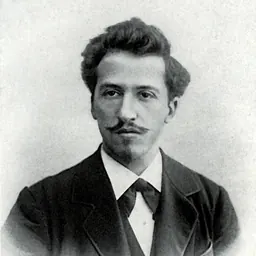
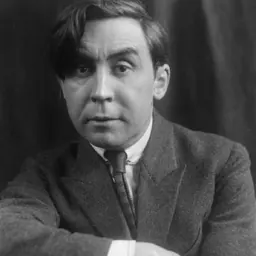
Related people
Same field, nearest in time

Contemporaries
People whose lives overlapped Henryk Stażewski's


Frequently asked questions
Who was Henryk Stażewski?
Polish painter (1894-1988)
When was Henryk Stażewski born?
Henryk Stażewski was born on 9 January 1894 in Warsaw.
When did Henryk Stażewski die?
Henryk Stażewski died on 10 June 1988 in Warsaw.
What was Henryk Stażewski's occupation?
Henryk Stażewski was a painter and sculptor.
What nationality was Henryk Stażewski?
Henryk Stażewski was Polish.
Sources & further reading
Cite this page
APA: Biography.guide. (2026). Henryk Stażewski. https://biography.guide/henryk-stazewski/
MLA: "Henryk Stażewski." Biography.guide, https://biography.guide/henryk-stazewski/.
Chicago: "Henryk Stażewski." Biography.guide. https://biography.guide/henryk-stazewski/.
Data last updated: 2026-09-20 · Spot an error? Report a correction.
Page generated 2026-09-27 05:28 UTC