
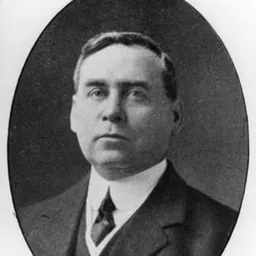
Henryk Mückenbrunn
Polish sportsperson
About Henryk Mückenbrunn
Lived 1903 – 1956 (aged 52–53). Henryk Mückenbrunn was a Polish ski jumper, nordic combined skier and cross-country skier.
Henryk Mückenbrunn (born 10 March 1903 in Zakopane, died 1956 in Vallée Blanche) was a Polish skier and a seven-time Polish champion in skiing. He was a two-time Polish record holder in jump length and a former record holder for the ski jumps in Jaworzynka and Zakopane.
He was born into a Jewish family in Zakopane and graduated from the School of Timber Industry there. He was a member of the skiing section of the . In the summer, he climbed mountains, and in the winter, he practiced ski tourism, making many descents in the Tatras. Among his most famous runs were the descent from Skupniów Upłaz and the run from the to the via a steep couloir, as well as the run from the in Vysoké Tatry. He also participated in slalom and obstacle course races.
Career Group of Polish skiers during competitions in Vorokhta in 1922. Henryk Mückenbrunn is second from the right Mückenbrunn started skiing at a young age, competing with young highlanders from his neighborhood. after jumping 20 meters, and finished 4th in the "artificial skiing" race (slalom). He won the Polish Ski Association vice-championship in the combined race, behind Andrzej Krzeptowski. In 1923, he participated again in Weszterovo, where he finished 3rd in the 15 km race and 3rd in jumping.
1925
The opening of the "jumping hill" at Krokiew took place on 22 March 1925, where Mückenbrunn achieved a jump of 32 meters, placing second behind Stanisław Gąsienica Sieczka from Sokół Zakopane, who set the first record for that facility at the time. In the Sokół competitions in Zakopane, he placed 9th in the main race and 8th in the Zakopane ski championship in the 18 km race. He won the Polish Championships in jumping in 1925 in Krynica after jumps of 25 m and 25.5 m, and he also became the national champion in the combined event. He also participated in the FIS Nordic World Ski Championships 1925 in Janské Lázně in Czechoslovakia, later recognized as the first ski world championships, where he placed 44th in the 18 km race and 44th in jumping.
1926 In January, competitions for the title of Master of the Southern Tatras were held in Starý Smokovec, organized by the Carpathian Association. The event concluded with a triumph for Polish skiing: in the 15.2 km race, Mückenbrunn won with a time of 1 hour and 17 minutes, followed by Czech runner Aladar Thern in second place, and his clubmate Aleksander Rozmus in third. In the senior category, won, with August Zamoyski in second place. Janina Loteczkowa from Lviv triumphed in the women's race. The Polish skiers were dubbed "Polish devils" by the audience and journalists. Mückenbrunn also claimed the title of skiing champion of Czechoslovakia during the XXXI International Competition in Nové Město na Moravě, held from 28 to 31 January and organized by the . The weather was thawing, and in the Class I race, Mückenbrunn finished fifth. The next day, under foggy conditions with rain and snow, the jumping competition took place, where Mückenbrunn placed 4th. Czechs expected their compatriot Koldovsky, the jumping competition winner, to become the Czechoslovak champion. However, after calculating the scores from the race and jumping, Mückenbrunn emerged as the Czechoslovak champion with a score of 17.583 points, while Koldovsky finished second with 17.479 points, and Franciszek Bujak was third with 17.333 points. The award ceremony took place in the evening in the presence of the Minister of Health, Dr. Tucny, and the Deputy Minister of Trade, Dr. Cerman, among an audience of a thousand people who applauded the Polish winners with enthusiasm and ovations. When Henryk Mückenbrunn was called, the national anthem was played, and Minister Tucny presented him with a magnificent gold plaque, while Gen. Podhajsky awarded him the cup from the Minister of National Defense, and Mr. J. Pilnacek from the Union presented him with a splendid sculpture of a Spaniel, amid endless cheers and applause. Mückenbrunn later participated in the famous competitions on Hala Gąsienicowa held in February, where he finished third in the senior category. He also won skiing accolades as part of the from Bielsko in the international military competitions held in March 1926. He also secured a silver medal in the Polish jumping championships, finishing fifth in the international classification. An invitation to international skiing competitions came from Beskidenverein from Bielsko for the Zakopane clubs. Mückenbrunn was entered by his club for the 16 km race (starting at ). However, his parents opposed this and took away his skis and boots. Despite this, he went to the competition, where he won using his sister's skis. Later that same year, he was to join the military, but he decided instead to emigrate to France.
Later years Mückenbrunn settled in Chamonix, where he became known as an excellent skier and mountaineer. He won awards competing in skiing, skijoring, sledding, and bobsleigh events. He began teaching skiing and spoke three languages, which was rare among instructors in Chamonix at the time, allowing him to attract many international clients. Over time, he built four houses. In 1929, he co-authored a skiing manual titled Le ski par la technique moderne and founded his own ski school, which he ran together with the renowned French skier Émile Allais. Aleksander Rozmus also served as an instructor there. Mückenbrunn became a well-known figure in Chamonix. In the summer, he supplemented his income by working at tennis courts, where he gave tennis lessons. In the 1930s, he worked as a physical education professor at the university in Lyon. He returned to Zakopane only once – for the 1933 Maccabiah Games, an international competition for Jewish sports clubs, held in February 1933. He became the owner of a sports shop and co-owner of a hotel in Chamonix.
During the war, he hid from the occupiers while also helping refugees escape to Switzerland. He was in contact with a member of the French resistance, Józef Szczepaniak, who was from Zakopane and later became an athlete and activist for the Start Zakopane club. In 1944, Mückenbrunn was denounced, arrested by the Gestapo, and imprisoned, but he managed to escape. After the war, when Polish skiers returned to foreign trails and ski jumps and came to Chamonix and Zermatt in Switzerland, Mückenbrunn served as the manager of the Polish team.
Death In March 1956, rescuers in Chamonix found the bodies of three individuals on the slopes of the Vallée Blanche: the famous guide Paul Demarchi, multimillionaire Fryderyk Ebel (of Polish descent), and Henryk Mückenbrunn. It was determined that the skiers had set out in haste during a snowstorm. Ebel was known as the König der Goldschmugler (King of Gold Smugglers), against whom police had raised serious charges of large-scale gold smuggling. Ebel could not officially cross the French-Swiss border, as he would have been arrested, so he chose a route through the snow-covered mountains. The skiers were heading to the Italian side via the Geant-Courmayeur Pass when they were caught in a snowstorm. All three froze in the crevasses of the glacier. Several articles in the French press discussed the mysterious deaths in the mountains. Mückenbrunn was buried in Chamonix. For Chamonix and its residents, he remains a well-known figure, perhaps even more so in the Alps than in Zakopane. He invigorated skiing in Chamonix.
Achievements
FIS Nordic World Ski Championships
1925, Czechoslovakia, Janské Lázně – 44th place (18 km race), 44th place (jumping)
National and international successes
Polish champion in the 18 km race: 1923 Polish vice-champion in the 18 km race: 1922 Polish champion in the classical combined event: 1924, 1925 Polish champion in jumping: 1924, 1925 Bronze medalist in Polish championships in jumping: 1923, 1926 Polish champion in the relay: 1924 Polish champion in the obstacle race: 1924 Czechoslovak champion: 1926.
Don’t just read it —
keep it.
Full-length biographies made to live with: read them, listen on the way to work, watch them tonight.
- E-book
- Audio
- Video
Instant download · yours to keep · every purchase keeps this site free
Important facts
People in Henryk Mückenbrunn's life
Named in this biography and alive at the same time


Related people
Same field, nearest in time

Contemporaries
People whose lives overlapped Henryk Mückenbrunn's
Frequently asked questions
Who was Henryk Mückenbrunn?
Polish sportsperson
When was Henryk Mückenbrunn born?
Henryk Mückenbrunn was born in 1903 in Zakopane.
When did Henryk Mückenbrunn die?
Henryk Mückenbrunn died in 1956 in Vallée Blanche.
What was Henryk Mückenbrunn's occupation?
Henryk Mückenbrunn was a ski jumper, nordic combined skier and cross-country skier.
What nationality was Henryk Mückenbrunn?
Henryk Mückenbrunn was Polish.
Sources & further reading
· Wikipedia: Henryk Mückenbrunn
Cite this page
APA: Biography.guide. (2026). Henryk Mückenbrunn. https://biography.guide/henryk-muckenbrunn/
MLA: "Henryk Mückenbrunn." Biography.guide, https://biography.guide/henryk-muckenbrunn/.
Chicago: "Henryk Mückenbrunn." Biography.guide. https://biography.guide/henryk-muckenbrunn/.
Data last updated: 2026-09-20 · Spot an error? Report a correction.
Page generated 2026-09-27 05:25 UTC