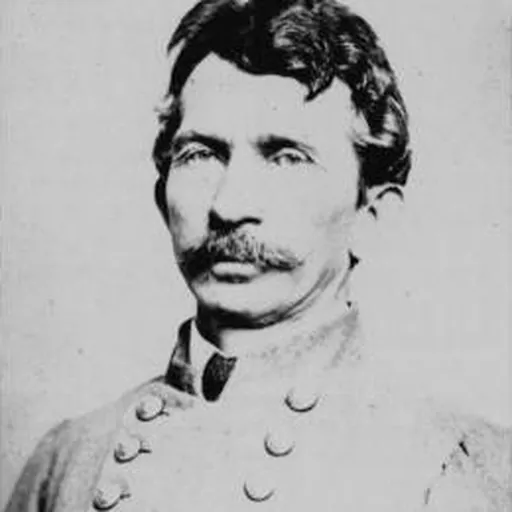
About Henry Watkins Allen
Lived 1820 – 1866 (aged 45). Henry Watkins Allen was an American politician, publisher, lawyer, brigadegeneral and governor.
Henry Watkins Allen (April 29, 1820 – April 22, 1866) was an American lawyer, soldier, and politician who served as the Governor of Confederate Louisiana. During the Civil War Allen served in the Confederate States Army, rising to the rank of brigadier general. He was later appointed as a military judge after suffering injuries in battle. He was elected to both the Mississippi and Louisiana State Legislatures before he was inaugurated as the 17th Governor of Louisiana, governing from Shreveport, the capital of the Confederate held area of the state.
Early life Henry Watkins Allen was born on April 29, 1820 in Farmville, Virginia into a Presbyterian family, the son of Dr. Thomas and Ann Watkins Allen. His father moved the family to Lexington, Missouri after Ann's death in 1830. While there, Allen worked for a time as a store clerk before he attended Marion College for two years. When he was seventeen, Allen ran away from home to Grand Gulf, Mississippi where he found employment as a teacher on a plantation. He also studied law during this time and was licensed to practice as an attorney in Mississippi on May 25, 1841.
In 1842, Allen moved to the newly independent Republic of Texas, serving briefly in Texan Army. He returned to Mississippi six months later and married Salome Ann Crane. Salome died in 1851 at the age of 25, and she is buried in Bruinsburg, Mississippi. In 1845, he was elected to the Mississippi state legislature where he served one term.
Louisiana In February 1852, Allen moved to Louisiana and along with William Nolan purchased Westover, a sugar cane plantation located in West Baton Rouge Parish. Three years later in 1855, the land was divided and split, with Nolan keeping the name Westover Plantation on his portion of land and Allen using the name Allendale Plantation for his portion of the property. He owned 125 slaves, expanded his territory to over 2,000 acres, and oversaw the construction of a railway to transport goods.
Allen was elected to the Louisiana legislature in 1853 and that same year, journeyed through the south. Writing about his travels, he published his letters in the Baton Rouge Comet under the pseudonym Guy Mannering. He studied law at Harvard University for a year before making a failed bid for the State Senate in 1855. After hearing about the outbreak of Italian Revolution, he travelled to Europe in 1859, intending to volunteer in the army of Giuseppe Garibaldi. The conflict had ended by the time Allen arrived and he instead toured Europe. He wrote a book about his travel which was published in 1861 as Travels of a Sugar Planter.
In early March 1862, he was promoted to colonel and marched to northern Mississippi where he served under the command of General Albert Sidney Johnson. As part of the Army of Mississippi, he moved into Tennessee and fought in the Battle of Shiloh where he was injured after being shot in the face.
During the Battle of Baton Rouge, Allen commanded a brigade and led the assault on Nims' battery. During the attack, he was severely injured in both legs from a cannon blast. Allen refused to allow a doctor to amputate one of his legs and he needed the use of crutches for the rest of his life. In early 1863, while recuperating, Allen served as military judge in Jackson, Mississippi and he suffered further injuries while escaping a hotel fire. He was promoted to the rank of brigadier general by the Confederate Congress and was assigned to Shreveport, then serving as the state capital of Confederate Louisiana, to organize paroled prisoners of war.
Governorship of Louisiana Allen ran for governor in November 1863 after Governor Moore chose not to seek a second term. He was inaugurated at the Shreveport Court House on January 25, 1864.
As the Union army forces started taking over Confederate Louisiana, military authorities declared Governor Allen an outlaw, punishable by death upon his capture. Historian John D. Winters, known for romanticizing the Confederacy and denigrating African Americans, wrote about Allen's leaving Louisiana to take refuge in Mexico:
With the Confederacy's end, James Madison Wells, who had been governor of Union-controlled Louisiana, became governor of the entire state. Allen moved to Mexico City and edited the Mexico Times, an English-language newspaper. Allen was initially buried at Mexico City National Cemetery and Memorial, however his body was returned to New Orleans 10 years later, for burial at Lafayette Cemetery. In 1885, 19 years after his death, Allen's remains were reinterred on the grounds in front of the Old Louisiana State Capitol in Baton Rouge, in a grave marked by a rose-colored obelisk.
Many things in Louisiana have been named after Allen, and in 2020 a debate opened up on the impact of Allen's legacy since he had been a Confederate official, enslaver, and opponent of Black political rights.
Allen Parish in western Louisiana is named for him, as is Port Allen, a small city on the west bank of the Mississippi River across from Baton Rouge. The neighborhood in which he lived in while in Shreveport was later named as Allendale.
The Henry Watkins Allen Camp #133, of the Sons of Confederate Veterans is named in his honor. Camp #435, Sons of Confederate Veterans, was chartered in 1903 as the Kirby Smith Camp, but the name was changed prior to 1935 to the Henry Watkins Allen Camp #435 in honor of Shreveport's famous resident. Camp #435 is no longer in existence.
Henry W. Allen Elementary School, a public school in New Orleans, is named for him. In 2021, the elementary school name was being debated for a name change based on Allen's controversial legacy.
A statue of Allen (1962) by sculptor Angela Gregory is located in Port Allen. In July 2020, a proposal to remove the statue was presented to the West Baton Rouge Parish Council. The council voted 6-3 not to remove the statue. A maquette of Gregory's Allen statue can be found at the West Baton Rouge Museum. A bust of Allen, along with Lee, Jackson and Beauregard, is located on the Confederate memorial in front of the Caddo Parish Courthouse in Shreveport.
Don’t just read it —
keep it.
Full-length biographies made to live with: read them, listen on the way to work, watch them tonight.
- E-book
- Audio
- Video
Instant download · yours to keep · every purchase keeps this site free
Important facts
People in Henry Watkins Allen's life
Named in this biography and alive at the same time


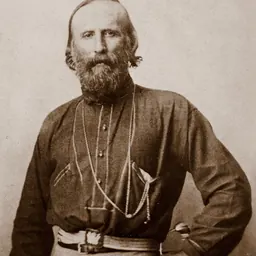

Related people
Same field, nearest in time


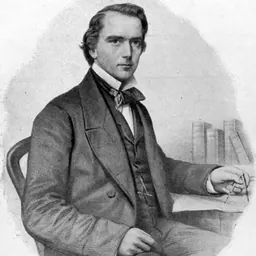

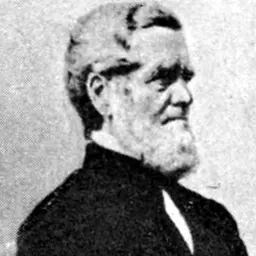
Contemporaries
People whose lives overlapped Henry Watkins Allen's






Frequently asked questions
Who was Henry Watkins Allen?
American politician (1820–1866)
When was Henry Watkins Allen born?
Henry Watkins Allen was born on 29 April 1820 in Prince Edward County.
When did Henry Watkins Allen die?
Henry Watkins Allen died on 22 April 1866 in Mexico City.
What was Henry Watkins Allen's occupation?
Henry Watkins Allen was a politician, publisher, lawyer, brigadegeneral and governor.
What nationality was Henry Watkins Allen?
Henry Watkins Allen was American.
Sources & further reading
· Wikipedia: Henry Watkins Allen
· DBpedia: Henry Watkins Allen
Cite this page
APA: Biography.guide. (2026). Henry Watkins Allen. https://biography.guide/henry-watkins-allen/
MLA: "Henry Watkins Allen." Biography.guide, https://biography.guide/henry-watkins-allen/.
Chicago: "Henry Watkins Allen." Biography.guide. https://biography.guide/henry-watkins-allen/.
Data last updated: 2026-09-20 · Spot an error? Report a correction.
Page generated 2026-09-27 05:09 UTC