
About Henry W. Butner
Lived 1875 – 1937 (aged 61). Henry W. Butner was an American military officer.
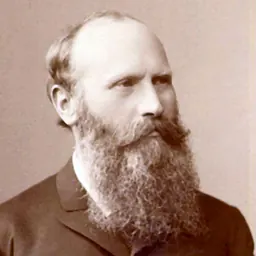
Henry Wolfe Butner (April 6, 1875 – March 13, 1937) was a United States Army general in World War I and onetime commanding officer of Fort Bragg (1928–29). A native of North Carolina, Butner graduated in the top half of the United States Military Academy Class of 1898. He became an artillery officer and was sent to France with the American Expeditionary Force during World War I. In the last month of the war Butner commanded an artillery brigade after promotion to brigadier general. After attending the United States Army War College, he led the United States Army Field Artillery School, the 24th Field Artillery Regiment, Fort Bragg, and Fort Eustis. Promoted to major general in early 1936, Butner took command of the Panama Canal Department. He suffered a stroke while golfing in late 1936, and died at Walter Reed Army Hospital in March 1937.
Early life Henry Wolfe Butner was born in the Pinnacle community of Surry County, North Carolina
Military career
Butner was sent to the 3rd Artillery Regiment's Battery E, stationed at Fort Point, San Francisco. He served with the unit from May 29 to December 8, 1898. He was transferred to the Presidio on December 8, and on January 28, 1899, to Alcatraz Island. In the spring of that year Butner transferred to Fort Baker. In June, Butner transferred to the regiment's Battery F. On July 1, he was reassigned to Fort Riley and the regiment's light battery. On July 1, 1900, Butner was transferred to the 6th Battery, Field Artillery. He stated at Fort Riley until December 4, when he became commander of a recruit detachment and was sent to Cuba. On February 2, 1901, he was promoted to first lieutenant. Butner returned to the United States on February 5, 1901, and was sent back to the 6th Battery. Butner was promoted to captain on September 23. Between October 1 and November 9, he led the brigade in the Meuse-Argonne Offensive. Butner was commander of the brigade until November 12, a day after the Armistice with Germany. He was sent to the Coblenz Bridgehead with the Third Army for occupation duties, arriving on December 15. On May 26, 1919, Butner returned to the United States. which was his last command.
In 1944, a ship was named after him. Camp Butner near Durham, North Carolina—today the site of the town of Butner, North Carolina—was named for him.
Don’t just read it —
keep it.
Full-length biographies made to live with: read them, listen on the way to work, watch them tonight.
- E-book
- Audio
- Video
Instant download · yours to keep · every purchase keeps this site free
Important facts
People in Henry W. Butner's life
Named in this biography and alive at the same time

Related people
Same field, nearest in time




Contemporaries
People whose lives overlapped Henry W. Butner's


Frequently asked questions
Who was Henry W. Butner?
United States Army officer (1875-1937)
When was Henry W. Butner born?
Henry W. Butner was born on 6 April 1875 in Pinnacle.
When did Henry W. Butner die?
Henry W. Butner died on 13 March 1937 in Washington, D.C..
What was Henry W. Butner's occupation?
Henry W. Butner was a military officer.
What nationality was Henry W. Butner?
Henry W. Butner was American.
Sources & further reading
Cite this page
APA: Biography.guide. (2026). Henry W. Butner. https://biography.guide/henry-w-butner/
MLA: "Henry W. Butner." Biography.guide, https://biography.guide/henry-w-butner/.
Chicago: "Henry W. Butner." Biography.guide. https://biography.guide/henry-w-butner/.
Data last updated: 2026-09-20 · Spot an error? Report a correction.
Page generated 2026-09-27 05:25 UTC